Resident of the world, traveling the road of life
69360 stories
·
21 followers

The Oldest Evidence of Animal Sex Has Been Found, and It’s Mind-Boggling

1 Share
The Oldest Evidence of Animal Sex Has Been Found, and It’s Mind-Boggling

Scientists have discovered the oldest fossilized evidence of sexual reproduction and locomotion in animals at a remote site in Canada’s Northwest Territories that dates back 567 million years to the Ediacaran period, according to a study published on Wednesday in Science Advances. According to researchers, the finding pushes the origins of animal sex back by 5-10 million years. 

The newly unearthed fossils were deposited in a fossil layer known as the White Sea assemblage that is preserved in parts of Russia, Asia, and Australia, but has never been found in North America before.

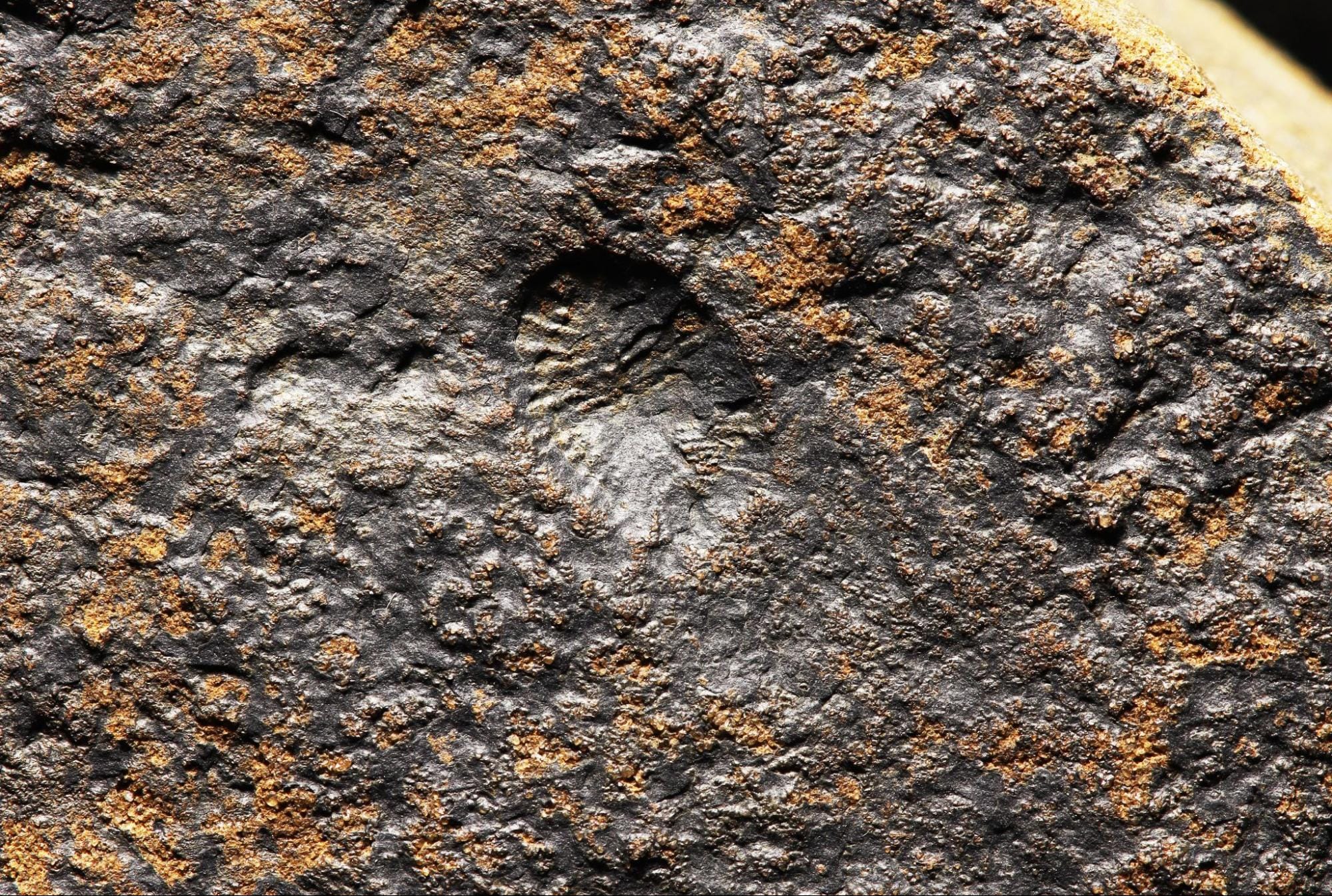
The discovery offers a snapshot of otherworldly species such as Aspidella, an animal that looked like a flying saucer with concentric ring patterns; Dickinsonia, a mouthless pancake of a creature that absorbed food through its bottom surface, clusters of tubular Funisia animals  that offer the oldest evidence of sexual reproduction in animals; and an unidentified anchor-shaped lifeform that may represent a new species. These animals lived in offshore waters at about 600 feet of depth, far from coastal shelves.

“We know, mostly from rocks in Australia, as well as some famous rock units in Russia, that taxa like Dickinsonia could move, and that taxa like Funisia probably reproduce sexually,” said Scott Evans, a curator and professor at the American Museum of Natural History who led the new research, in a call with 404 Media.

“The cool thing about this study is that we're finding those same fossils in rocks that are at least seven million years older than the oldest previously known,” he added. “It's exciting to be able to say that they weren't just around for a blip of time. They were around for a really long period of time in our history.”

The Oldest Evidence of Animal Sex Has Been Found, and It’s Mind-Boggling
Reconstruction of Ediacaran fossil community from the lower Blueflower Formation near Sekwi Brook, Mackenzie Mountains, Northwest Territories, Canada. Image: Illustration by Alex Boersma

The Ediacaran era, which elapsed between 635 to 541 million years ago, marked the transition from microscopic organisms to much larger lifeforms, setting the stage for the Cambrian “explosion” of animal life that directly followed it. But though the Ediacaran was the dawn of truly complex and visible life on Earth, fossils from this time are rare in part because organisms were soft-bodied, lacking bones or shells that are more conducive to preservation. 

That said, some Ediacaran ecosystems have been fortuitously entombed in stone molds in assemblages around the world, offering a glimpse of this bizarre lost world. For decades, paleontologists have explored these ancient ecosystems at the Blueflower Formation in the Sekwi Brook area of the Northwest Territories. 

In 2024, Evans and study co-author Justin Strauss of Dartmouth College discovered a new site that exposed the first known White Sea fossils in North America, opening a new window into these early ecosystems. For Evans, it was especially thrilling to find the remains of Dickinsonia, an organism he has spent years studying and had never been found in North America before.

“We'd always joke, ‘wouldn't it be crazy if we found Dickinsonia?’” Evans recalled, referring to his past fieldwork in the region. “So, on day one to find it out there was almost comical, but it's because Justin knows the rocks and knew they were right to look for them. That’s the key.”

Sexual reproduction initially evolved in simple microbes some two billion years ago, but Funisia is the oldest example of animal sex that is known from the fossil record (though there were no doubt earlier sexual pioneers that are not preserved). These worm-shaped animals are often found in dense clusters that imply they reproduced through mass spawning events in which they released sperm and egg into the water column, a strategy still used by corals and other marine animals today.  

The team’s discovery of Dickinsonia, along with another strange bottom crawler called Kimberella, also offer the earliest fossil evidence of movement in animals.
The Oldest Evidence of Animal Sex Has Been Found, and It’s Mind-Boggling
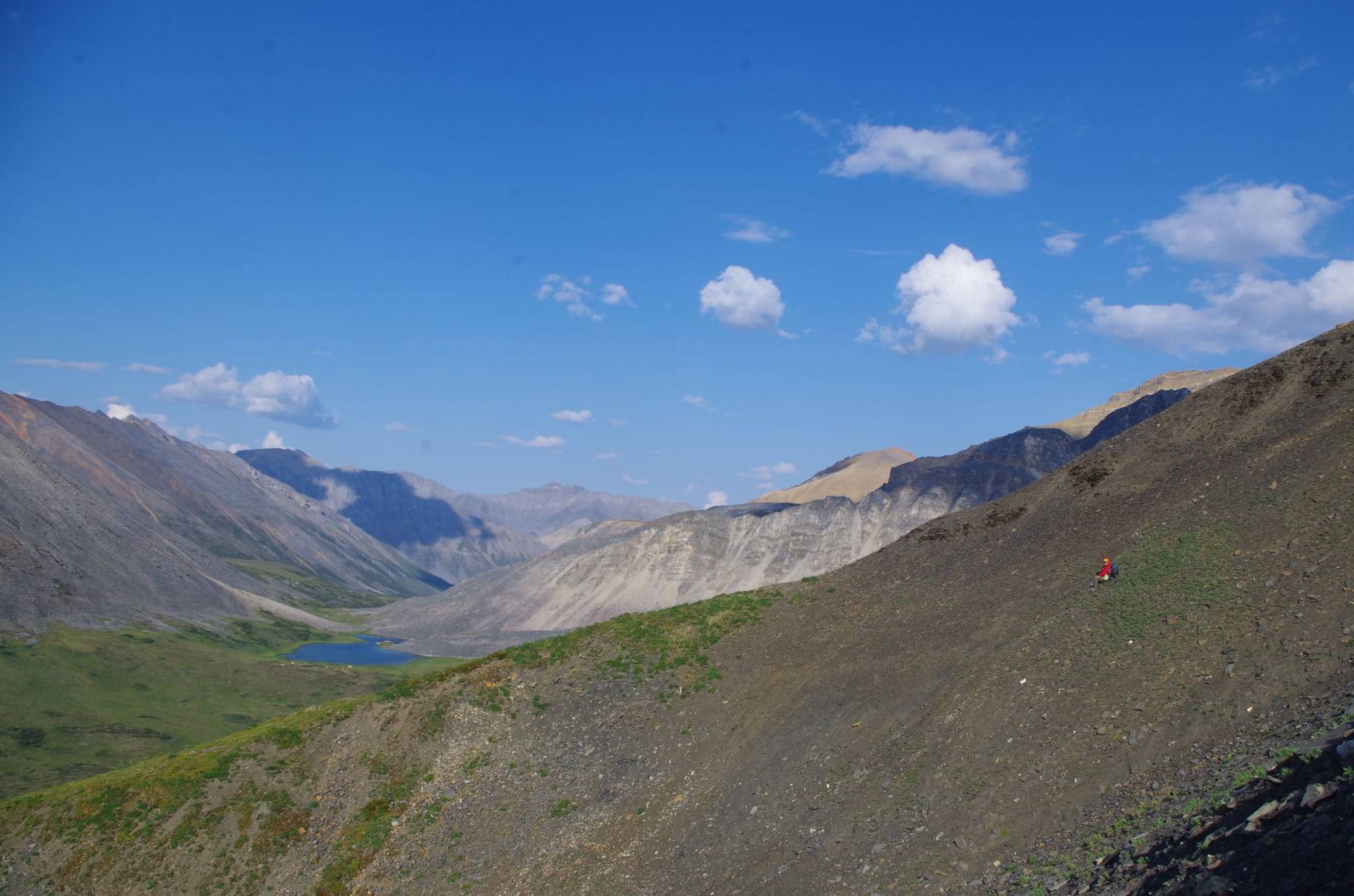
Fossil locality near Sekwi Brook, Mackenzie Mountains, Northwest Territories, Canada, with co-author Kim Lau. Image: Scott Evans 

One of the most evocative finds is a tiny organism that likely represents a new species and genus, though the remains are too indistinct to clearly identify it. It resembles a known organism called Parvancorina, which looks like an anchor came to life, but it will take more specimens to pin down its lineage. 

“We don't know what it is,” Evans said. “It's hard because these fossils are soft-bodied things that were buried under sand and compressed. They can be distorted, stretched, and so when you find just one, it's really hard to know that the shape you're seeing is how it's typically preserved, or maybe this is just a weird specimen that got stretched in a certain way.”

“It is very tantalizing to think this is a new species, but we are not ready to name it yet,” he added. “But that's why we'll go back and spend a lot more time crawling over these rocks.”

Indeed, the team only spent five days at this site last year, so there is plenty of ground left to cover. In addition to looking for new specimens, the researchers hope to understand the broader context of this assemblage. 

For example, the fact that these thriving ecosystems emerged in deep offshore waters suggests that these environments may have provided stability for nascent animal life, compared with shallow coastal regions. 

Later in the fossil record, it is more common to find organisms that emerge first in shallow waters near the shoreline, and then follow the opposite trajectory by colonizing the deeper ocean. Future fieldwork could reveal more insights into this early flourishing of complex life, and how it laid the groundwork for everything that has happened since.

“This is one of the few places on Earth where we have over a kilometer of rocks that cover this period where we think animals first appear and diversify,” Evans concluded. “The hope is that by continuing to go back to these sites, we'll get a lot more information on patterns of change through that interval.”

Read the whole story
mkalus
9 minutes ago
reply
iPhone: 49.287476,-123.142136
Share this story
Delete

Im Stream: Die Toten Hosen – Das letzte Album

1 Share

Als 15-Jähriger schenkte mir irgendwer, und ich weiß wirklich nicht mehr wer genau, eine solche Kassetten-Box mit den ersten Alben der Toten Hosen. Die Kassette war von der CDs abgehängt worden und für viele obsolet. Ich hörte „Opel-Gang“ rauf und runter. Für mich heute eine der wichtigsten deutschsprachigen Platten überhaupt. Bis „Opium fürs Volk“ war ich noch dabei, dann trennten sich unsere Wege irgendwie und Techno wurde wichtiger. Vieles danach habe ich dann nicht mehr gehört, aber mit „Opel-Gang“ war ja eh schon fast alles gesagt.

Die Kassetten-Box vergammelte samt Kassetten später dann im WG-Keller an der Glienicker Brücke, was mich rückblickend etwas traurig werden lässt.

In ein paar Tagen erscheint mit „Trink aus, wir müssen gehen!“ ein letztes Album der Hosen. Anlässlich dessen gibt es in der ARD-Mediathek die Doku Die Toten Hosen – Das letzte Album. Unten der Trailer dazu.

So nah und persönlich wie nie zuvor: Die Toten Hosen, eine der prägendsten und erfolgreichsten deutschen Bands, haben sich im Studio bei den Aufnahmen zu ihrem letzten Album „Trink aus, wir müssen gehen!“ begleiten lassen. Der preisgekrönte Regisseur Eric Friedler filmte Campino, Andi, Breiti und Kuddel beim Komponieren und Texten an ihrem musikalischen Nachlass.
„Die Vorstellung, das ist das letzte Mal, dass wir ein Album machen, das ist schon etwas Besonderes“, hebt Bassist Andi Meurer die Tragweite des Vorhabens hervor.


(Direktlink)

Read the whole story
mkalus
50 minutes ago
reply
iPhone: 49.287476,-123.142136
Share this story
Delete

Caprice

1 Share

Michael Kalus posted a photo:

Caprice


Read the whole story
mkalus
51 minutes ago
reply
iPhone: 49.287476,-123.142136
Share this story
Delete

Two Centuries of the Bicycle, Under One Roof in Sakai

1 Share
Two Centuries of the Bicycle, Under One Roof in Sakai

The Shimano Bicycle Museum traces the evolution of cycling — but keeps its distance from its own story


Sakai is not somewhere most visitors to Japan find themselves by accident. A low-key industrial city folded into the southern sprawl of Osaka, it has been a centre of metalworking craftsmanship for centuries — swords and firearms first, then fishing tackle, then bicycle components. It is, of course, the birthplace and global headquarters of Shimano, the company whose derailleurs and brakes have been invisibly present on billions of bicycles for decades. Which makes it entirely reasonable to expect that the city's bicycle museum would tell Shimano's story with some pride. It is, then, a mild surprise that it mostly doesn't.

The Shimano Bicycle Museum — formally the Bicycle Museum Cycle Center — is tucked into a sleek, understated building near Sakai-Higashi station. The facade offers almost no signage. Inside, the space is modest: perhaps smaller than you'd expect for a museum funded by a company of Shimano's scale, and the layout feels slightly aimless, as though the curators gathered an impressive collection of objects and then weren't quite sure how to arrange an argument around them.

Two Centuries of the Bicycle, Under One Roof in Sakai

The welcome area sets a clean, quiet tone — perhaps too quiet for what lies inside


A broad sweep through cycling history

The museum's central ambition is admirable: to tell the full two-hundred-year story of the bicycle, from the first tentative draisines of the 1810s through to the present day. And the collection does this with some charm. Early display cases hold replicas and originals of the curious proto-bicycles that predate the pedal — the Draisine, or Laufmaschine, which required riders to stride along the ground like a running machine. What these early machines already demonstrate is that inventors were quick to experiment: suspension, steering mechanisms, even rudimentary gearing appear in surprisingly early forms.

Two Centuries of the Bicycle, Under One Roof in Sakai

A high wheeler fitted with gearing — early engineers were already experimenting

Two Centuries of the Bicycle, Under One Roof in Sakai

A Laufrad & Penny-farthing loom over the display floor

The penny-farthings — or "ordinaries" as they were known to their riders — dominate an early section of the museum floor with satisfying visual drama. Their enormous front wheels, sized to maximise the distance covered per pedal stroke, tower above eye level. The collection then moves through the safety bicycle revolution of the 1880s, when the chain-drive rear wheel finally made cycling accessible to ordinary people — and, crucially, to women. Several examples of step-through frames from the era are on display.

Two Centuries of the Bicycle, Under One Roof in Sakai

Early chain-drive safety bicycle

Two Centuries of the Bicycle, Under One Roof in Sakai

A bicycle built for five (Tandem)

Two Centuries of the Bicycle, Under One Roof in Sakai

Early balloon-tyre city bike

"The collection is genuinely interesting — it's the narrative thread connecting it all that remains frustratingly slack."

Side rooms and the main theatre

Two side rooms holds a more varied assortment of machines: a vintage lugged steel road bike sits near a Cervélo P-series time trial bike, an early recumbent, a step-through utility roadster, and a vintage steel racer. The room feels more like a storage annex than a curated display — bicycles parked in proximity rather than arranged in conversation. That said, it rewards a slow wander: the friction-shifter road bike with its rear rack, the recumbent's unexpectedly modern geometry, the tandem built for two.

Two Centuries of the Bicycle, Under One Roof in Sakai

The side room — an eclectic mix

Two Centuries of the Bicycle, Under One Roof in Sakai

A beautifully preserved lugged steel road bike

Two Centuries of the Bicycle, Under One Roof in Sakai

Steel road bike with period-correct friction shifters and rack

There are two films showing in the museum. One plays in a small room as you enter the exhibition space. A short film telling the history of the bicycle A second, longer version screens in the dedicated main theatre deeper inside, essentially telling the same story. In both theatres you can see the movie either in Japanese or English. In the smaller theatre you can select the language, while the larger theatre runs the movie alternatively at a fixed schedule. The films are earnest and well-produced. But they are also, unmistakably, nearly the same film. The redundancy is curious: two screens, two projections, two substantially overlapping cuts of the same material. A single, well-placed film would have served better.

Two Centuries of the Bicycle, Under One Roof in Sakai

The main theatre — the film will play alternatively both in Japanese and English


The missing thread: Shimano's own story

The museum's most puzzling omission becomes clear as you reach the later sections. For all its breadth, the museum never quite closes the loop between the history of the bicycle and the company that funds it. There are references to Shimano components — an airline-pneumatic shifting system here, a display of component evolution there — but the museum stops well short of telling Shimano's own story with any depth or ambition.

Two Centuries of the Bicycle, Under One Roof in Sakai

Cycling culture panels — informative but detached from Shimano's own arc

The comparison that keeps returning to me is with the Mercedes-Benz Museum in Stuttgart — a benchmark for how a company can use its own history as the spine of a broader industrial and cultural narrative. That museum weaves the story of the automobile into the story of Mercedes with intelligence and genuine drama. You leave understanding both. The Shimano museum, by contrast, gives you a solid survey of bicycle evolution, and a polite wave in the company's direction. You leave having enjoyed the collection, but wondering why the institution seems shy about its own considerable legacy. Shōzaburō Shimano founded his company in 1921 in this very city. A century of innovation in components that transformed competitive cycling and everyday transport deserves a more confident platform.


Practical notes

The museum is a short walk from Sakai-Higashi station on the Kintetsu Osaka Line, or reachable from central Osaka in under thirty minutes. Admission is modest. Staff are unfailingly helpful. The building is clean, well-lit, and quiet — perhaps reflecting its school-group clientele on weekdays. For a committed cycling enthusiast, there is genuine pleasure in the collection, particularly in the earlier machines. Allow an hour. If you're hoping for the cycling equivalent of Stuttgart's Mercedes shrine, keep your expectations calibrated.


Verdict

A worthwhile collection of two centuries of bicycle history, housed in a sleek building in Shimano's home city. The machines speak clearly; the museum's curatorial voice is softer than it might be. The near-identical pair of films is a wasted opportunity, and the institution's reluctance to foreground Shimano's own story leaves a curious gap at the centre. Worth a visit for cyclists and design-history enthusiasts — just don't expect a Shimano museum in the way Mercedes-Benz has the Mercedes museum that celebrates both the history of the internal combustion engine and it’s myriad uses during the 20th century, as well as the companies own contributions.

Two Centuries of the Bicycle, Under One Roof in Sakai
Collection 7 / 10
Narrative 4 / 10
Overall 6 / 10

Photos: Michael Kalus / Flickr (CC licence). All photographs from the author's visit.

Read the whole story
mkalus
19 hours ago
reply
iPhone: 49.287476,-123.142136
Share this story
Delete

Tucson Project Blue: data centres lie about water again

1 Share

Beale Infrastructure is a data centre developer, owned by Blue Owl. One of the companies Beale develops for is Amazon Web Services.

One of Beale or Amazon thought it would be a good idea to build a water-sucking data centre in Tucson, Arizona — in a desert.

Beale and Amazon have pulled every trick they can to keep all details of this plan out of the public eye, and even out of the awareness of the local governments.

Project Blue has actually been in the works since 2022. That’s the year City of Tuscon staff signed non-disclosure agreements with Amazon such that the staff didn’t tell the elected city councillors anything about the plan until 2025: [Arizona Luminaria]

While city council members did not sign any non-disclosure agreements, Ward 4 council member Nikki Lee said an agreement was signed by Barbra Coffee, the director of Economic Initiatives for Tucson.

“I was told that one was signed on behalf of the City of Tucson and that it applied across the organization,” said Lee, whose ward would house the proposed data center.

The No Desert Data Center Coalition has a timeline of every quiet action by Beale and Amazon they could find over those initial years. It’s a useful checklist of the nonsense you can expect a data centre developer to pull. [timeline]

Pima County approved the plan to sell a block of land to Beale to build the first Project Blue data centre. Residents worried that Project Blue would suck up all the water and electricity, but Beale said it’d be fine, honest. [AZPM]

How much water would Project Blue use? The first version was set to use 2.9 million litres of water every day. [KGUN]

Beale said the data centre would use reclaimed water — but only after a few years of using fresh water. Beale also claimed they’d build a pile of water reclamation plants on site, but any of those existing would be a matter for the fabulous future. [Arizona Mirror]

There was quite a backlash over the abuse of non-disclosure agreements with local government. Amazon backpedaled:

We do not have any commitments or agreements in place to develop this project.

Later it came out that Amazon had got Pima County to sign a five-year non-disclosure agreement in 2023 to keep Amazon’s involvement out of public view. Surprising for a company with no “commitments or agreements”. Sounds not entirely true. [Arizona Luminaria]

In August, the City of Tucson Council voted unanimously to stop any data centre discussions with Beale and not grant them anything. Beale would get nothing from the City of Tuscon. This killed the first version of Project Blue. [Arizona Luminaria]

Beale proposed an air-cooled setup in September — that is, loud cooling fans screaming 24/7: [press release]

New air cooled design will utilize a closed-loop system and will not otherwise consume any water for industrial cooling.

Amazon pulled out of Project Blue entirely in December. Since then, Project Blue has not had a customer. [Arizona Daily Star]

Beale kept building the allegedly air-cooled version of Project Blue on the land in Pima County, even without any help from the city and without a customer.

A few weeks ago, it came out that Beale was using the city’s drinking water for dust control in the construction. The city had explicitly blocked Beale from using a drop of city water — but one of their contractors used their own rights to city water and drove that water to the Project Blue site by truck! Tucson City Manager Tim Thomure was not pleased: [Tucson Sentinel]

To our amazement, we were alerted to the fact that your contractor obtained a construction meter from Tucson Water from within the Tucson Water service area and transported that water out of our service area for use on Project Blue site. This was completely unacceptable and was terminated by Tucson Water immediately.

Thomure had previously been a huge booster for Project Blue. But even he was sick of their weaseling and dissembling. Thomure also demanded Beale pay for that water.

Without that water, the construction threw up masses of dust. So last Wednesday, Pima County issued Beale a notice of violation! [KGUN]

It also turns out the “air cooled” data centre will still need a huge amount of water. They can’t get it from the city of Tucson — so a Beale subsidiary has applied directly to the State of Arizona for permits to drill two wells so they can suck up 117 million litres of ground water each year. In the desert. [Tucson Sentinel]

You might think Beale wasn’t entirely telling the truth about not using any water for cooling the data centre.

With Amazon pulling out, Beale still doesn’t have a customer for this data centre. But that hasn’t stopped both Beale and Amazon pulling every scurvy trick and corporate shell game they can. When they’re not just straight-up lying. Because that’s what data centre developers do.

Read the whole story
mkalus
21 hours ago
reply
iPhone: 49.287476,-123.142136
Share this story
Delete

The bicycle the Sakai City offered to the then Crown Prince (1936)

1 Share

Michael Kalus posted a photo:

The bicycle the Sakai City offered to the then Crown Prince (1936)


Read the whole story
mkalus
22 hours ago
reply
iPhone: 49.287476,-123.142136
Share this story
Delete
Next Page of Stories