Resident of the world, traveling the road of life
68687 stories
·
21 followers

How One Guy Crowdsourced More Than 500 Dashcams for Minneapolis to Film ICE

2 Shares
How One Guy Crowdsourced More Than 500 Dashcams for Minneapolis to Film ICE

When self-employed software engineer Nick Benson put out the call for dashcams online, he thought he’d get maybe 10 people to donate. More than 500 have shown up on his front porch in suburban Minneapolis. “The state apparatus, of course, has cameras everywhere,” Benson told 404 Media. “The citizens will also benefit from having the same cameras around to document what's going on and making sure that everything is on the up and up.”

In early January, the Trump administration sent 2,000 federal agents and officers to the Minneapolis area. DHS has said hundreds more are on the way. Earlier this week, President Donald Trump threatened Minnesota with a “DAY OF RECKONING & RETRIBUTION” in a Truth Social post.

On January 7, two days before Benson put out his call for dashcams, ICE agent Jonathan Ross shot legal observer Renee Good in the face. In the wake of that killing, multiple people have filmed agents threatening the lives of other observers.

Benson feels like he has to do something, so he gets dashcams into the hands of people who want them. “We need more documentation showing what these people are doing. Because I don't know—other than a compelling visual documentation of what's going on—I don't know what other tools we have until the legislative branch of our government can stand up and do its job and provide a check to all of this, because our state government can't,” he said. “So all we can do is collect evidence that this is happening and let people know about it.

Benson made it easy to buy the cameras. He set up an Amazon wishlist that has the dashcams and a 256gb memory card to go in them. People buy the equipment on Amazon and it shows up at Benson’s house. From there, he reaches out to local community organizers and gets them into the hands of people who want them. “I think more than 350 of those cameras have gone out and are already deployed in the community now,” he said. “So we got them out fast, because we all understand exactly why we need those cameras, and we appreciate that support very much.”

Benson got the idea for the dashcam wishlist when ICE told local police that one of his friends was ramming their cars. “That was completely fabricated,” Benson told me. But there was no way to prove it. It was the word of the federal government against Benson’s friend. “Dashcams are the only way we can prevent that from happening.”

As ICE spreads across cities in the US and continues to disappear and kill people, citizens have taken to the streets to put themselves between the masked agents and their targets. These community observers use a variety of tactics, including blowing whistles to let people know ICE is in the area and recording everything and posting it online.

Benson runs the website JetTip, a flight alert service for aviation enthusiasts and it was through this work he first noticed how America was changing during Trump’s second term. “I got interested in all of the ICE things by tracking the flights that were coming in to take deportees away,” he said. “In addition to keeping track of those flights that are coming and going from the airport, I've been getting looped in with the community observation part of it.”

Benson lives in Burnsville, a Minneapolis suburb with a population of 60,000. He said that even here, ICE is a constant and terrifying presence. “There's more federal agents here now than there are local police,” he said. “And we know that they're not operating with respect to the rule of law. They're conducting warrantless door to door operations right now.” 

The day after Joss shot Good, Benson was dropping his kids off at school when he noticed a man running down the road. At first he thought the man was jogging. “And then half a block down the way, there was the ICE agent who was running after him,” he said. “They were just right there when I'm driving my kids to school. And it was so frustrating and violating.”

Benson put the call for cameras on January 5, but saw an uptick in donations after the Good shooting. “It was immediately clear that ICE was lying about it, and people were looking for a way to reach out and make a difference from wherever they were in their community, and that Amazon wish list was a very low friction, easy way for people to make a constructive and tangible difference,” he said. “It was more than $75,000 worth of Dash cams that have been delivered to my house here now in Burnsville.”

From there, Benson plugged into local community organizations and got the cameras into the hands of his neighbors watching ICE. “We have to teach history or someone else will teach their version of it,” Jean, one of Benson’s dashcam recipients who spoke to 404 Media on the condition of pseudonymity for her safety, said. She said that one big plus of the dashcams is that it keeps observers hands on the wheel when they’re in their car. “This was safer. A lot of people were trying to record [on their phones] while driving.”

Jean started observing and recording ICE, and organizing others to do the same, after she witnessed a raid in December. She said that ICE brought more than two dozen cars, a tactical vehicle, and dozens of armed agents. “We have to make sure people are watching,” she said. “We have to make sure we’re keeping track of our community members.”

Letty, another ICE watcher in the area, learned about the community organizations in her area after the Renee Good shooting. After getting plugged in, they told her a man named Nick was giving out dashcams. “I think they’re a great tool and beneficial to anyone who is out patrolling and observing,” she said. “Hell, I think if you’re a person of color and vulnerable to being kidnapped, I strongly believe you should have one in one in your car even if you’re not in any [observation] groups.”

Letty, the daughter of Mexican immigrants, said the camera gives her a small amount of peace of mind. “But deep down I also know agents don’t care about whether you have one or not, “ she said. “I’ll never get rid of my dashcam now though. I feel like it adds another layer of safety.”

 Benson isn’t done giving out cameras. “We need all of those cameras we can get to help the people who have the opportunity to stand up for what's right here and make sure that we're protected as best we can be from the federal government right now,” he said.

Benson said that the mood has changed in the neighborhood since ICE killed Renee Good. “My family were all immediately a lot more concerned about what I was doing, of course. It's hard when you see those videos of someone who was just out driving and ICE comes up to them and said, ‘Didn't you learn your lesson from the other day,” he said. "They're weaponizing this killing to prevent people from just existing in their neighborhood. Like, you can't even be near ICE while they're operating, because that means you didn't learn your lesson of them murdering someone who was there.”

Some ICE agents are reportedly using Good’s shooting as a threat: Videos captured by bystanders in the Minneapolis area this week shows agents asking if people have “learned from what just happened” while threatening them. 

“It's upsetting, and it's just the next step in getting kicked in the guts by these guys,” Benson said. “I don't want to get in a situation where I've got a bunch of idiots yelling at me from outside of my car, possibly with guns drawn, and possibly giving me conflicting directions where they already have the outcome predetermined and my actions won't make any difference. That's the sort of thing that makes me really nervous: that they've already decided they need to make examples out of people.”

But Benson said he won’t give up. “We can't give up, and we can't stop doing everything we can to protect our neighbors, because we can't let them win.”

And so Benson hands out dashcams. “We’re in a situation right now where the only people that are helping are just good people, normal people, standing up and helping out the best way they can. That’s all they’ve got…what a stupid situation that we allowed this to get this far.”

Read the whole story
mkalus
1 hour ago
reply
iPhone: 49.287476,-123.142136
Share this story
Delete

The ALSO TM-B Is Rivian’s Answer to the Electric Bike

1 Share

The ALSO TM-B Is Rivian’s Answer to the Electric Bike

It’s estimated that 7 billion people will live in cities by 2050. With 80% percent of the carbon emission coming from cars on short journeys traversing these urban centers, it’s clear that alternatives are more than necessary and that these new options need to comprise much more than just luxury cars.

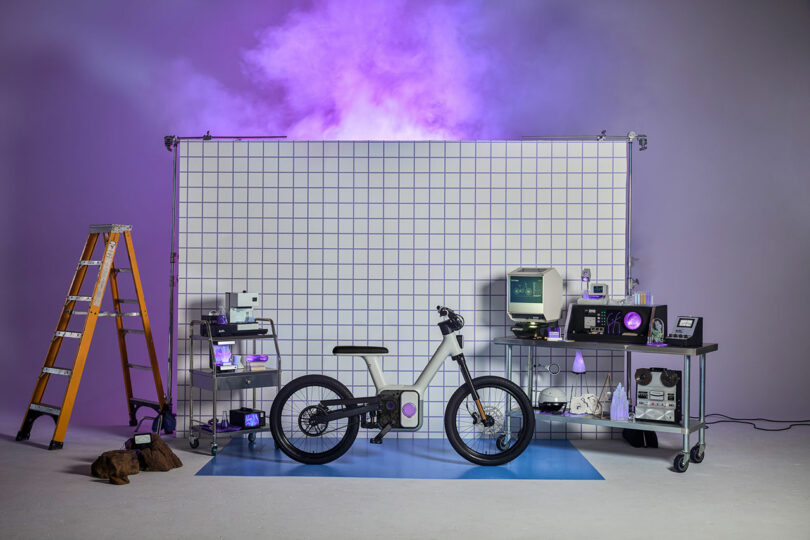
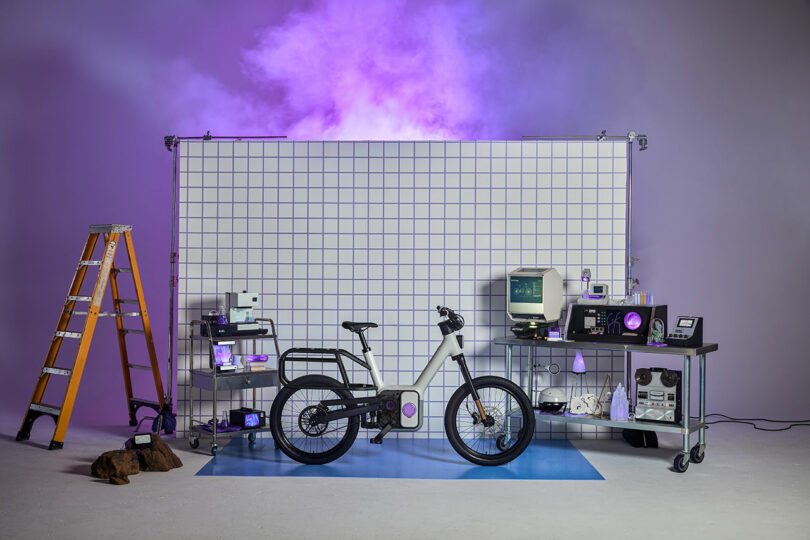
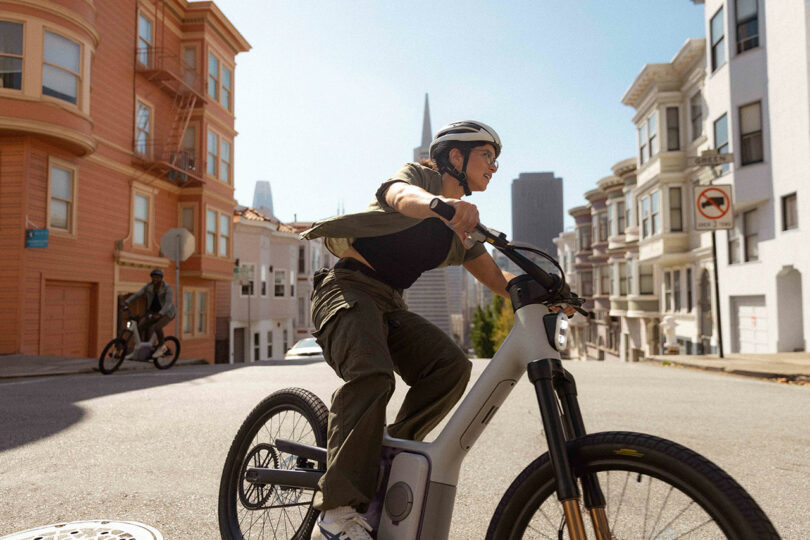
Tapping into the growing demand for micromobility is the aptly-named Rivian sub-brand ALSO. It’s just launched TM-B is an easily configured yet durable kit-of-parts electric bike conducive to the changing needs of everyday life.

A white electric bicycle is displayed in front of a grid backdrop, surrounded by lab equipment, a yellow ladder, and purple smoke in the background.

“Our vision is to bring together the latest technology with fun, thoughtful design to create small EVs that inspire people to adopt these more efficient modes,” says Chris Yu, President of ALSO. “This launch has been years in the making and it is just the beginning of a broader platform we are building that we believe will catalyze adoption globally.”
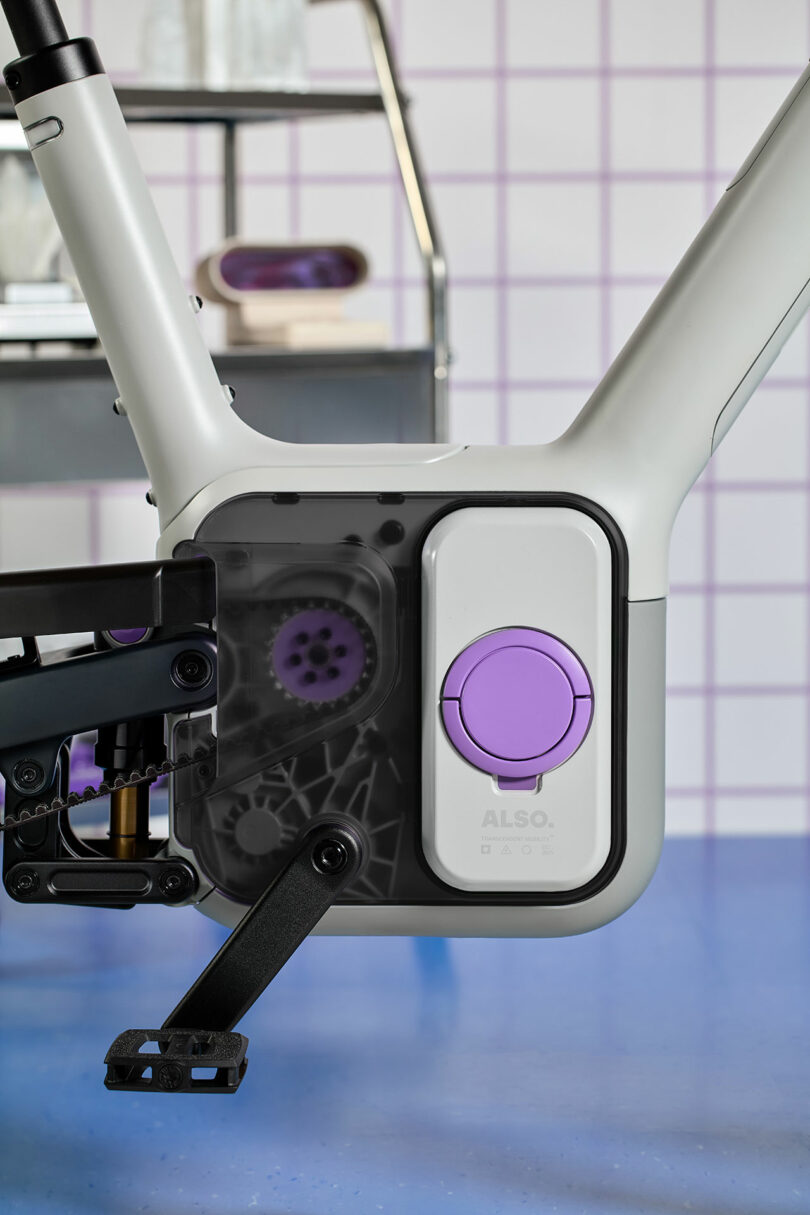
Close-up of a bicycle frame with a transparent panel revealing gears inside and a white compartment with a purple circular cap labeled "ALSO." on a blue tiled surface.

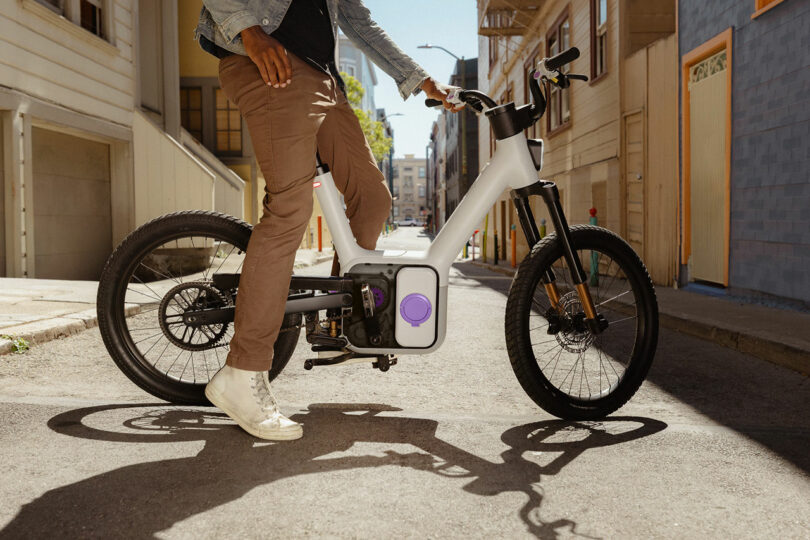
TM-B is marked improvement on the rudimentary, battery saddled electric bikes we see often zooming around the neighborhood, used to hastily deliver food or other items. Its one-touch, modular frame can be switched out for a wide variety of different size frames, as well as those more appropriate for different types of activity: the transportation of goods; commuting; simply taking a joy ride; or venturing out on the trails.

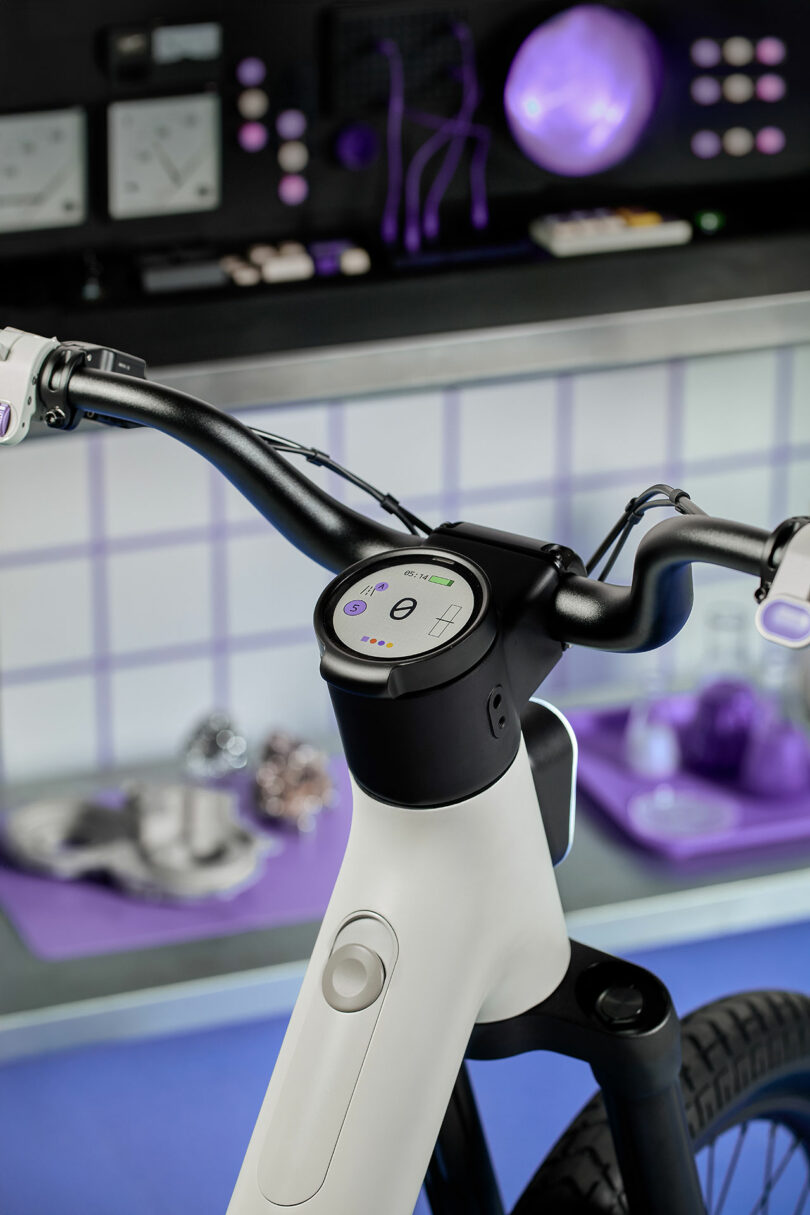
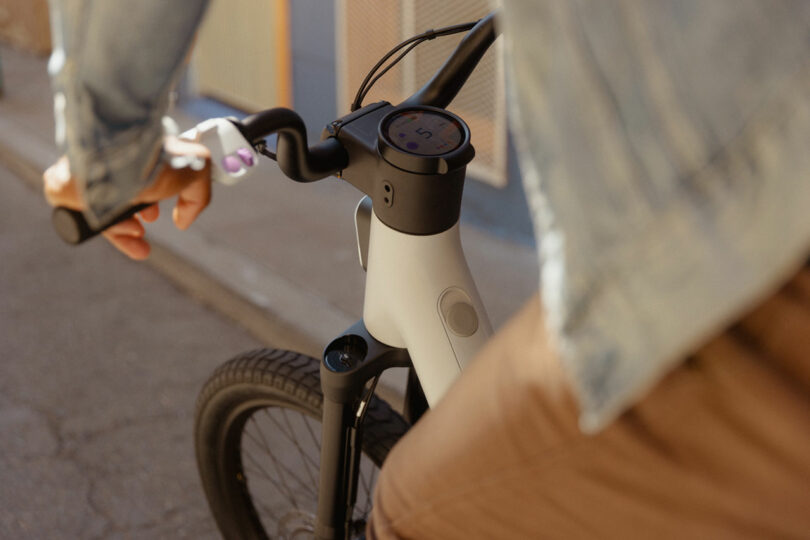
Close-up of a modern e-bike handlebar with a digital display, set against a blurred background featuring various purple and silver objects on shelves.

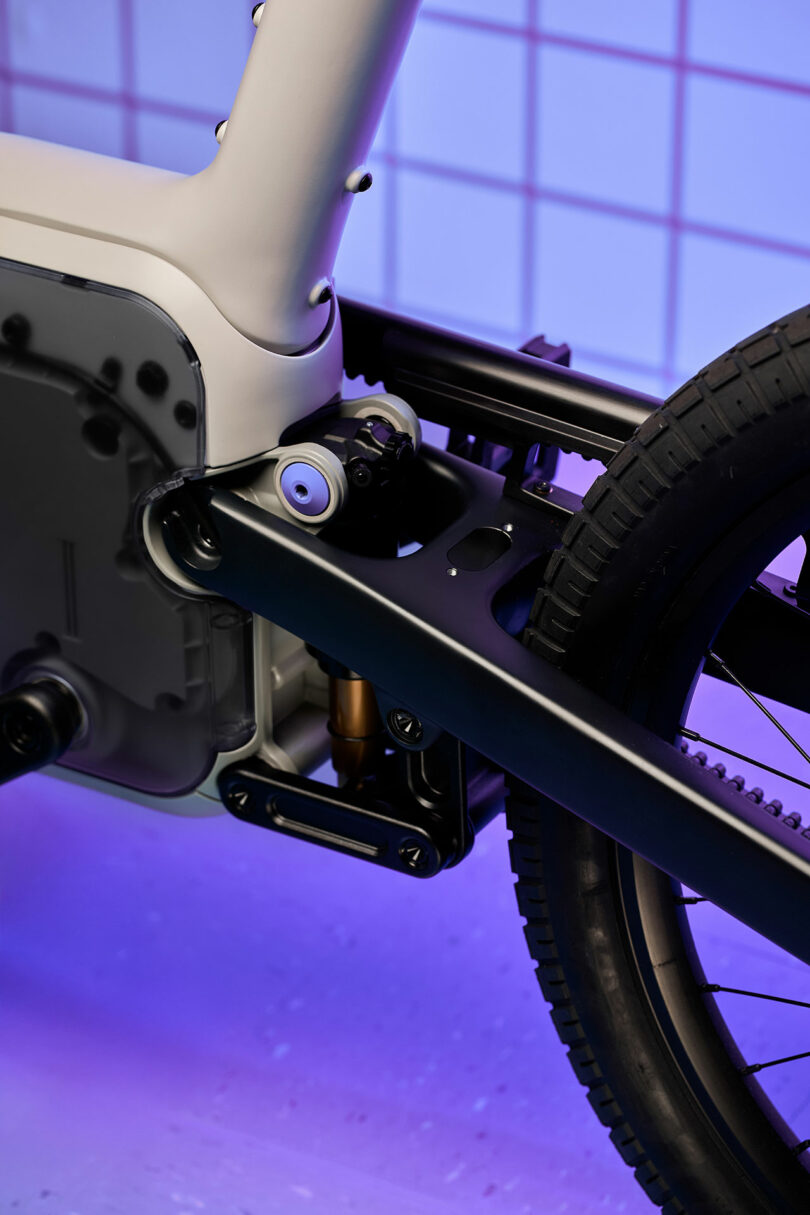
Close-up of an electric bicycle’s rear suspension and drivetrain against a purple-lit tiled background.

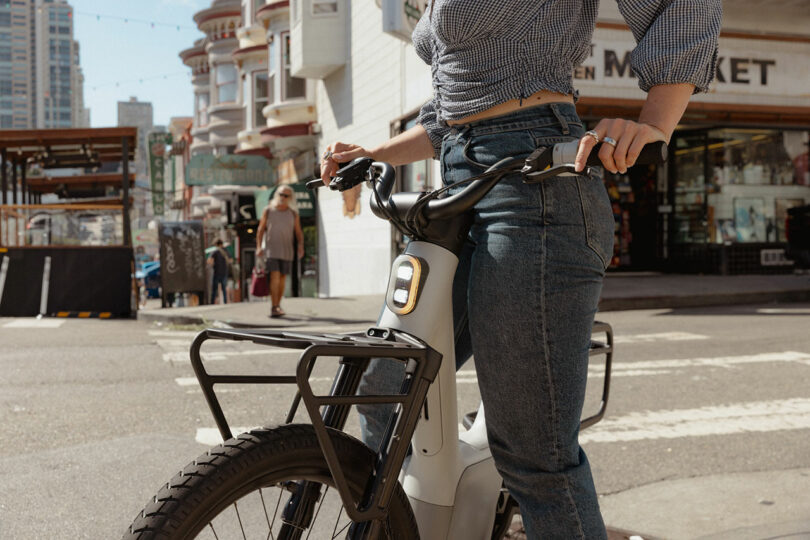
It can easily transition from being a light cargo hauler to what the Dutch call a bakfiets (children carrier). With a 100-mile range on a single charge, the TM-B can become one’s “everything” vehicle. For commercial use, there’s the TM-Q quad variation – replete with compact trailer – already used by Amazon.
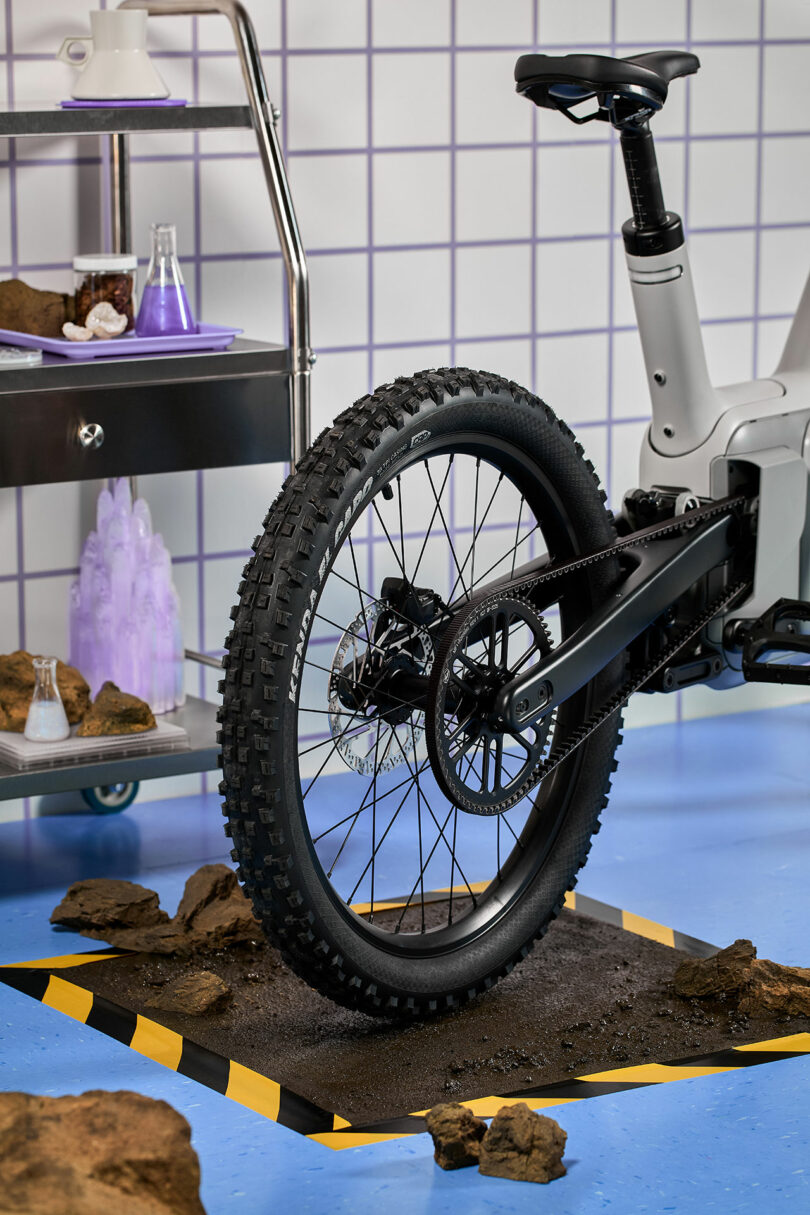
A close-up of a rugged electric bike’s rear wheel on a dirt patch, with rocks scattered around and lab equipment on a metal cart in the background.

The TM-B runs on ALSO’s proprietary DreamRide drive system. The hyper-customizable technology replaces the conventional direct mechanical connection. The 240 watts battery comes with energy density and USB-C fast charging. The portable digital touchscreen makes navigation and even taking calls a lot safer. An integrated lock system automatically secures the bike as its primary rider walks away.

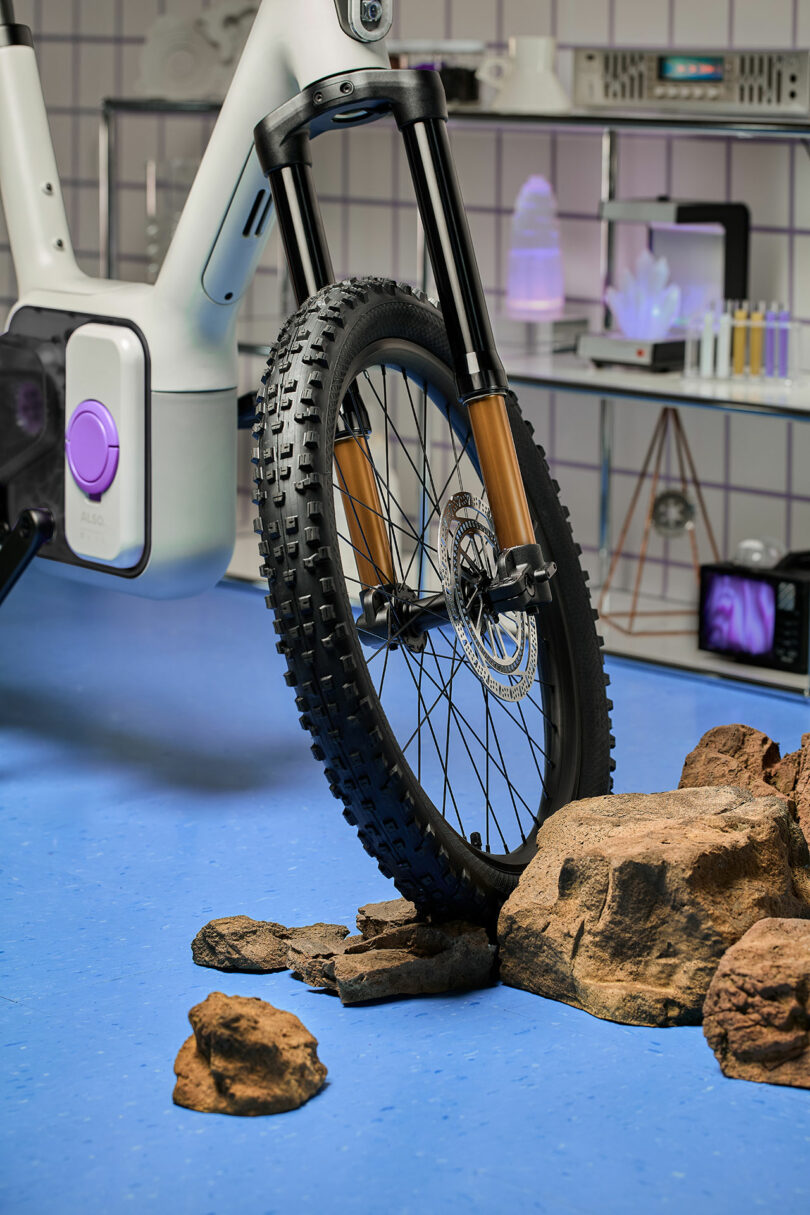
A close-up of a bicycle's front wheel positioned on rocky terrain inside a modern, science-themed room with lab equipment in the background.

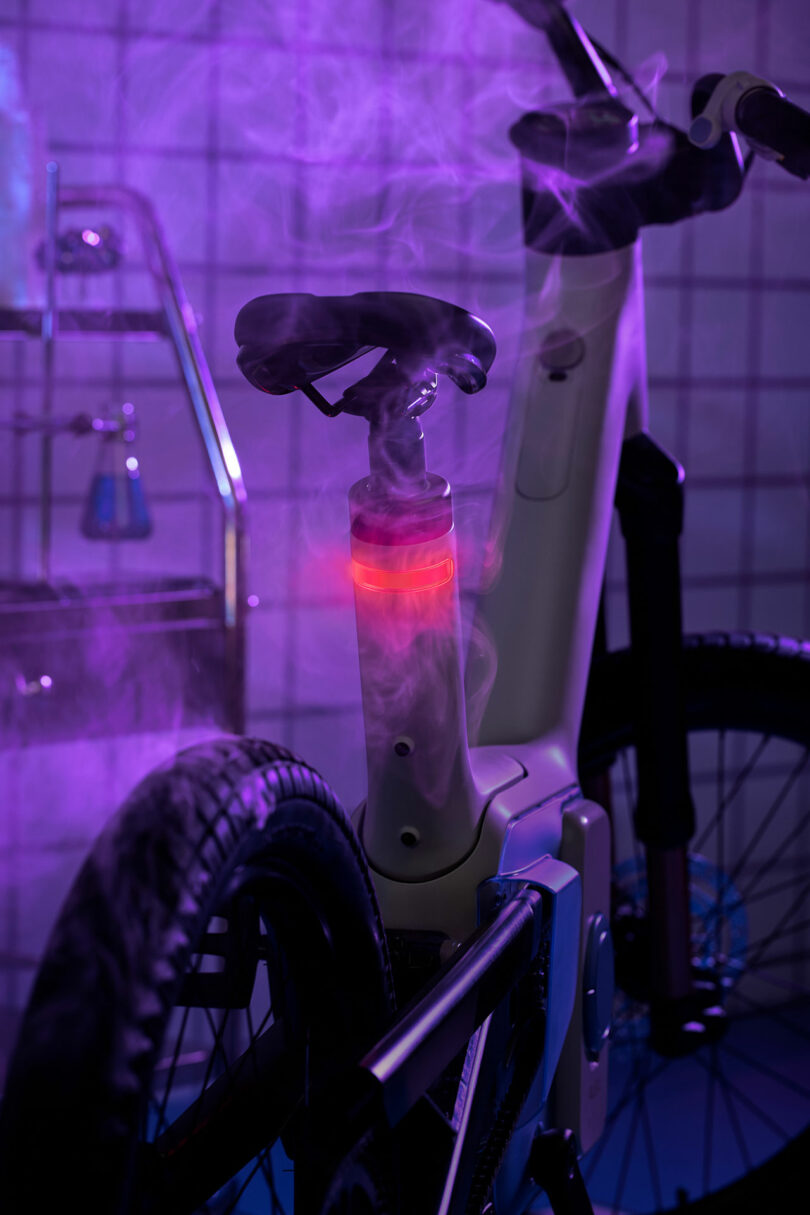
A bicycle with smoke and purple lighting has a glowing red light beneath the seat, set against a tiled wall and metal rack with lab equipment in the background.

Leaving no detail to chance, ALSO has “also” launched the Alpha Wave Helmet, fully equipped with a step-change in rotational impact protection release layer system.

A person riding a bike.

Person wearing light sneakers and brown pants stands next to a modern electric bike on a sunlit urban street.

“ALSO was created to develop technology and products that challenge existing expectations for what is possible in form factors smaller than a car or truck – I couldn’t be more excited about the potential for ALSO to help drive excitement for new modes of transportation,” says Rivian Founder and CEO RJ Scaringe. “We have built a ground-up technology platform that enables us to deliver rich, personalized experiences that get better over time, through the power of software.”

Two people sit on electric bikes in an urban alley, wearing casual clothing and helmets, talking and gesturing to each other near a street pole with stickers.

A person rides a bicycle with a digital display on the handlebars, wearing a blue shirt and brown pants, in an outdoor urban setting.

A person stands on a city street holding the handlebars of an electric bike with a front cargo rack.

Three people ride electric bikes on a dusty dirt trail through a dry, grassy landscape on a sunny day, wearing helmets and casual clothing.

The ALSO TM-B eBike starts at $4,500 and is available at ridealso.com.

Photography courtesy of ALSO.

Read the whole story
mkalus
2 hours ago
reply
iPhone: 49.287476,-123.142136
Share this story
Delete

This Modular Sauna Embodies the Agility of Italian Brand Agape

1 Share

This Modular Sauna Embodies the Agility of Italian Brand Agape

Most of the conversations in architecture these days are about place-making – reformulating or creating spaces that better reflect the physical and culturally-ascribed characteristics of their surroundings. For many the term is being quickly cliched; simply used as a marketing ploy: gimmicky solutions that are surface level at best but often permanent. What would happen if this formula was turned on its head and the early modernist notion of modularity – pre-produced kit-of-part components brought to and assembled on almost any site – was reintroduced as a way to better frame these settings, allowing their histories to unfold with almost no tampering.

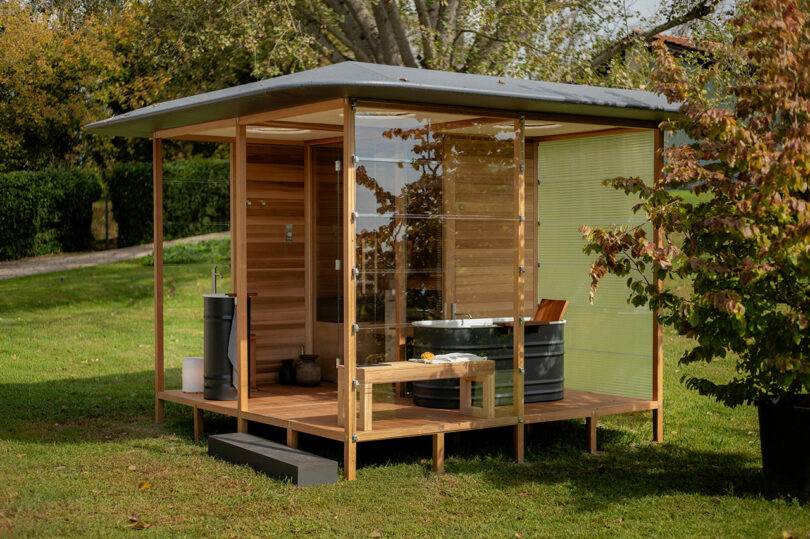
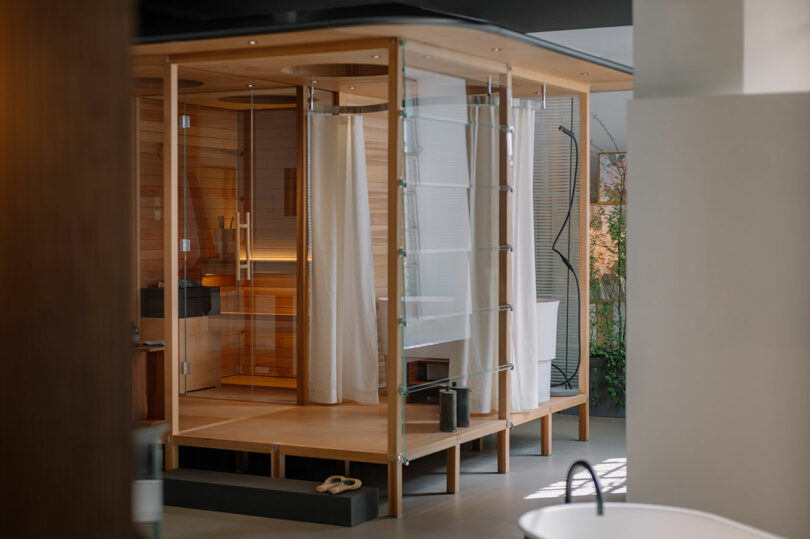
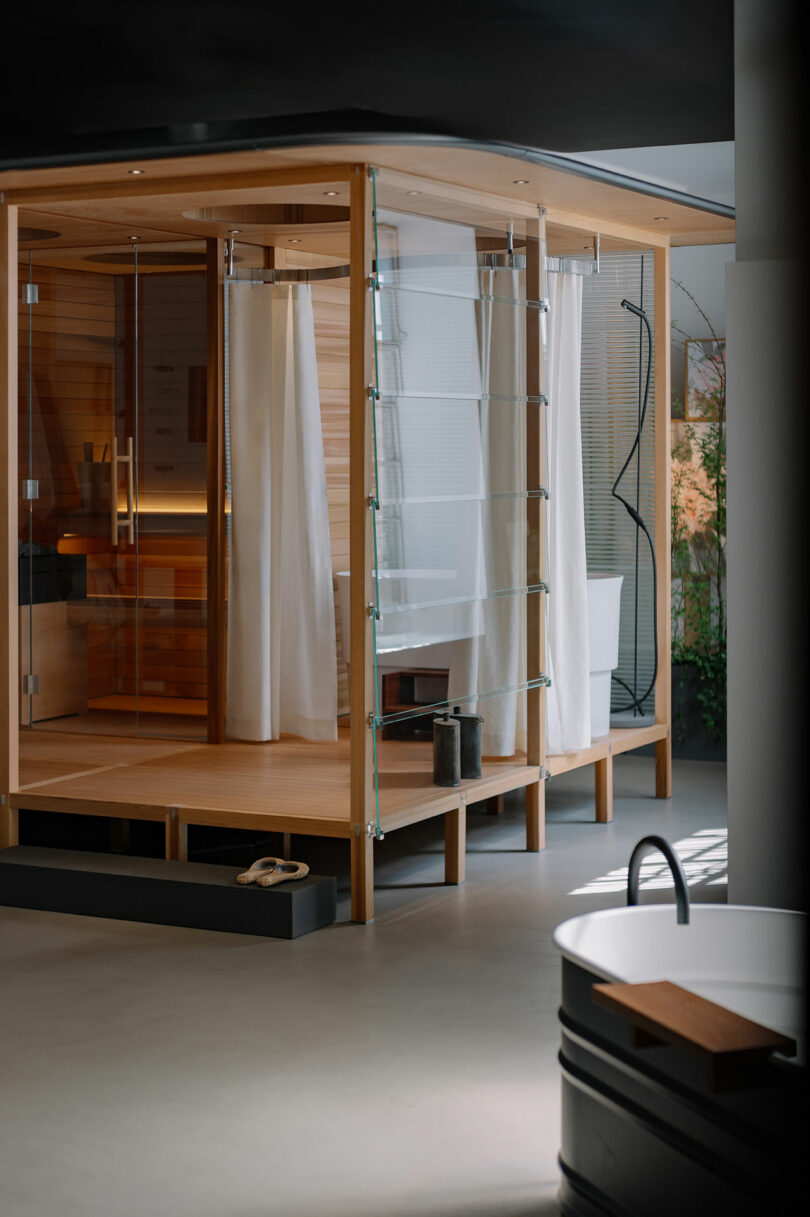
Cue heritage Italian bathroom brand Agape and its just debuted Pavilion Sei sauna concept. Developed by Michele de Lucchi Studio partner Nicholas Bewick, the “micro architecture” design reflects the brand’s long-held systems thinking philosophy.

Modern indoor sauna and shower area with wooden and glass construction, white curtains, and a freestanding bathtub nearby in a minimalist bathroom setting.

First articulated in the 1970s, this ethos centers on the idea that objects don’t exist in inert vacuums and are instead influenced, constantly reshaped, by their implementation: their use but also placement among other objects and spatial elements. Agape’s diverse bathroom collections were all imagined as such: networks of furnishings, fixtures, and luminaires that can be interchanged, and in turn, customized.

Modern bathroom with a wooden sauna, glass walls, white curtains, black shower area, and a freestanding black bathtub in the foreground.

This approach has also led to innovations in how typologies one might otherwise take for granted – a tap for instance – could be entirely re-configured, influencing a change in how it is employed. Introducing new materials and processes has also been central to this progressive evolution. Balancing between standardization and the potential of individuality and idiosyncrasy – perhaps a better way to reflect the essence of a locale than so-called “place-making” – Sei serves as a kind of canvas for different experiences, mostly centered on the recently solidified design principle of wellness.

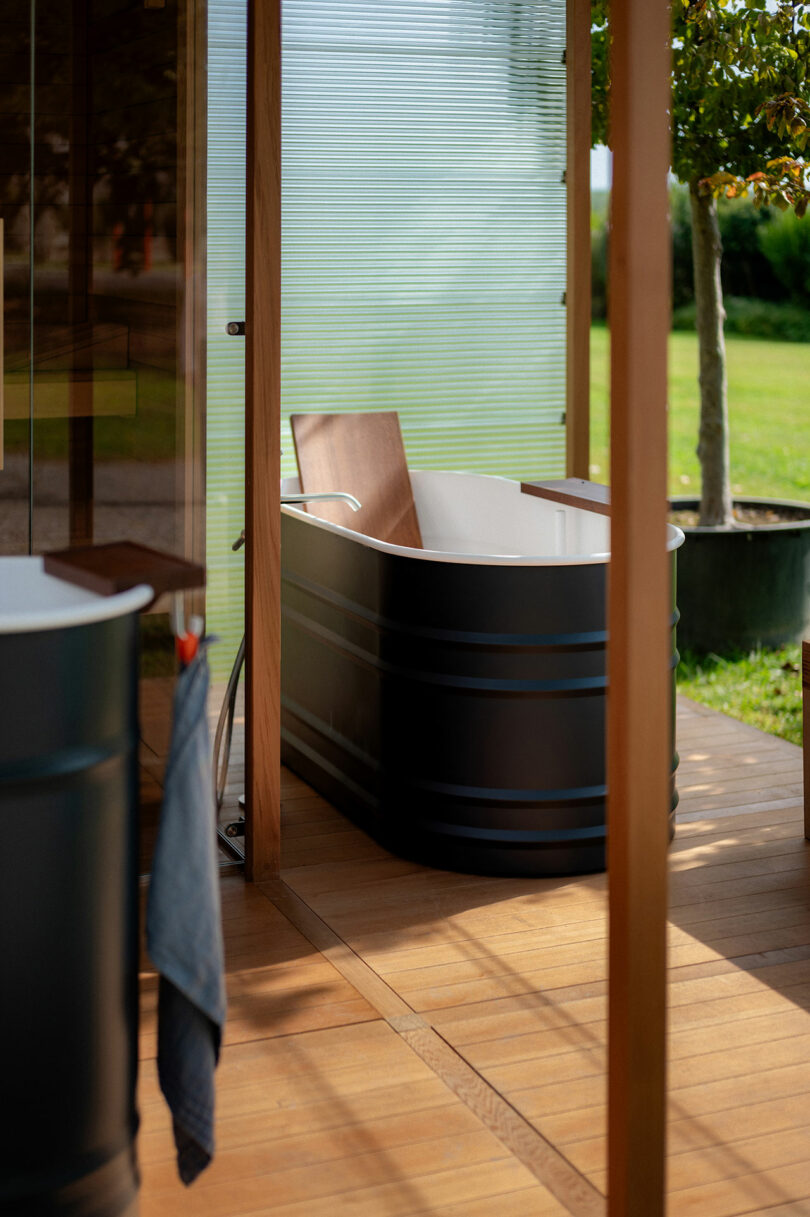
A modern outdoor bathtub with a wooden backrest sits on a wooden deck, partially enclosed by glass panels, with greenery visible outside.

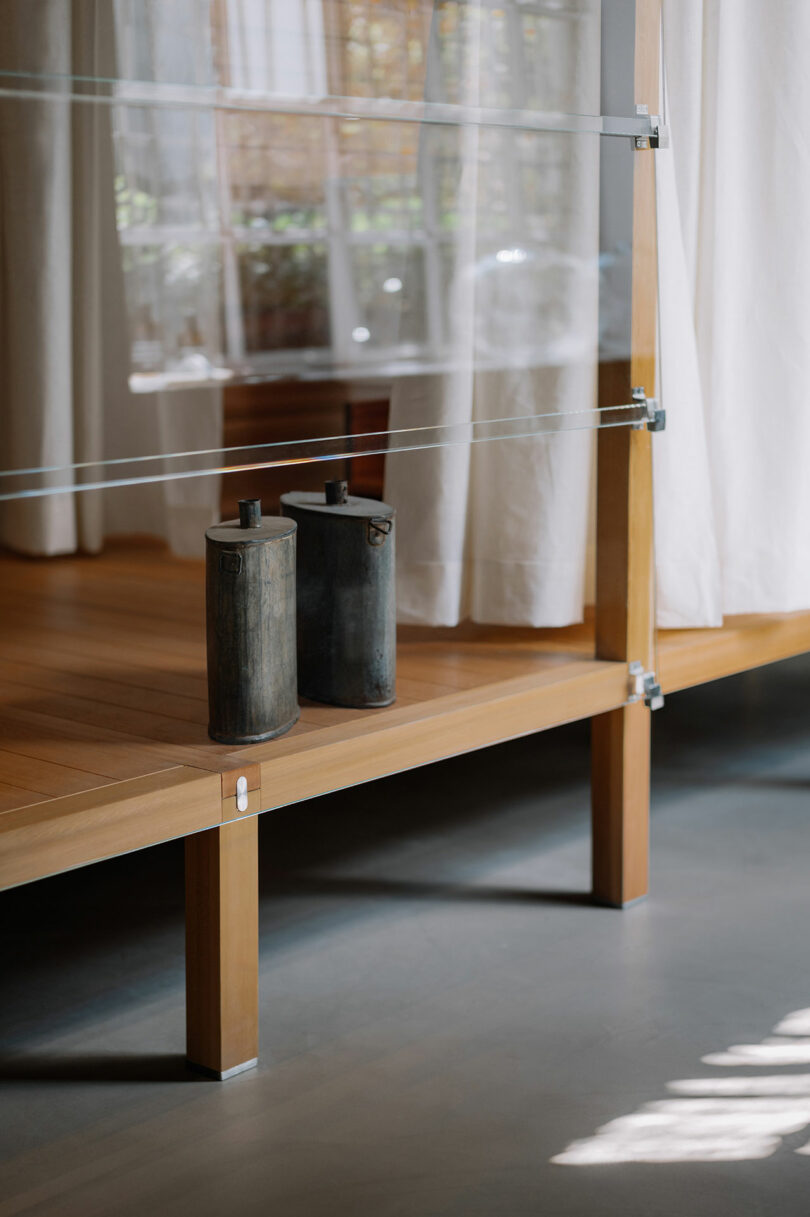
Two metal containers rest on a wooden platform with glass railings, in front of white curtains and a window.

As society moves away from other “harmful” forms of entertainment and respite, the bathhouse and sauna has reemerged as a more health-conscious type of third-place diversion. Specialized facilities are popping up in major urban centers as an antidote to the hustle bustle but also as portable units set up in more rural places. Sei emerges as an easily erected “space” with minimal impact on its environs. Traditional saunas are hermetically sealed. This system opens up to the outdoors.

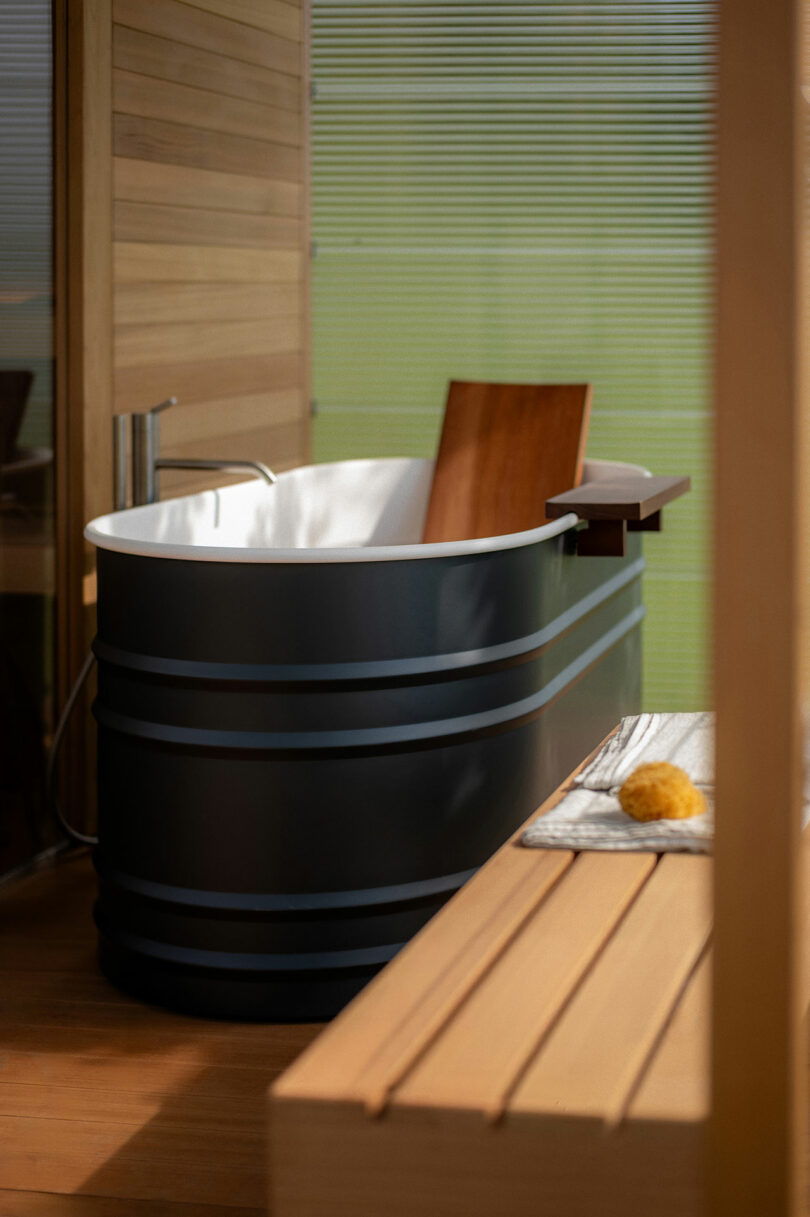
A modern black soaking tub with a wooden backrest sits next to a wooden bench holding a towel and a pastry in a sunlit, minimalist bathroom.

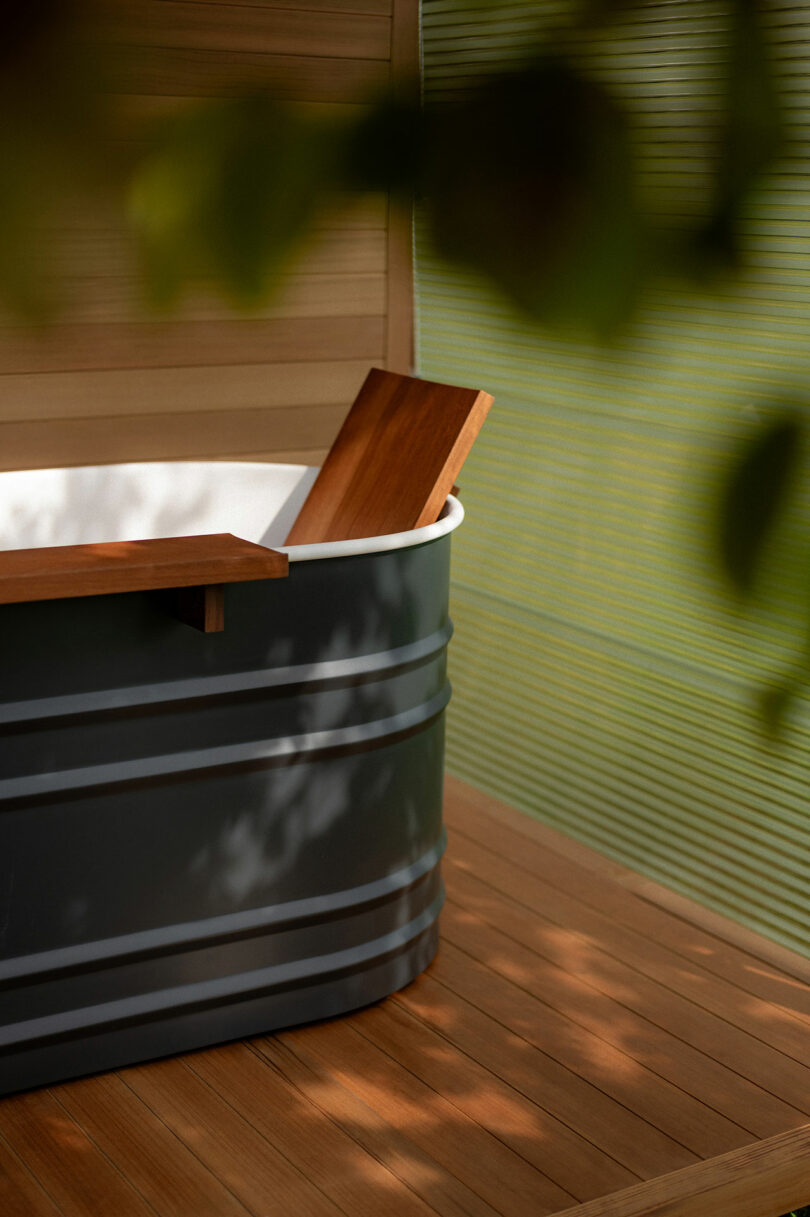
A modern black soaking tub with a wooden backrest is situated on a wooden deck, partially shaded by leaves.

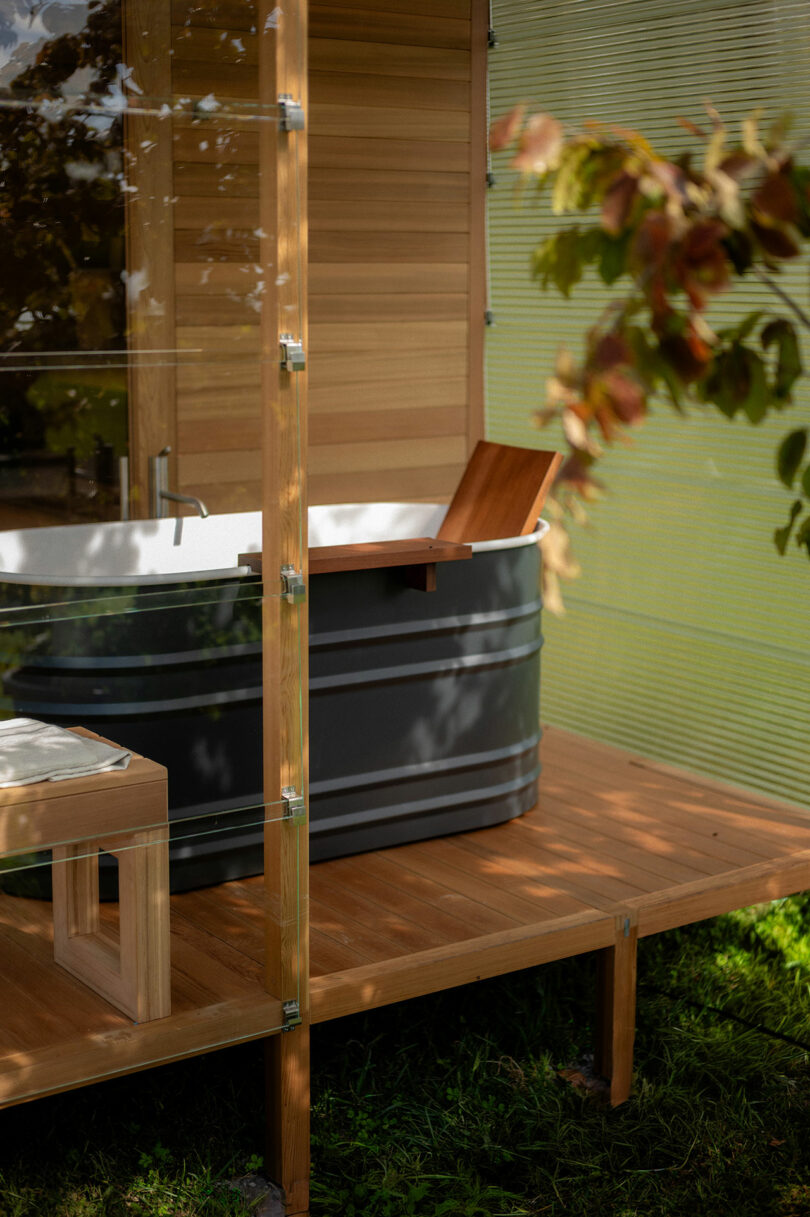
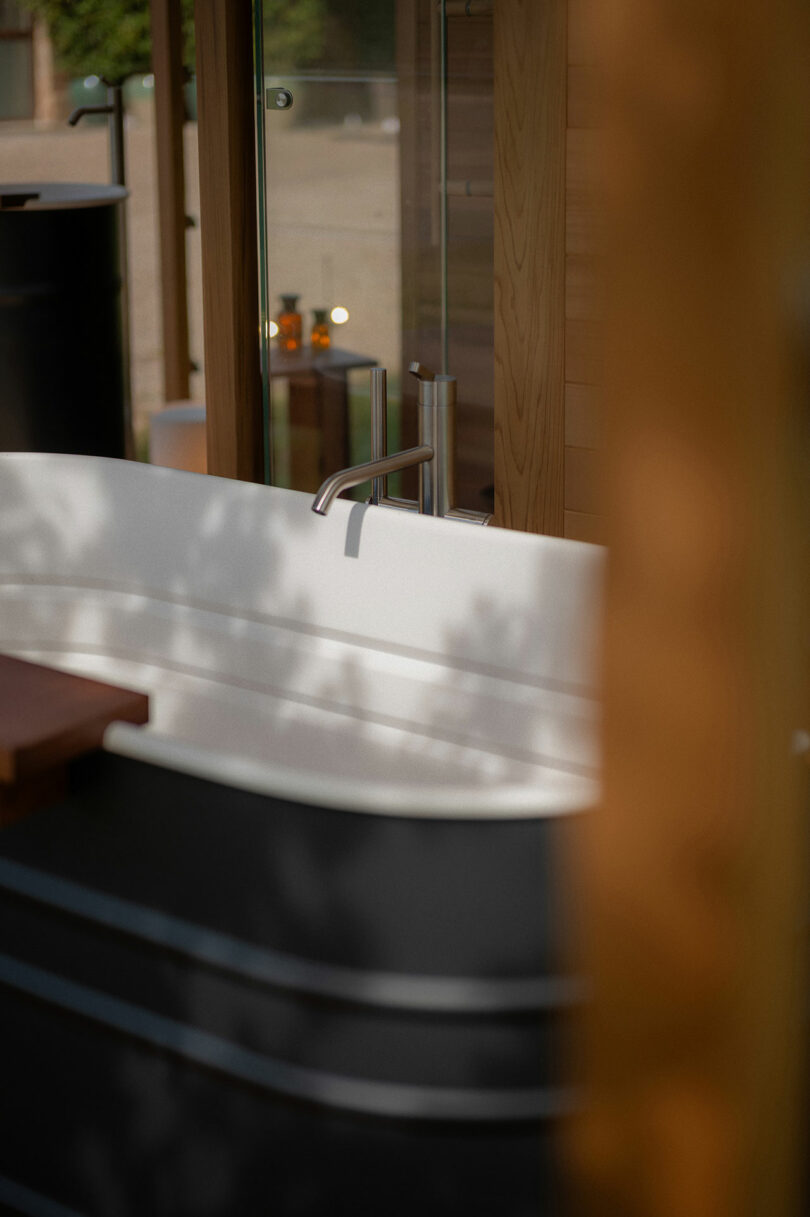
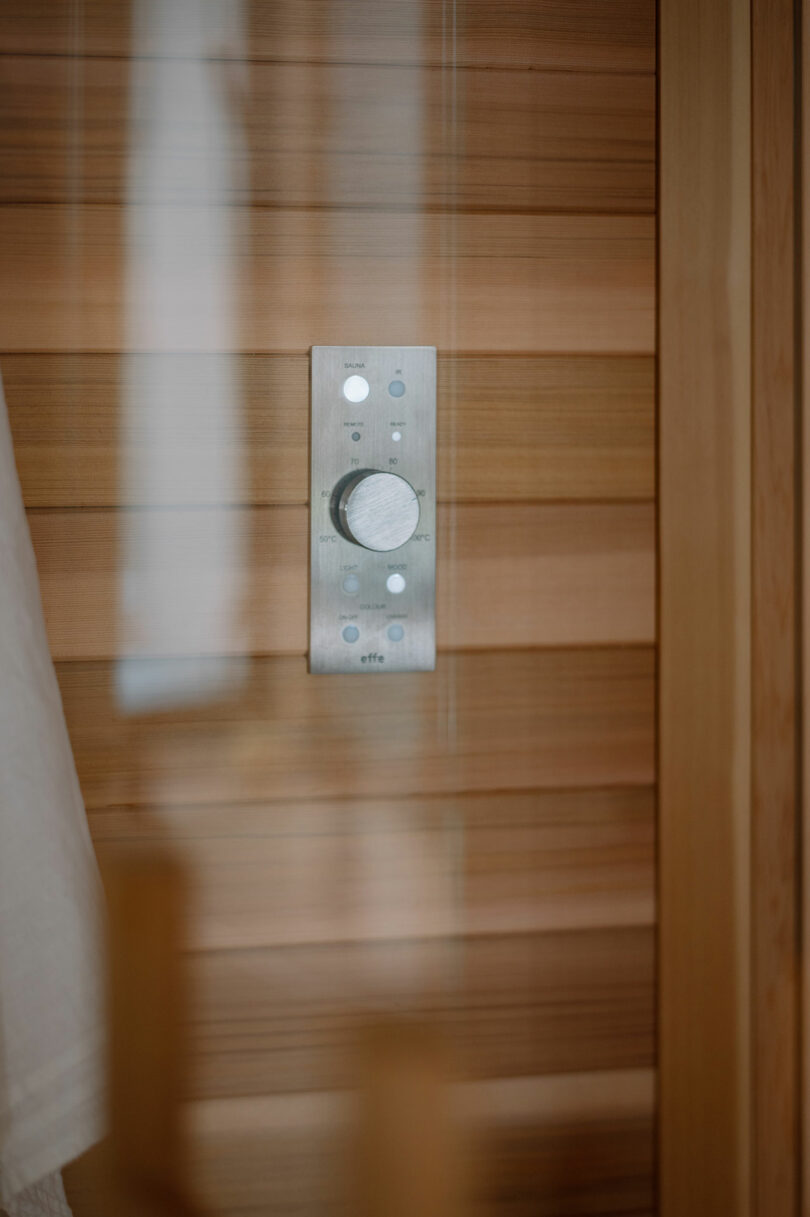
Developed with sauna brand Effe and interiors solution firm Cesare Roversi, the “plopable” structure consists of a 6 by 6 foot open wooden frame, raised platform, and permeable roof with strategically placed daylighting exposures. Innovative glass partition walls help to contain the heat and steam emitting from the enclosed sauna module. The rest of the space features a Neri & Hu-designed washbasin and bathtub. Depending on the specificity of site or personal need, Sei also comes in two more compact Version B and C iterations. It’s an ideal addition to a backyard, rooftop, shared urban garden, or in the case of Agape’s bucolic Agapecasa HQ, the rolling farmland just south of Mantova, Italy.

A modern freestanding bathtub with a chrome faucet is situated next to a glass wall, with soft natural light and outdoor elements visible in the background.

A modern freestanding black bathtub with wooden accents is positioned on a wooden deck near a translucent glass wall and a tree outside.

The carefully chosen name of Sei derives from three sources. In Italian, it both references the number six – the carefully considered cubic proportioning of the pavilion – but also the notion of being present. In Japanese, the word loosely means life: the notions of nature, rhythm, and regeneration.

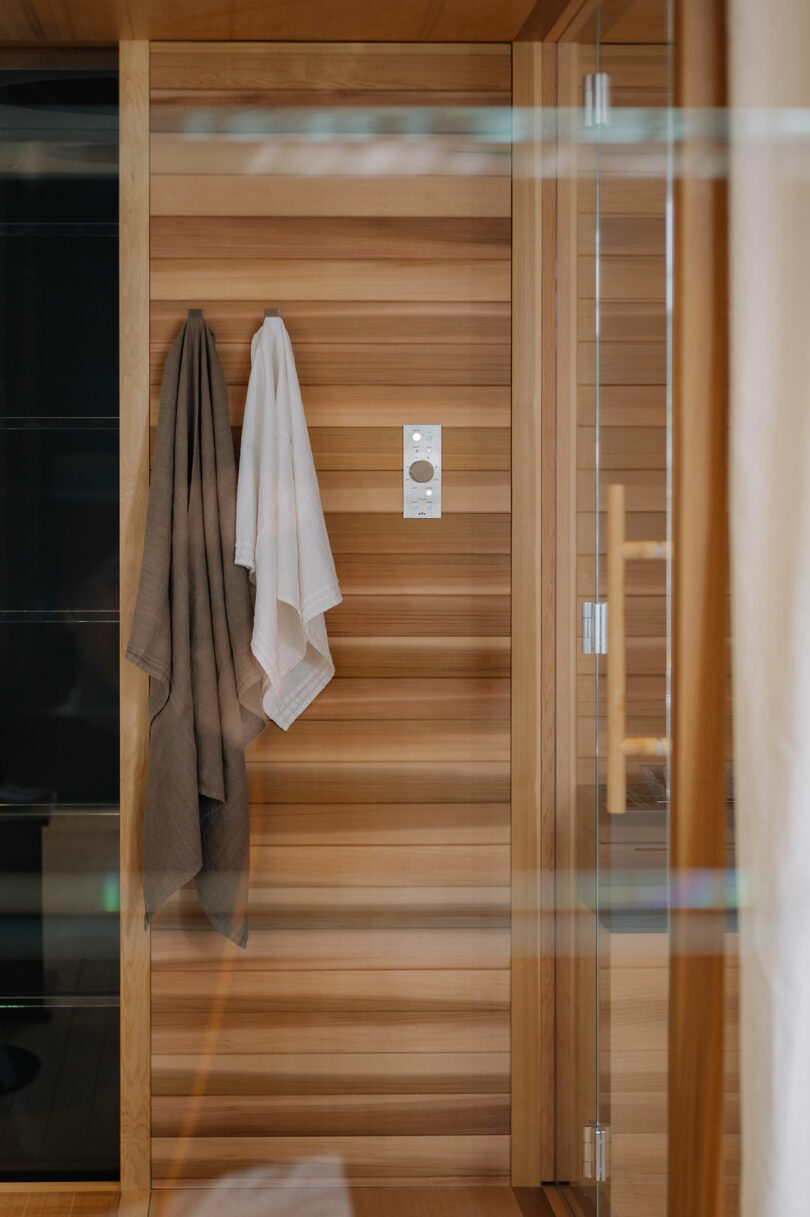
Wood-paneled sauna interior with a white and a gray towel hanging on hooks next to a control panel and a glass door.

A close-up of a silver control panel with buttons and a knob mounted on a wooden wall, likely inside a sauna or wooden room.

It’s standardized but given its sober aesthetic, it can blend-in easily, become part of a place and then be removed if so desired without much impact. The endless configuration of its components makes it far more agile than “placemaking” strategies that are far more set in stone, literally and figuratively.

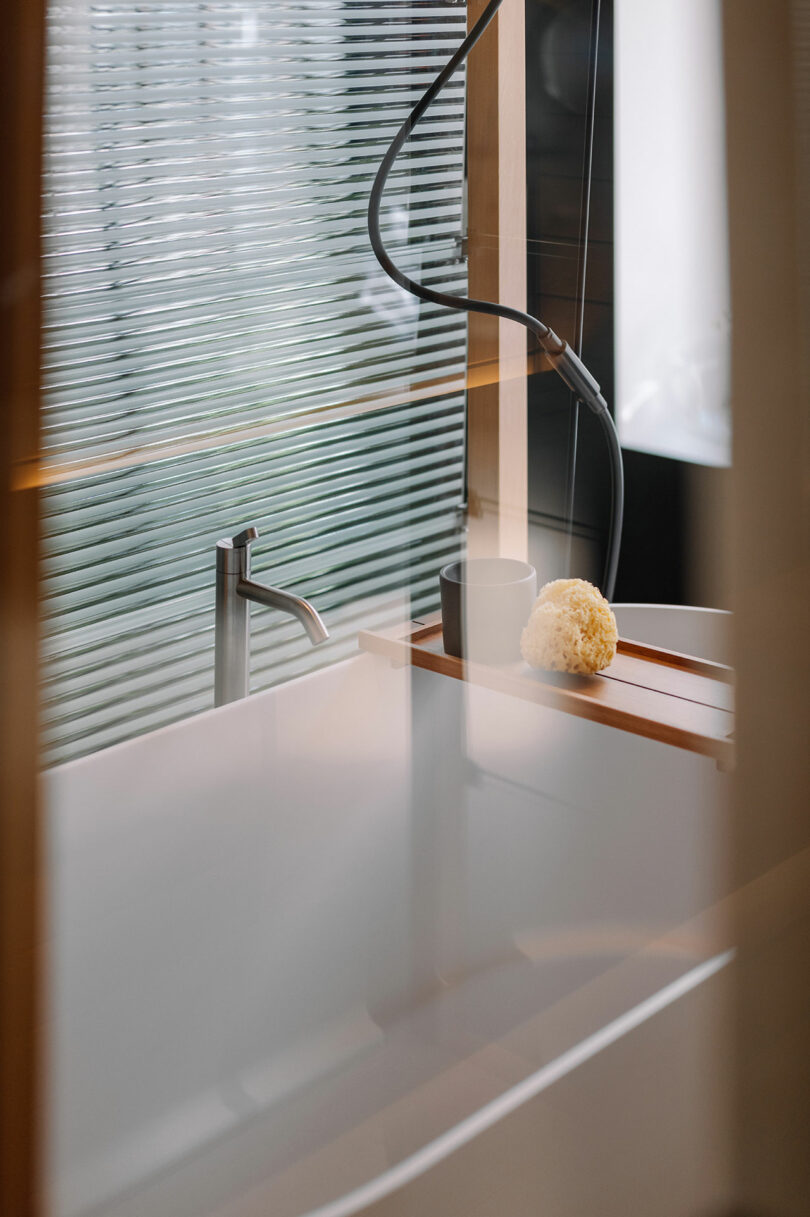
A modern bathtub with a wooden tray holding a yellow sponge and a cup, set next to a silver faucet and a handheld showerhead.

To learn more about the Pavilion Sei by Nicholas Bewick and Agape, please visit agapedesign.it.

Photography courtesy of Agape.

Read the whole story
mkalus
2 hours ago
reply
iPhone: 49.287476,-123.142136
Share this story
Delete

If AI coding is so good … where are the performance numbers?

1 Share

AI coding bros right now are super-impressed with the latest version of Claude Code. This is a game changer! It’s is the future! You can’t deny it!

And you know. It turns out I can deny it — if they can’t give numbers to back up their claims. Because we can and  have measured AI coding effectiveness. We have a methodology. The AI bros just don’t want to measure. Wonder why that is.

We have one public study of AI coding performance that applied any reasonable methodology to the coding itself. That’s the METR study from July last year.

METR got 16 experienced open-source developers with “moderate AI experience.” The devs fixed real bug reports in their own projects. They used either Cursor with Claude Code or no AI help, at random.

METR actually screen-recorded and timed the work. The devs said they’d worked 20% faster — but they’d actually been slowed down by 19%. [blog post; paper, PDF]

And that’s why you have to measure. Vibe self-reports are wrong. You must measure.

The METR report itself is modest in its claims and lists all its obvious problems, they’re very scrupulous. It’s only sixteen subjects, n=16 — though that beats the usual n=1 anecdote, or n=0 given it’s always just vibes. METR uses early 2025 coding models, and all the bros will tell you the models are so much better three months in the future. (Whatever today’s date is.)

But if you’re not measuring, you’re just wasting everyone’s time spouting vibes.

AI bros keep refusing to understand the concept of measurement. I ask for measurements, they tell me how vibe coding feels so great! They say measuring coding performance just isn’t possible. I say METR literally did it, they say the METR study is outdated — but they do not redo the METR study better. They just want to pretend the METR study never happened.

And by the way, METR are huge AI coding fans. They’re literally AI doomsday cultists from the Effective Altruism subculture, they write studies about AI doomsday. METR were completely surprised by the numbers they got.

I’m not putting forward the METR study as some sort of gold standard. I’m saying that AI bros aren’t even bothering to meet this extremely low bar.

C’mon. Is there really nobody who can do a better job than the AI doomsday nutters?

Measuring your own performance isn’t hard. We talked in September about Mike Judge, who thought AI coding made him so fast — then he looked at the METR study, he measured his own performance properly, and it wasn’t really a big enough sample, but the numbers he had showed the AI had slowed him down about 20%.

Every AI proponent dismisses the METR study — but there doesn’t seem to be a single study since that’s even to that standard of actually measuring the work.

A lot of bros answer, but I just looove vibe coding. Look at all my vibe code! But if you can’t bring numbers, you’re wasting everyone’ s time. The bros are yelling vibes at people like they forgot what measuring is.

I saw one AI advocate put forward the 2025 DORA Report as more up-to-date evidence than the METR report. DORA is a unit of Google Cloud. The AI bros love the DORA report because it’s an unashamed promotion for AI. DORA says: [DORA, PDF, archive]

AI’s primary role in software development is that of an amplifier. It magnifies the strengths of high-performing organizations and the dysfunctions of struggling ones.

So if you get bad results from AI coding, you must be organising wrong!

What was DORA’s methodology?

Drawing on qualitative data and a global survey

DORA didn’t measure coding performance at any point. They asked devs how they felt about it. Then they literally drew graphs of the vibes! They even put error bars on their graphs of vibes! ’Cos that turns vibes into data, right?

Anyone who answers the METR study with the DORA study didn’t understand the question.

DORA did show that AI really speeds up feature delivery! You can tick off so many story points!

But this is well known — AI tools fix bugs, and they also add more bugs. One Jira leaves, three Jiras enter.

AI coding tools have improved. Now, instead of obvious bugs, they create subtle bugs.

In fact, IEEE Spectrum ran a story where an ardent vibe coder notices exactly that: “AI Coding Assistants Are Getting Worse: Newer models are more prone to silent but deadly failure modes.” [IEEE]

A task that might have taken five hours assisted by AI, and perhaps 10 hours without it, is now more commonly taking seven or eight hours, or even longer. It’s reached the point where I am sometimes going back and using older versions of large language models.

I strongly suspect a lot of the noisiest Claude Code fans had it do something for them apparently right, and they were completely one-shotted by it. They will do anything just to get that high one more time.

When these guys insist that Claude is so much better now? Show me the numbers for that. Or I don’t have to take you seriously at all.

Read the whole story
mkalus
2 hours ago
reply
iPhone: 49.287476,-123.142136
Share this story
Delete

This Nightclub-Inspired Speaker Is Transparent Both in Name and Assembly

1 Share

This Nightclub-Inspired Speaker Is Transparent Both in Name and Assembly

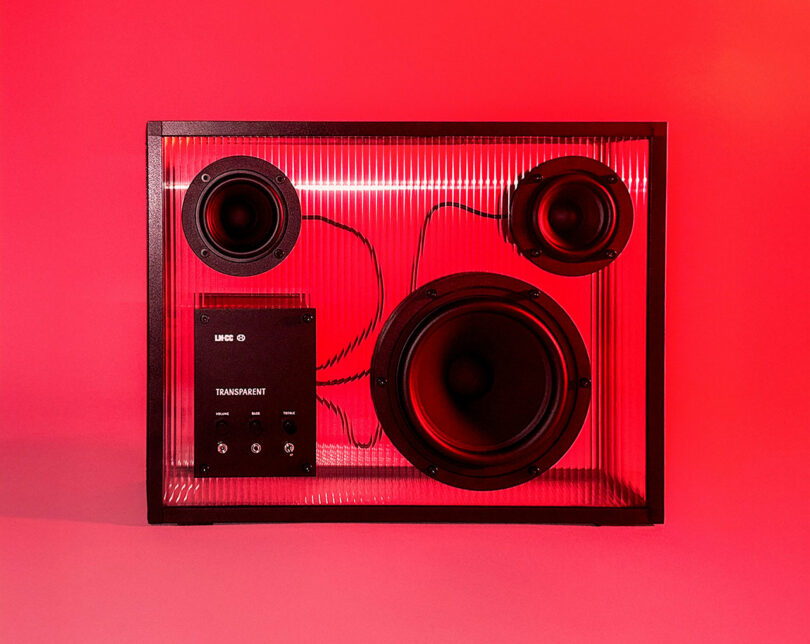
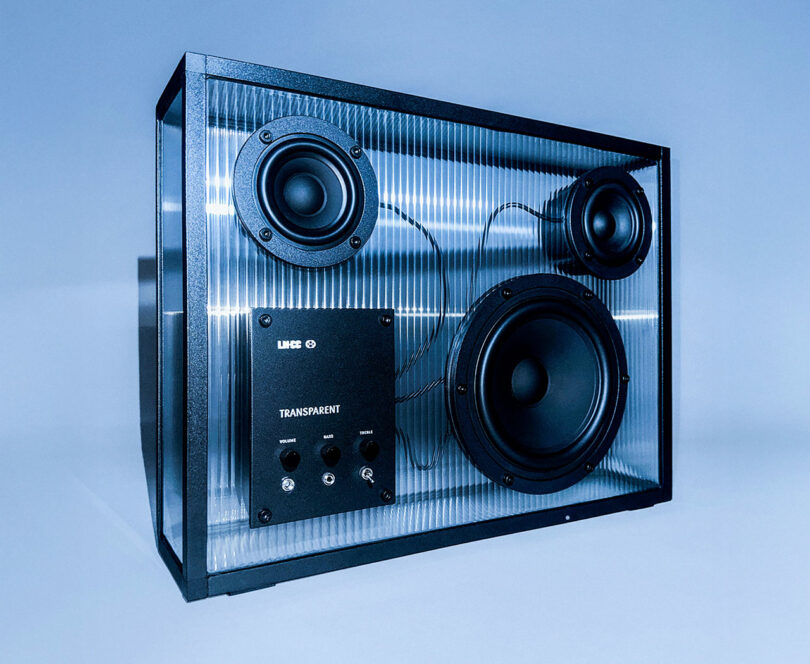
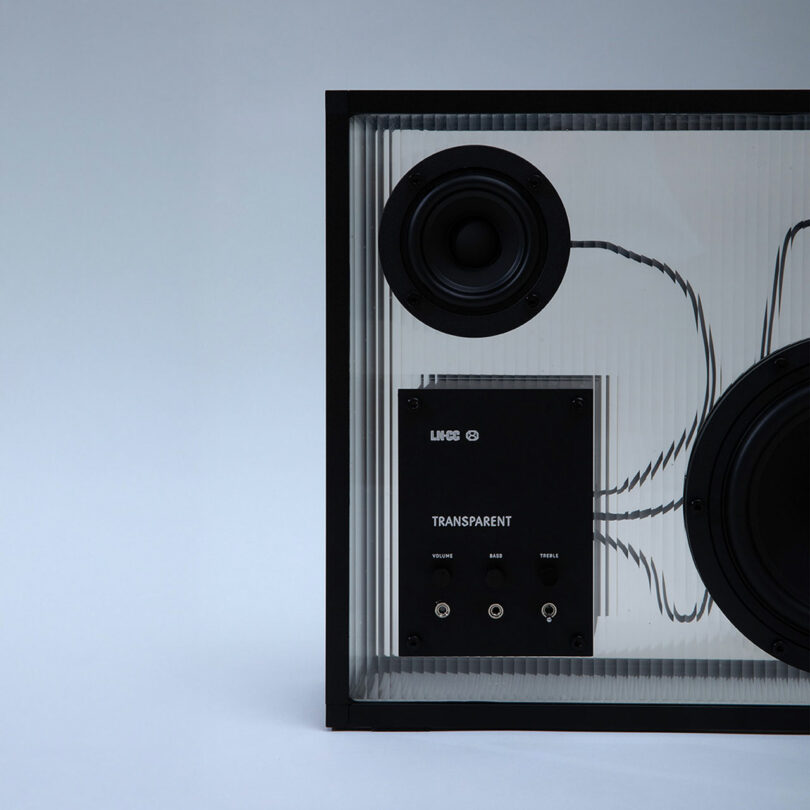
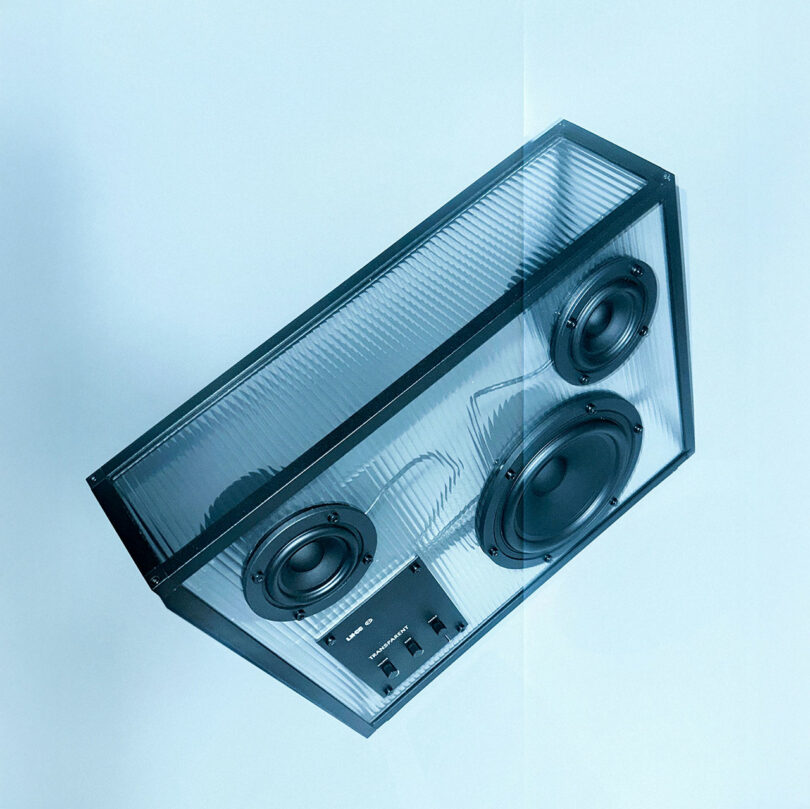
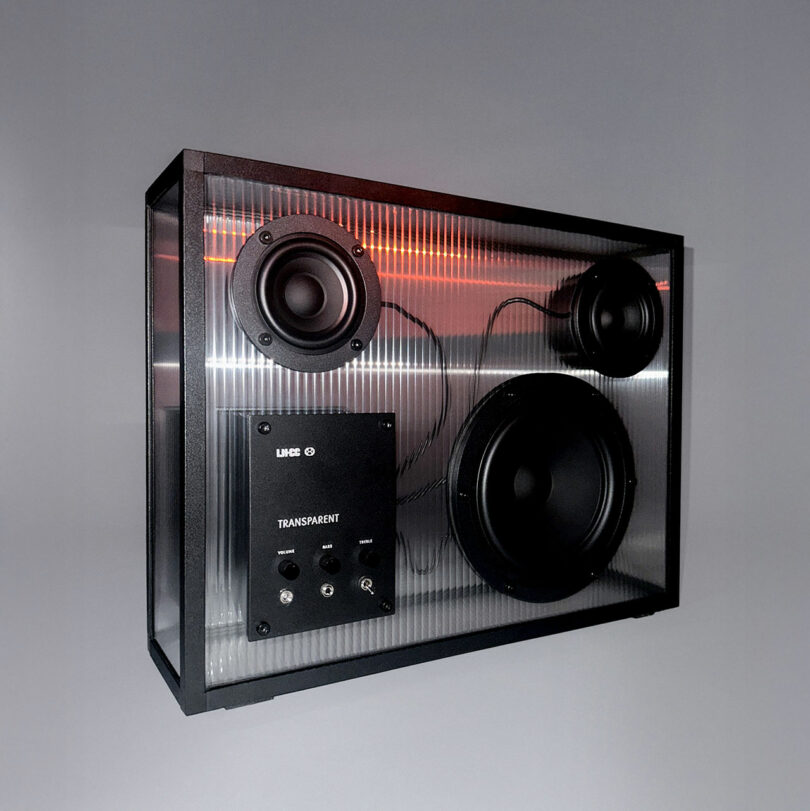
L8te was established by multifaceted British lifestyle brand LN-CC as a versatile, event-ready venue for music and performance. In 2025, the London hot spot played host to the company’s We Love Music era program as part of its 15th anniversary celebration. To mark the occasion, LN-CC teamed up with respected Swedish audio gear producer Transparent to develop the Transparent Speaker x LN-CC, a limited edition of 15 speakers emulating the 1970s style interior design of the ever-popular club but that also holds true to the tech company’s guiding ethos of circularity.

A transparent speaker with a black frame, showcasing its internal components including three speaker cones and control knobs, set against a blue background.

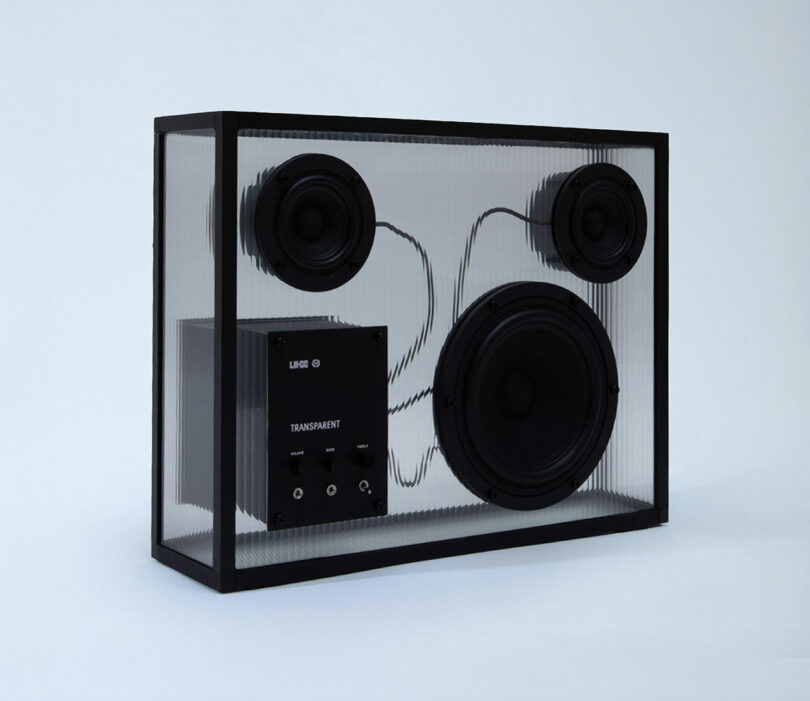
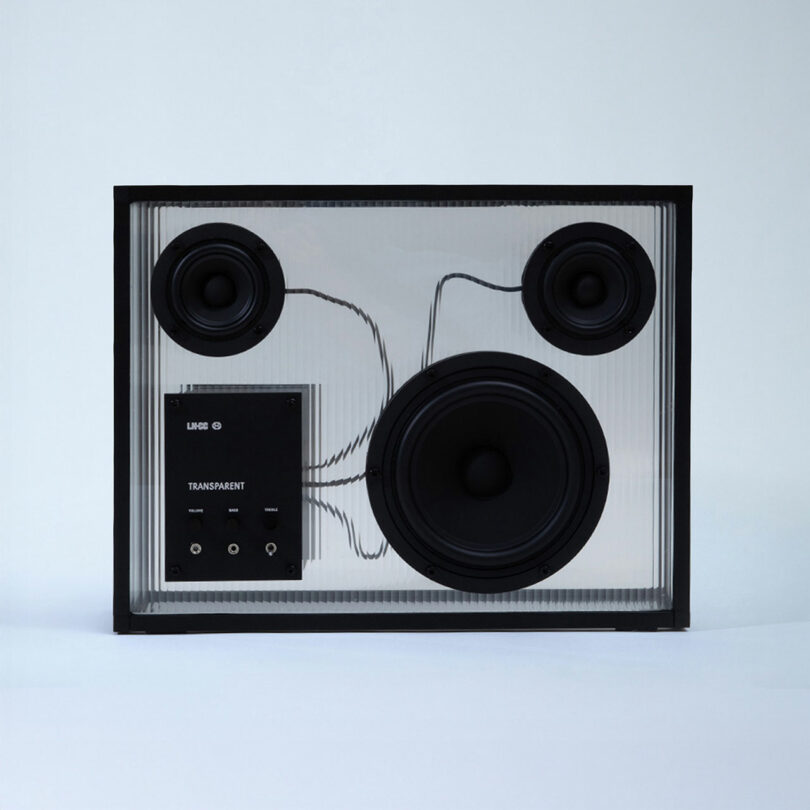
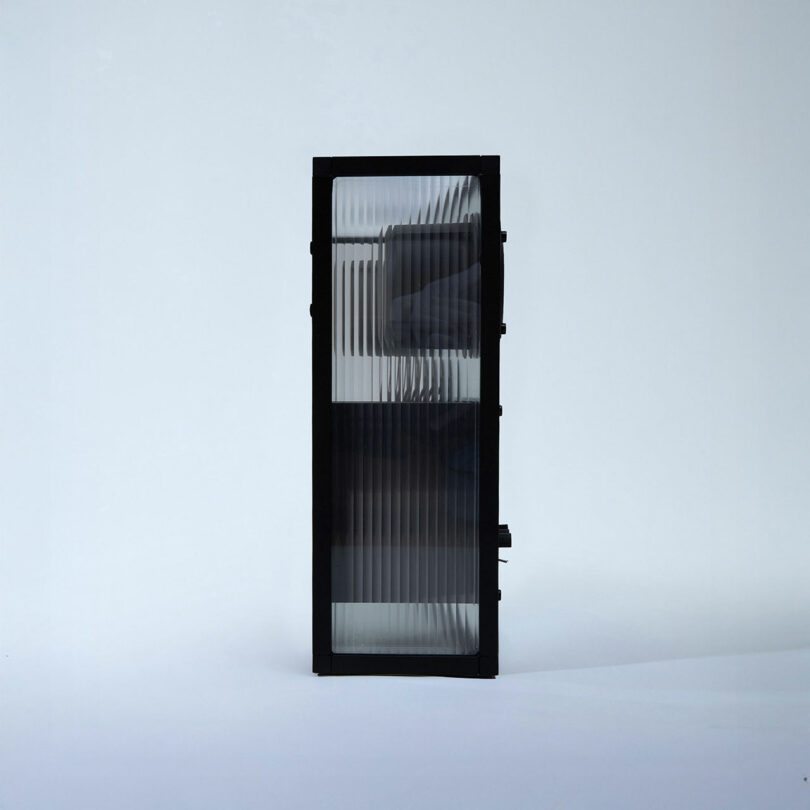
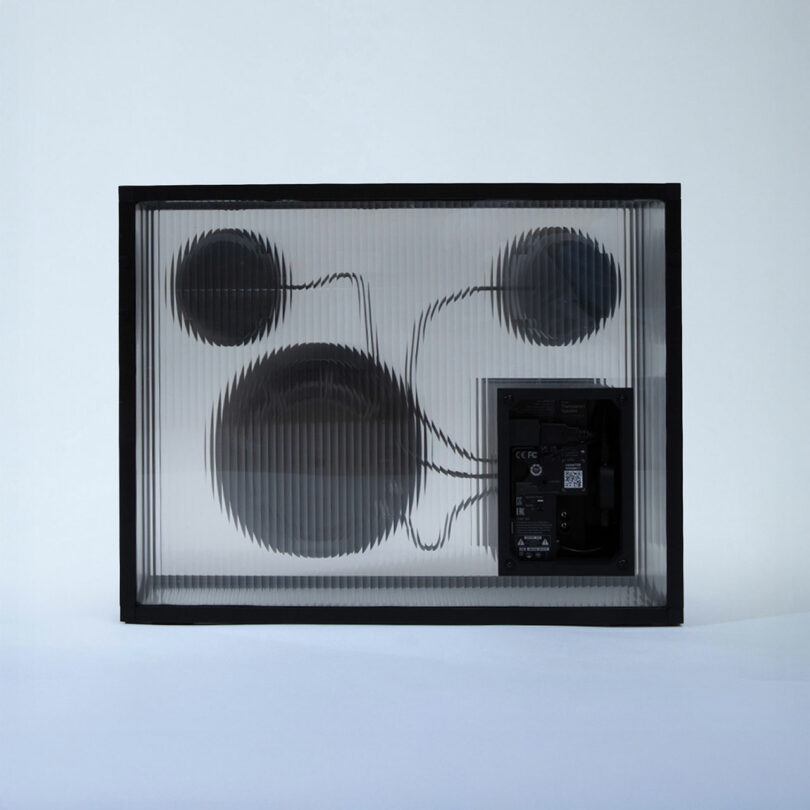
The speaker’s main feature: a semi-translucent rippled glass shell directly pulled from L8te but that also reflects Transparent’s philosophy of honest assembly and the sustainable proposition of unencumbered adaptation – the ability to easily change out and upgrade various components. It’s not often that a distinctive architectural feature can become an integral part of music equipment without turning into a digestible gimmick. The marriage of these impetus – both explicitly referential and functional – works well. At L8te, the striated material covers various walls and illuminates in a wide spectrum of colors to create various moods.

A rectangular transparent speaker with visible wires and components, including three round speakers and control knobs on the front panel, set against a plain light background.

A black-framed, transparent speaker with visible internal wiring, three circular drivers, and a control panel labeled “Transparent” on a plain light background.

With 120W output, the Bluetooth 5.0 ready speaker is no less powerful than other models with Transparent range. All of the pared-back electronics essential to the device’s superior performance are evident – unconcealed and demystified. There’s very little superfluous apparatus and no fused-together material as is more common in other tech products. These elements are often intentionally engineered to be hard to dismantle so that consumers constantly buy new rather than retrofit older devices. Transparent’s approach, in this regard, is not just aesthetic but also substantive.

Close-up of a transparent speaker with visible internal wires, control panel, and audio input ports against a plain background.

A rectangular, vertically oriented black object with a ribbed, semi-transparent front panel is centered against a plain, light background.

The experience of listening to music, especially in an ethereal, dimly lit club, can seem fleeting. Holding onto a tangible fragment of that moment is not always feasible. By carefully extracting a physical element – one that is also structurally sound and appropriate in this application – of the space in which that occasion took place is a clever solution. This memento of sorts is refined and efficient, as much as sentimental and even nostalgic.

Rectangular framed object with translucent, ribbed front panel revealing four circular shapes and visible black wires inside.

A transparent speaker with visible internal components, including two midrange drivers, a woofer, and a control panel, set against a light blue background.

Wall-mounted transparent speaker with visible internal components, black frame, and a faint red light illuminating the background.

To learn more or to purchase one of the 15 Transparent Speaker x LN-CC speakers, visit ln-cc.com.

Photography courtesy of LN-CC.

Read the whole story
mkalus
14 hours ago
reply
iPhone: 49.287476,-123.142136
Share this story
Delete

Cubo Design Architect Builds a House Around Light on Water

1 Share

Cubo Design Architect Builds a House Around Light on Water

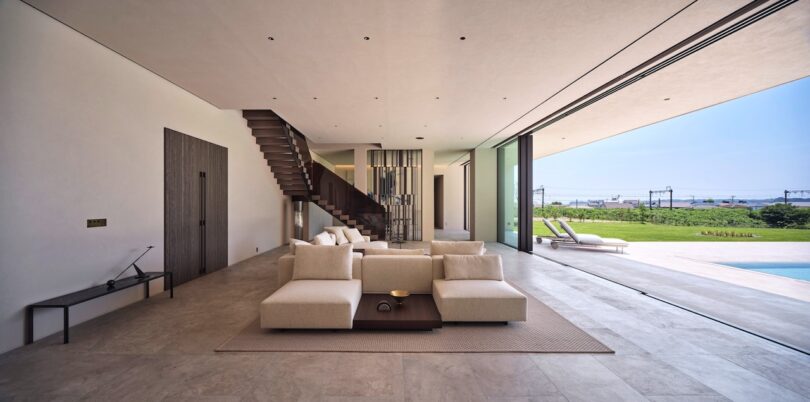
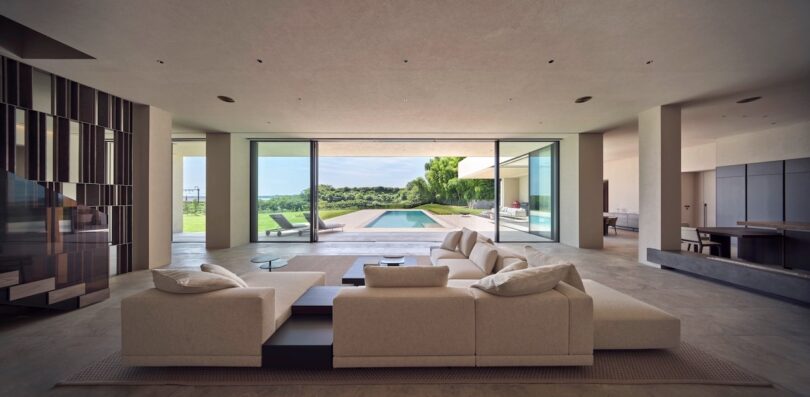
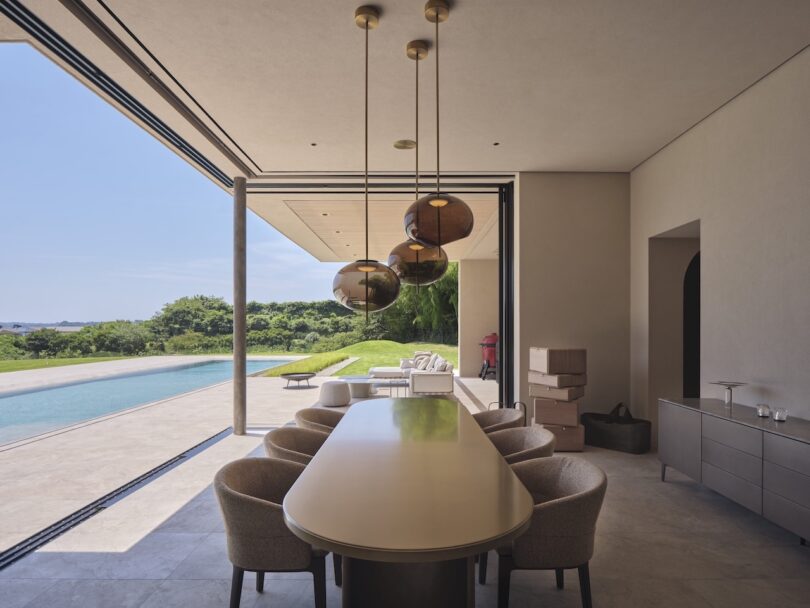
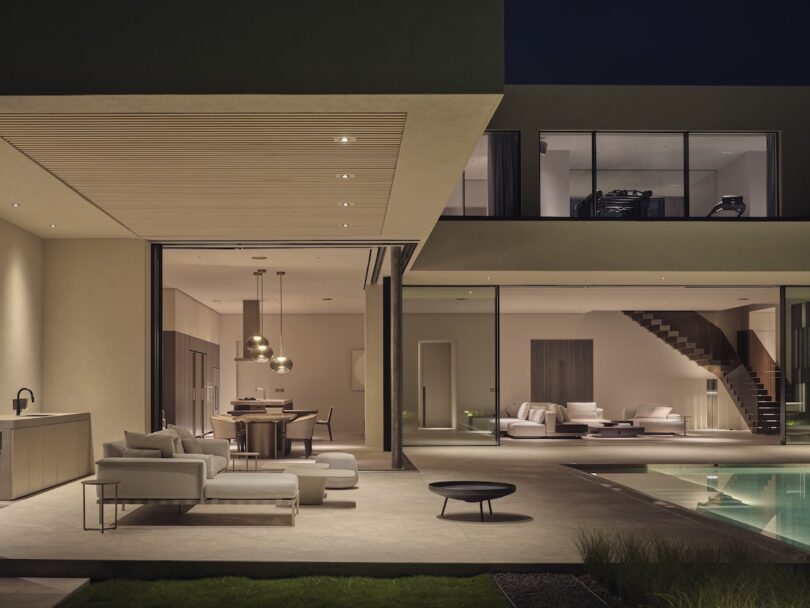
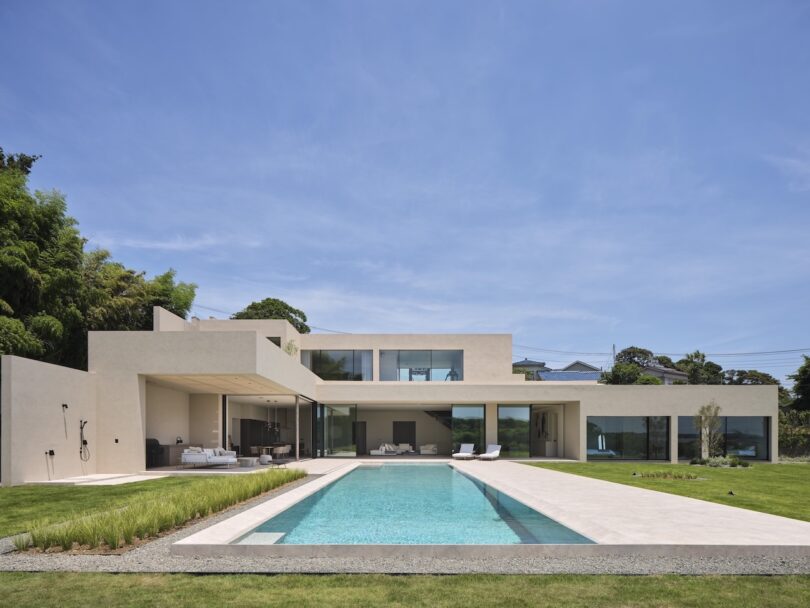
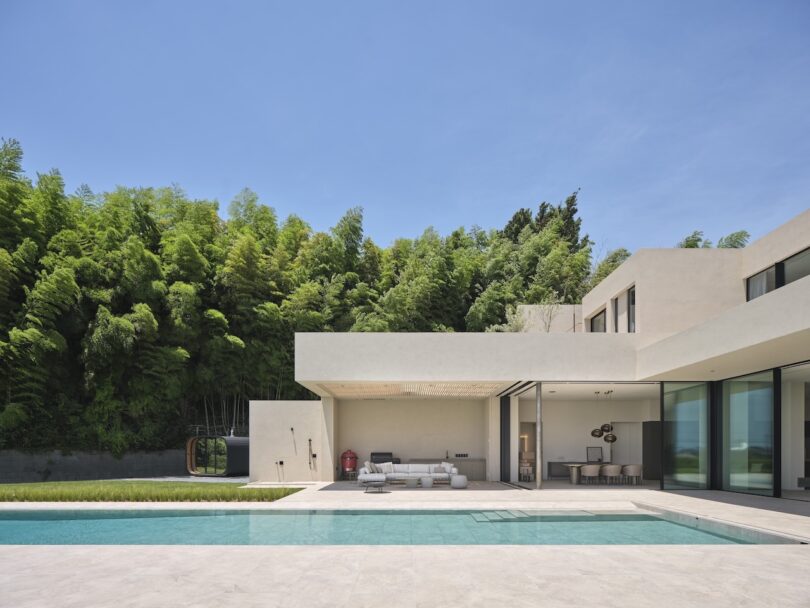
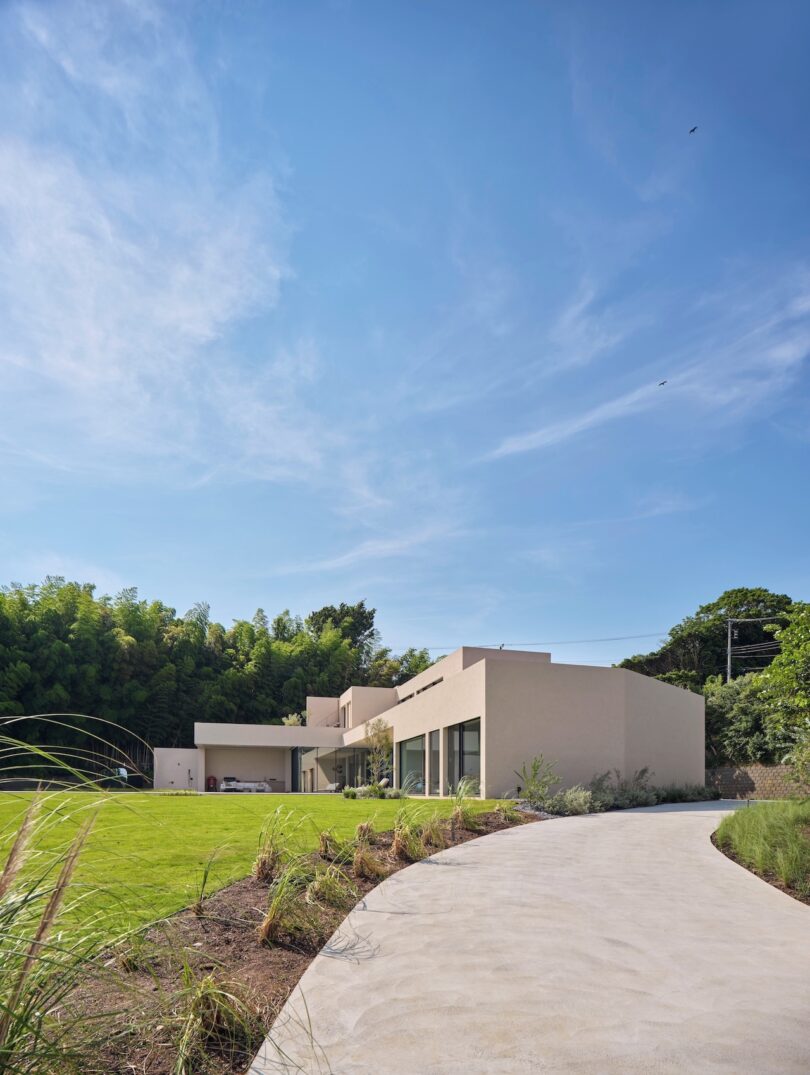
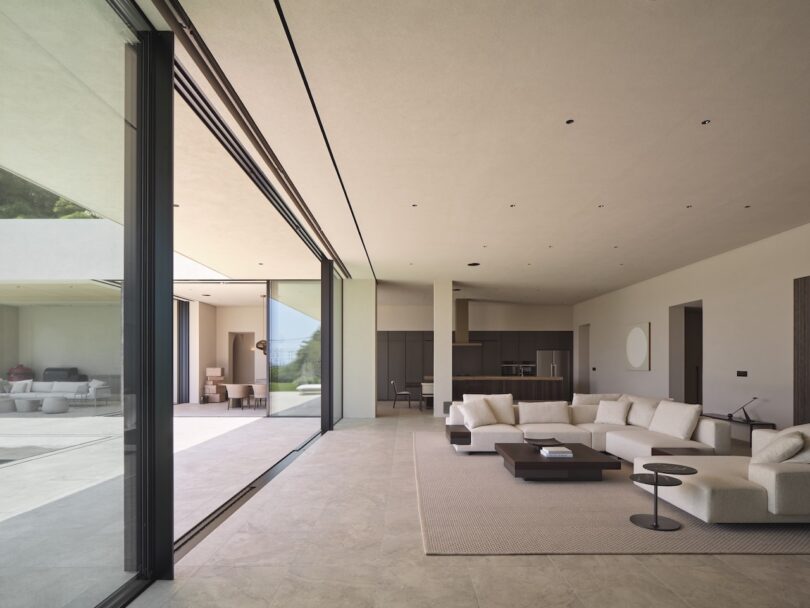
In the coastal terrain of eastern Japan, where salt air drifts through bamboo groves and mandarin orchards slope toward the Pacific, Cubo Design Architect conceived 10M, a residence that makes water its organizing principle. The home features 56,000 square feet of gently inclined land, creating the stage for an architectural project structured entirely around its 65-foot swimming pool, which functions less as recreational amenity than as generator of light, rhythm, and atmospheric presence.

Modern living room with beige sofas, a wooden coffee table, and an open wall leading to a patio, pool, and outdoor lawn with lounge chairs and a view of the ocean.

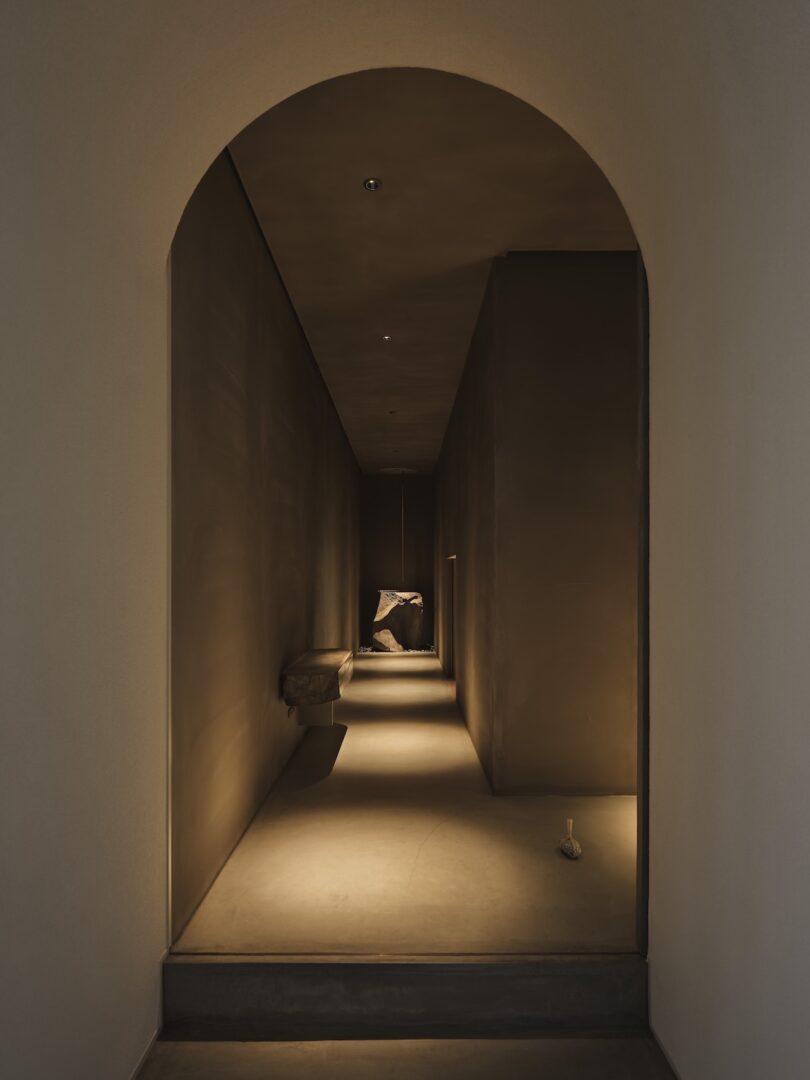
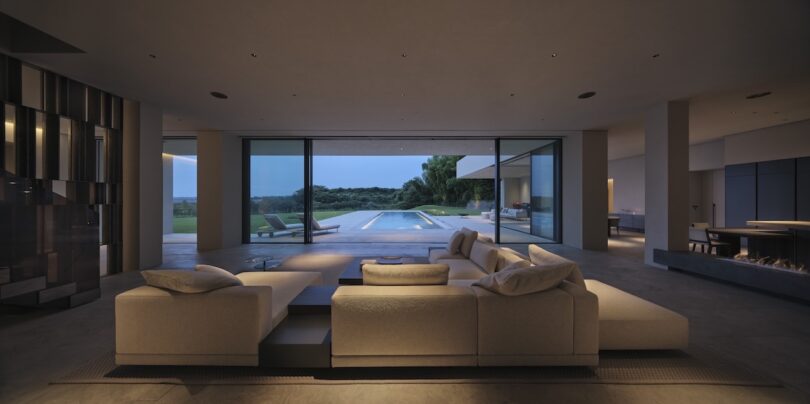
The pool establishes the compositional spine, aligned deliberately with the citrus grove to the south. The architecture unfolds from this axis, all while keeping water as the home’s focus. The surface of the water catches fragmenting sunlight, creating a sparkle perceptible from every interior space. The manipulation of spatial sequence draws directly from Sukiya-zukuri architecture, the restrained aesthetic tradition formed from Japanese tea ceremony spaces. The entry unfolds through compression and release – a cave-like approach tunnel opens to a dim gallery, then through wide doors into the pool-facing expanse. The design forces adjustment of the eyes, amplifying perceived luminosity through controlled contrast.

Modern living room with beige sectional sofa, glass coffee tables, and large sliding doors opening to a patio, pool, and landscaped garden with trees and distant hills.

Modern dining area with a long table and chairs, pendant lights above, and large open doors leading to a pool and garden view; several boxes are stacked near the wall.

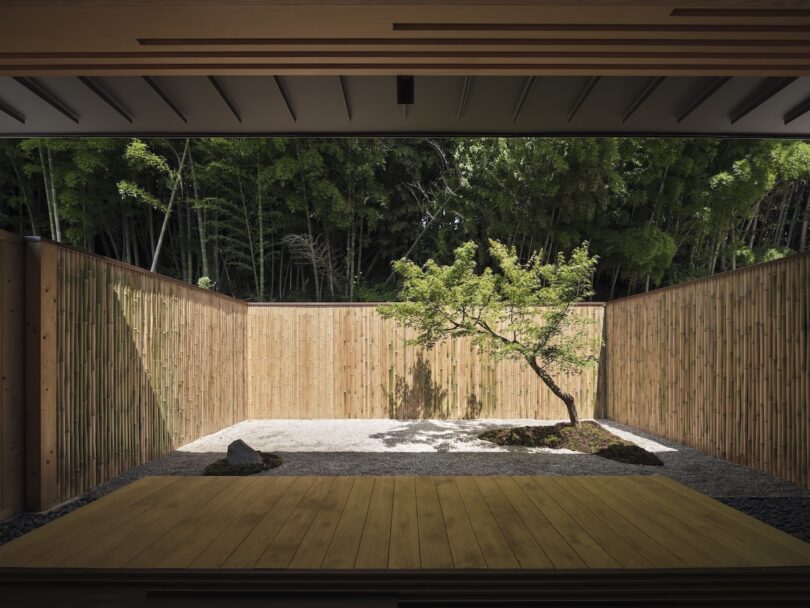
The embedded tea room pushes this material and atmospheric precision through the function of the residence’s terminus. It borrows views into neighboring bamboo while deploying traditional elements – bark-wrapped columns, natural plaster walls, compositional gestures sourced from the 16th-century tea master Sen no Rikyū – with the architects creating their own reinterpretation.

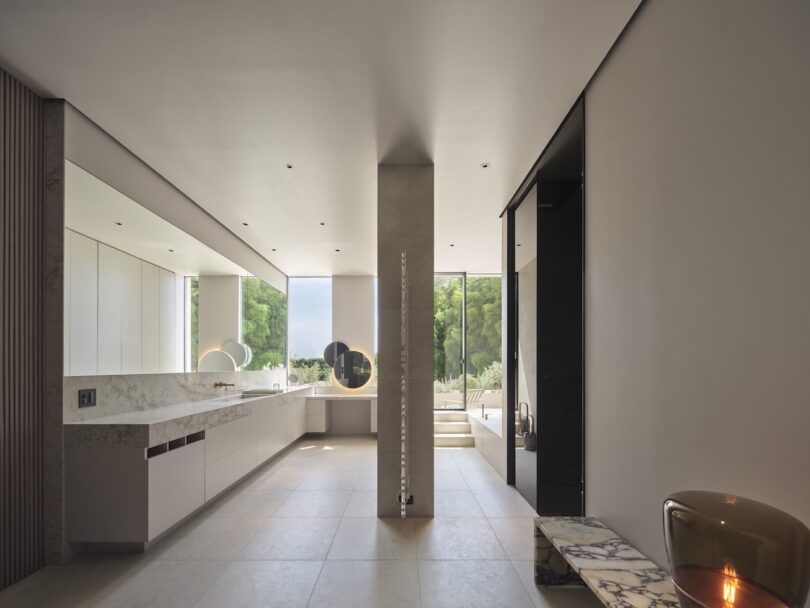
Spacious modern bathroom with large mirrors, marble countertops, a freestanding bathtub, floor-to-ceiling windows, and neutral-toned walls and floors.

A minimalist Japanese garden with a single tree, gravel, and moss is enclosed by bamboo fencing, viewed from a wooden deck with bamboo forest in the background.

A dimly lit, narrow hallway with smooth brown walls, arched entryway, and a single stone bench along one side, leading to a softly illuminated area at the end.

The pared palette and minimal detailing function as perceptual training, heightening awareness of environmental shifts that richer surfaces might obscure. Wind in bamboo, water ripples, bird calls, and distant surf are framed as primary content rather than backdrop. Supporting this domestic life are functional insertions handled with equal economy – wine storage, guest quarters, fitness space, all subordinate to the larger atmospheric project.

Modern living room with a sectional sofa facing large glass doors that open to a pool and patio, with a scenic outdoor view at dusk.

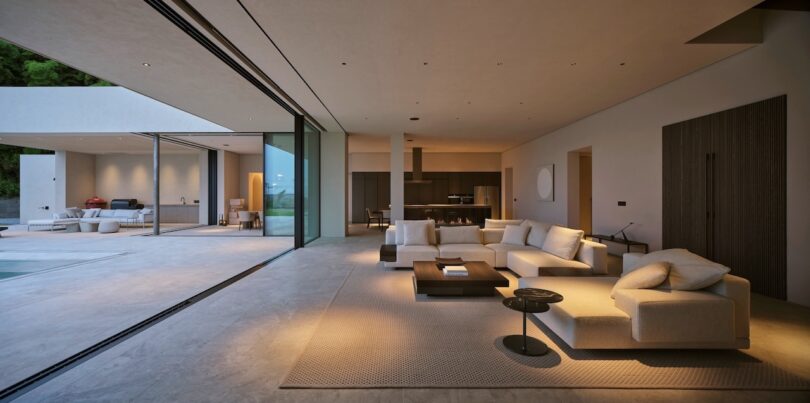
Modern open-plan living room with large sectional sofa, coffee tables, and view into a contemporary kitchen and outdoor patio area, illuminated by natural and interior lighting.

Modern house at night with large glass windows, outdoor seating area, pool, and view of an open-plan interior with dining and living spaces.

Modern two-story house with flat roofs, large glass windows, and a rectangular swimming pool in a landscaped backyard under a clear blue sky.

Modern house with large windows, outdoor lounge area, and a swimming pool in front, surrounded by lush green trees and clear blue sky.

A modern, flat-roofed beige house with large windows sits beside a winding concrete path, surrounded by grass, plants, and trees under a blue sky.

To learn more about 10M and Cubo Design Architect, please visit cubod.com.

Photography by Koji Fujii / TOREAL.

Read the whole story
mkalus
14 hours ago
reply
iPhone: 49.287476,-123.142136
Share this story
Delete
Next Page of Stories