 Log in

|
Resident of the world, traveling the road of life
|


Environments designed to support smart manufacturing can be full-tilt tech and have little warmth, which echoes the lack of human connection people feel in today’s digital world. For key spaces in the MAX Zone Technology Park in Foshan, China, the Ippolito Fleitz Group embraced feng shui principles to set the tone. “The concept of Jù, or gathering, is reinterpreted within a contemporary office setting to create a multidimensional environment,” says Patrick Wu, studio director at Ippolito Fleitz Group Shanghai.
The journey begins for staff at the lobby of the sales center, where the region’s signature archways are reimagined. A delicate curtain of water encircles the reception area, reflecting the dancing dragon motif on the facade.
Woven blankets, wood carvings, and other artifacts celebrate the country’s tradition of handicrafts. On the third floor of the center, guests are treated to views of the surrounding cityscape. In the bar, handmade porcelain teacups are on view, and a coral marble countertop contrasts with crackle-effect tiles.
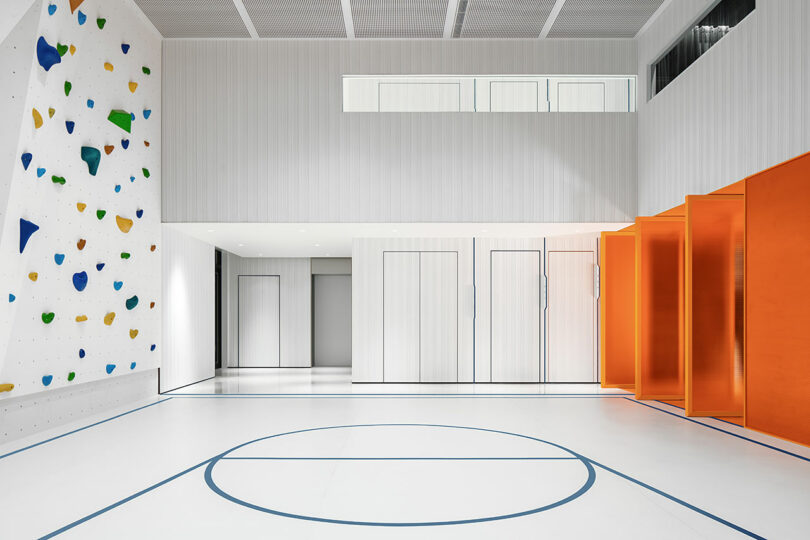
The five-floor show office captures a sense of motion. The curves of the reception desk and ceiling cutouts echo the fluid movement that happens on each level. Flagship products are highlighted on a circular display at the entrance, paired with interactive screens.
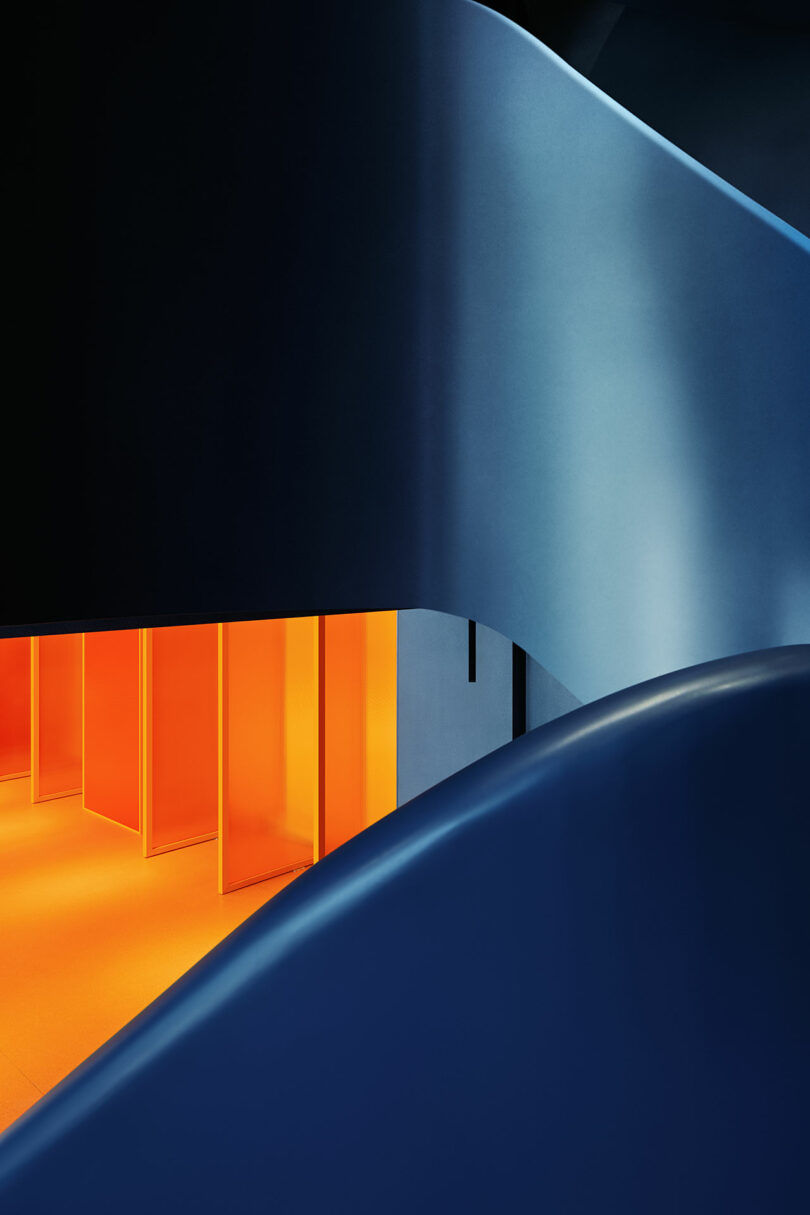
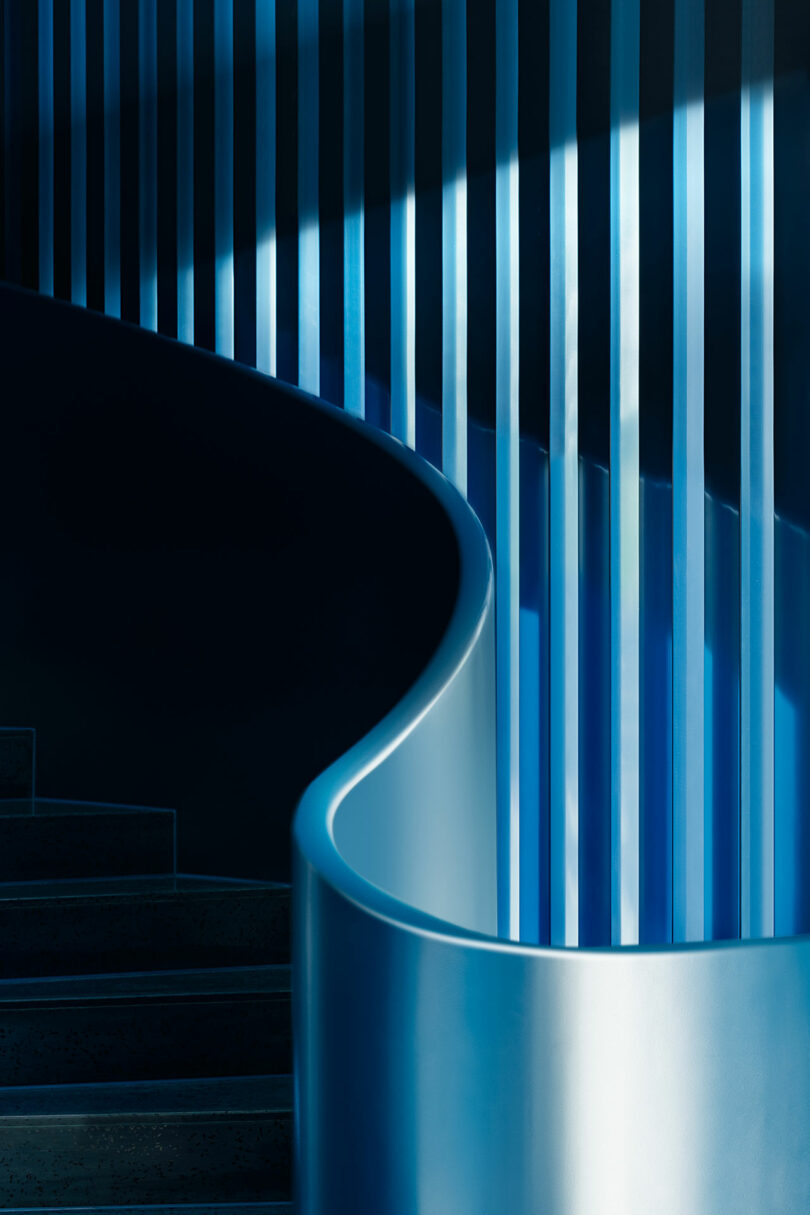
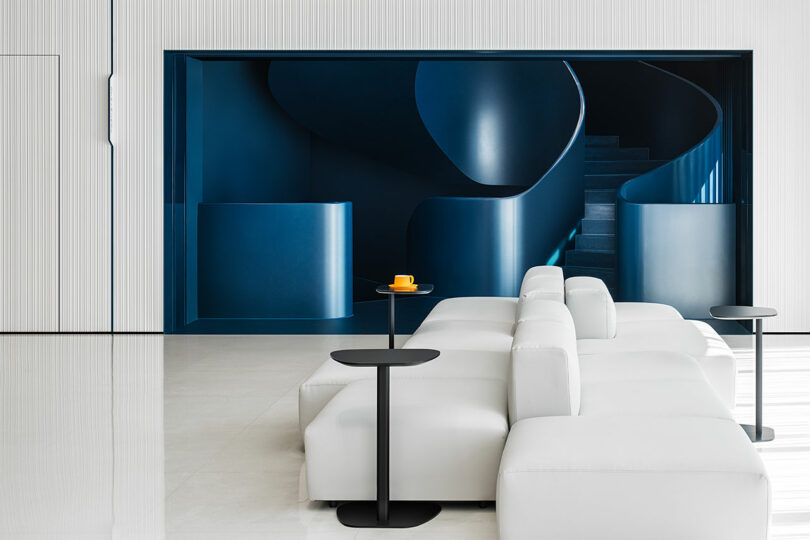
A sculptural staircase serves as a vertical link that promotes spontaneous encounters and informal meetings. The palette of blue and white tones calms, while fluorescent pops and bright orange offer striking chromatic contrasts in designated sections.

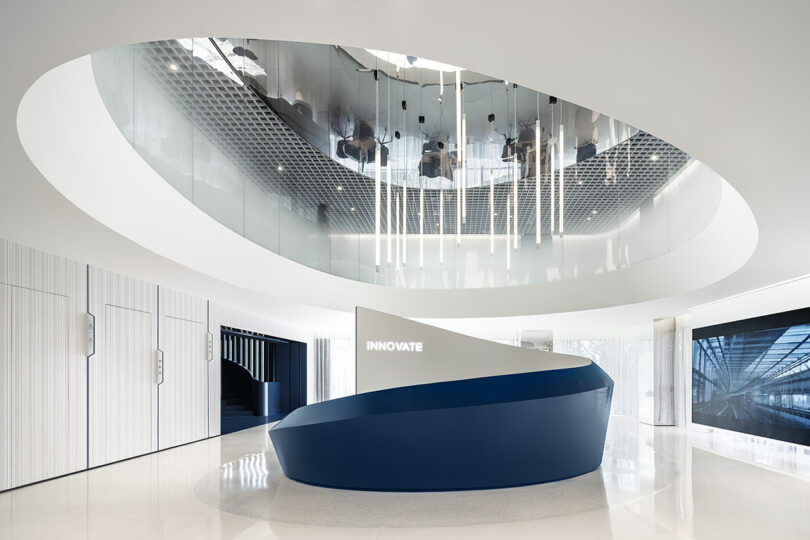
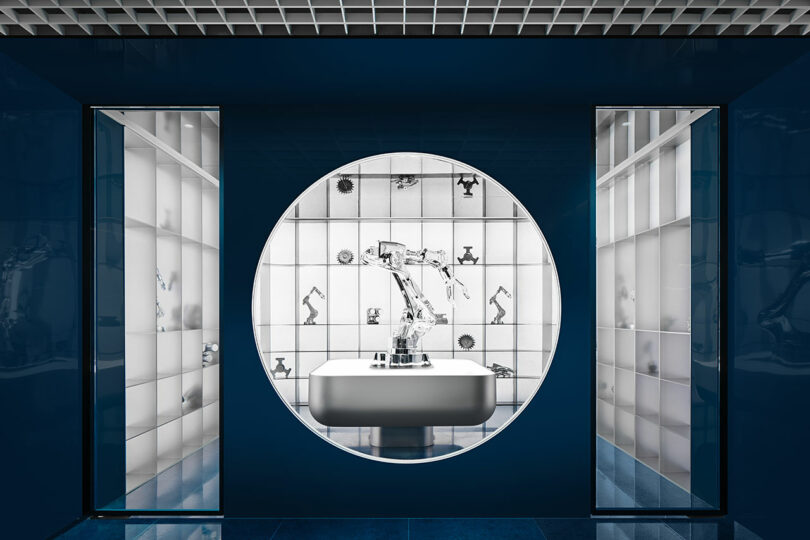
Designed for both heads-down and group tasks, the second floor of the office features a state-of-the-art conference capsule surrounded by ergonomic workstations and seminar sectors. Layouts on the upper levels spark creativity, complete with flexible workspaces, modular furniture, and adaptable partitions for just enough privacy.
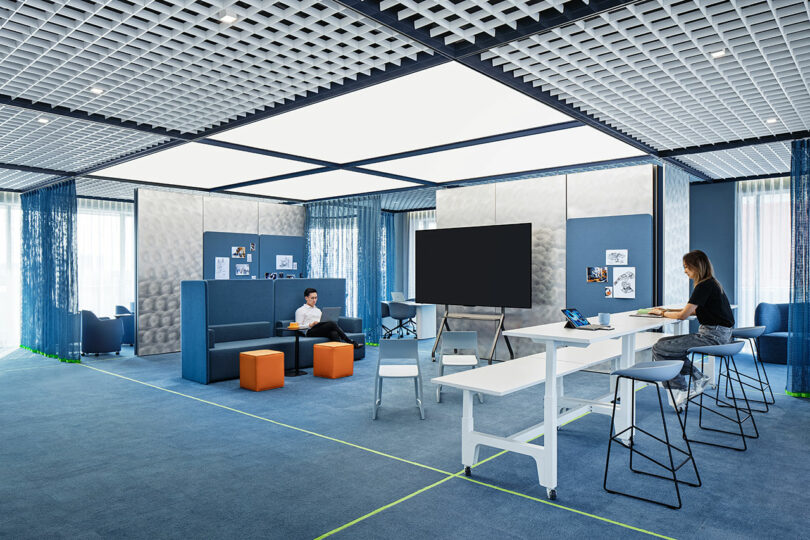
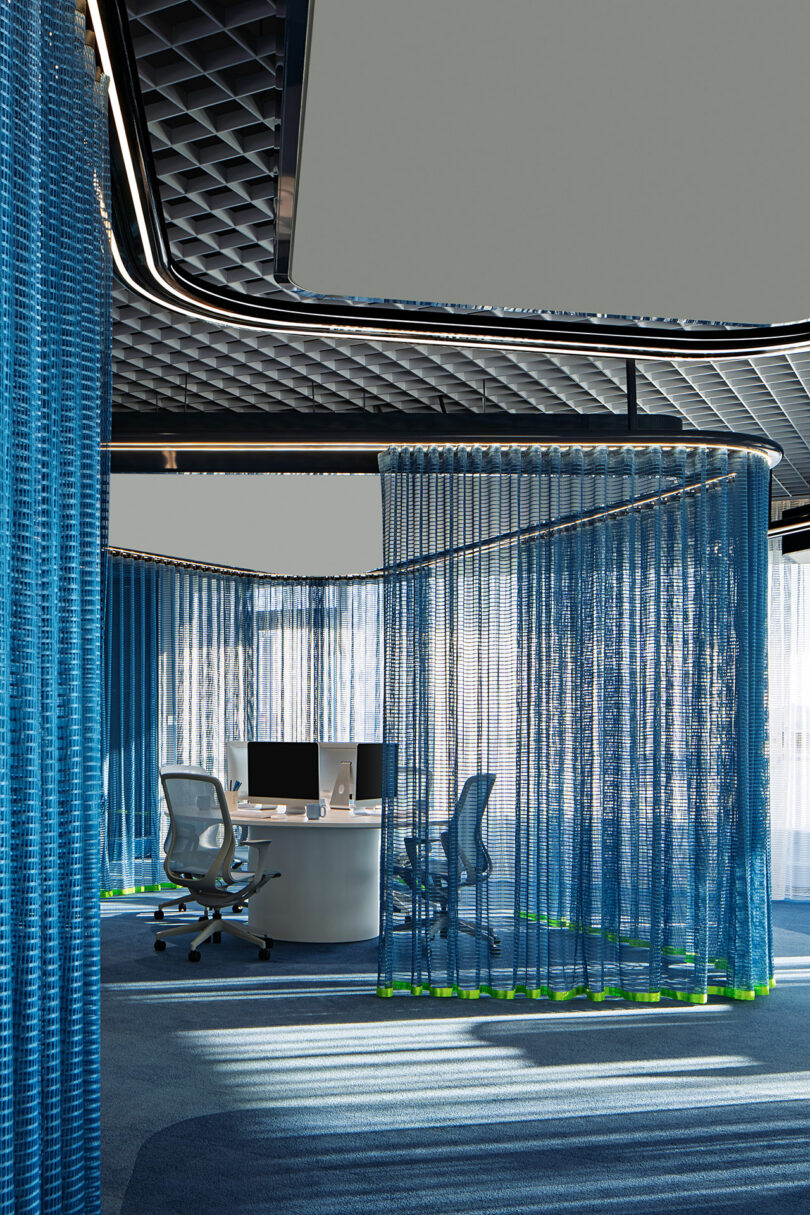
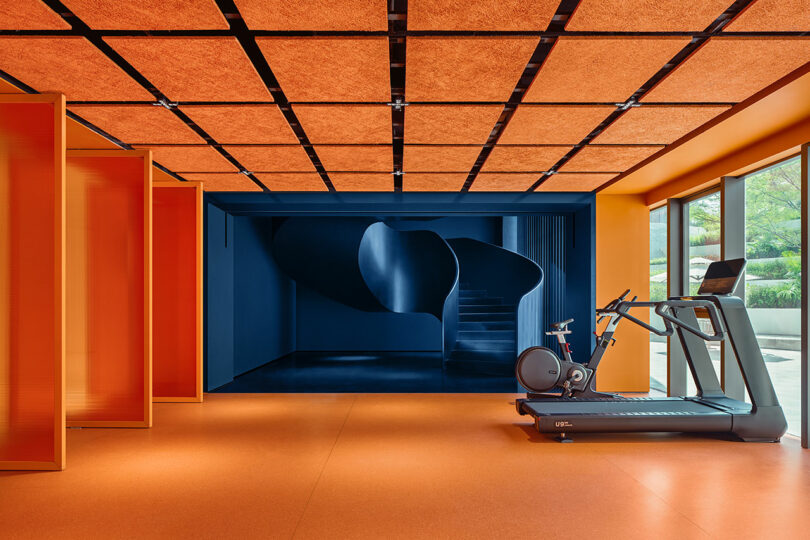
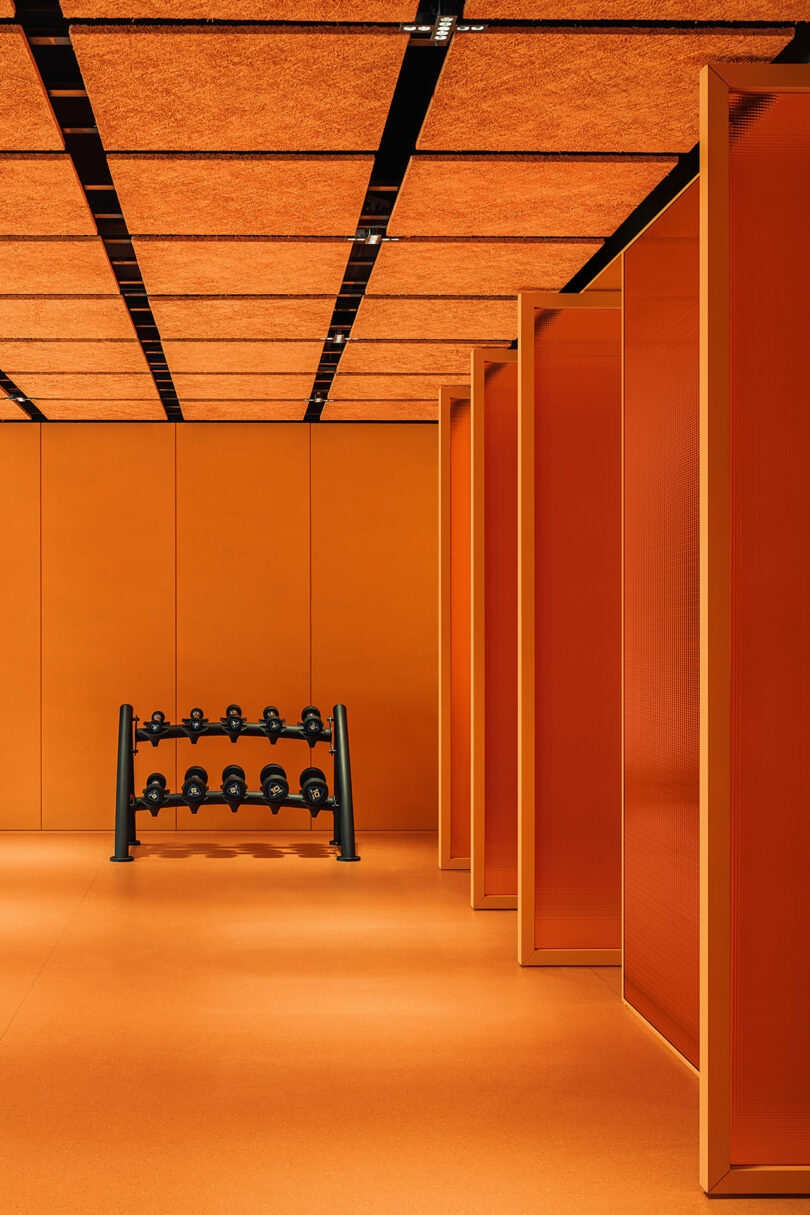
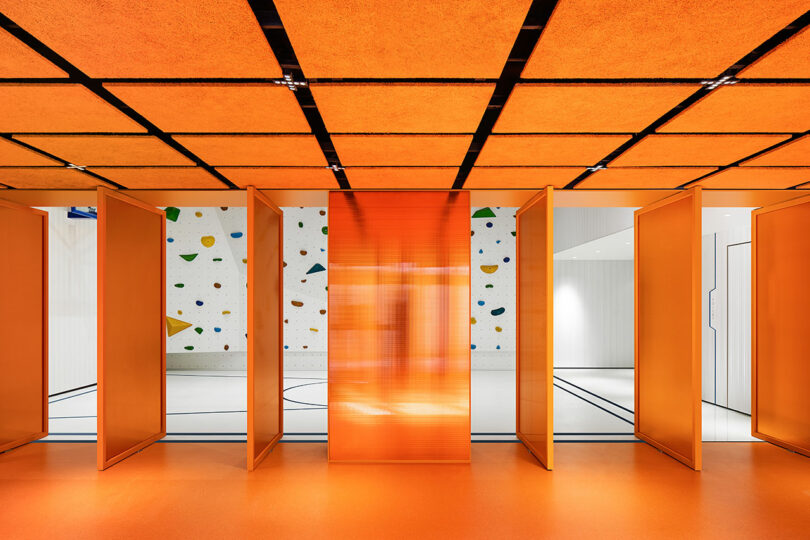
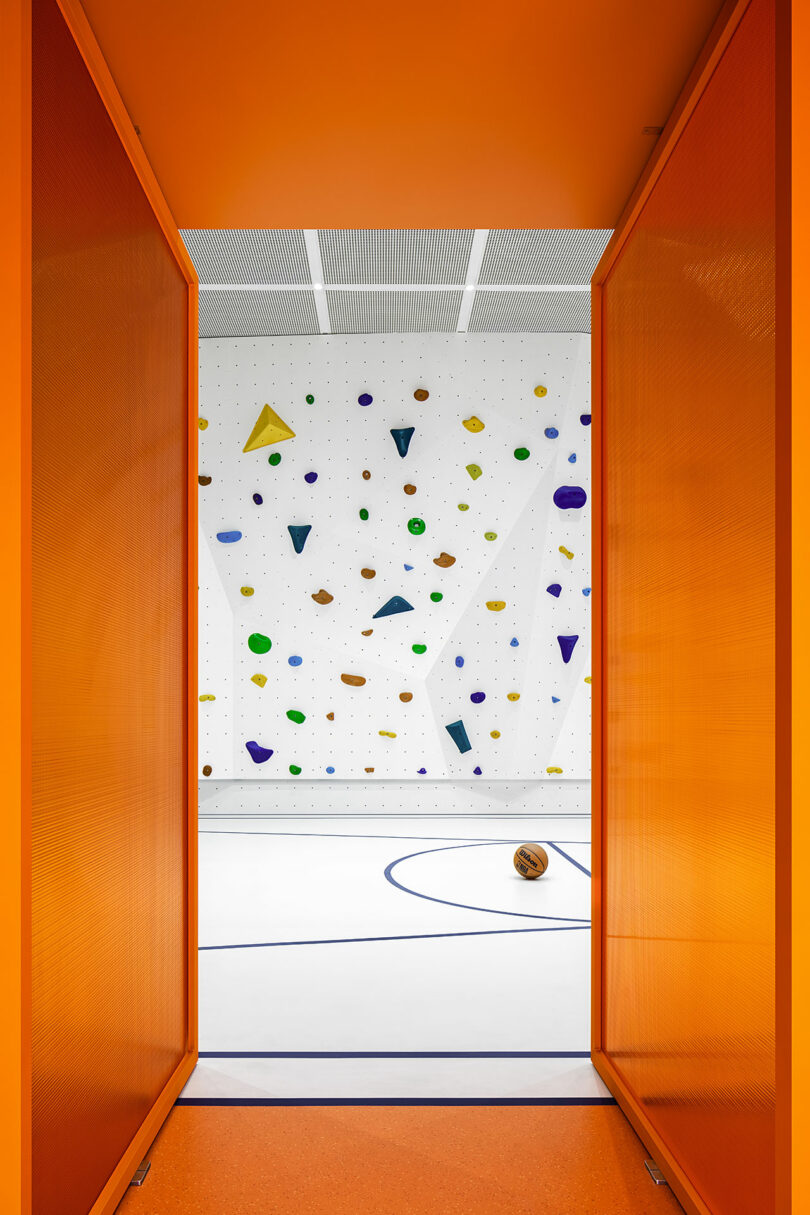
The souterrain houses basketball courts, climbing walls, and a gym so that employees can prioritize fitness or take part in a team sport. A mezzanine on this level doubles as a hospitality center, and boasts banquet spaces enclosed by faux fur curtains. The dining area offers an intimate setting for savoring meals.
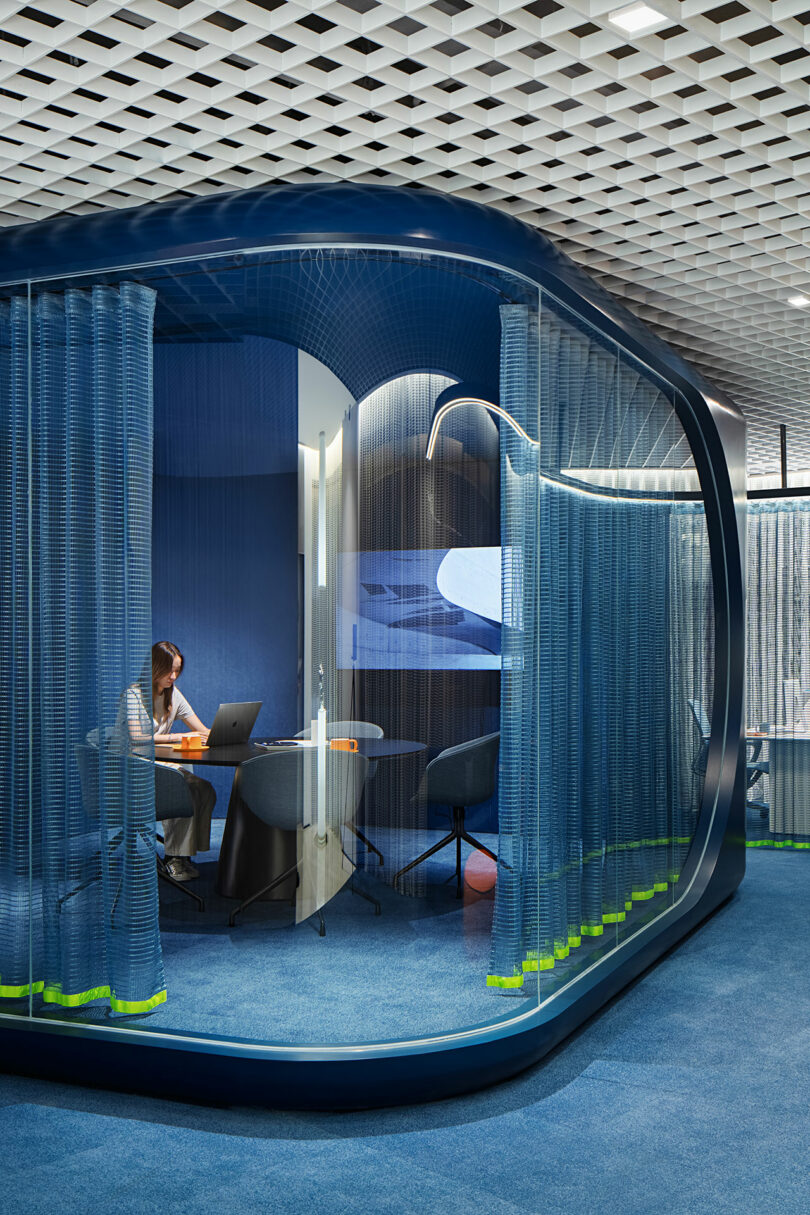
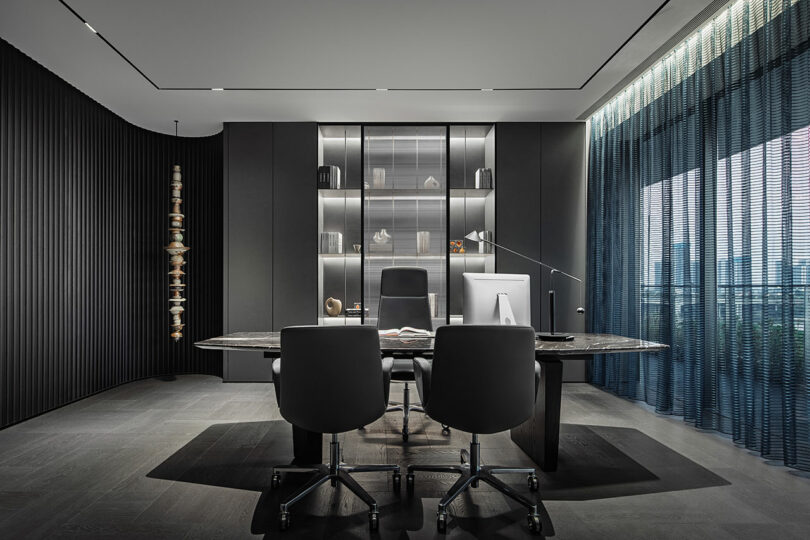
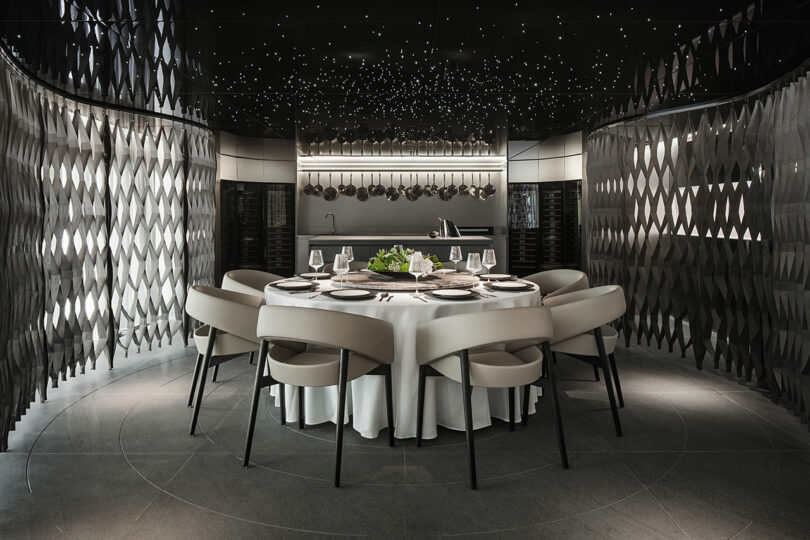
MAX Zone blends unique elements to honor past and present as staff looks ahead to what’s next. “The spaces are infused with energy and movement amid tranquility, embodying a bold, progressive identity rooted in tradition,” Wu notes.
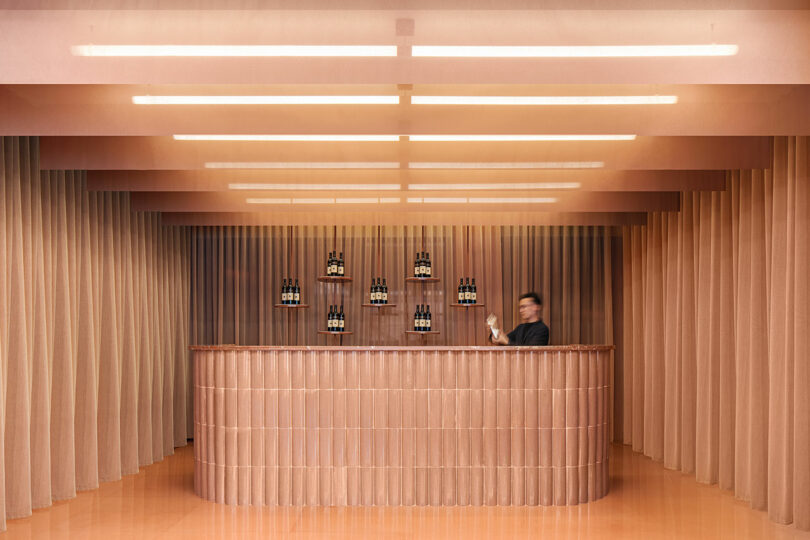
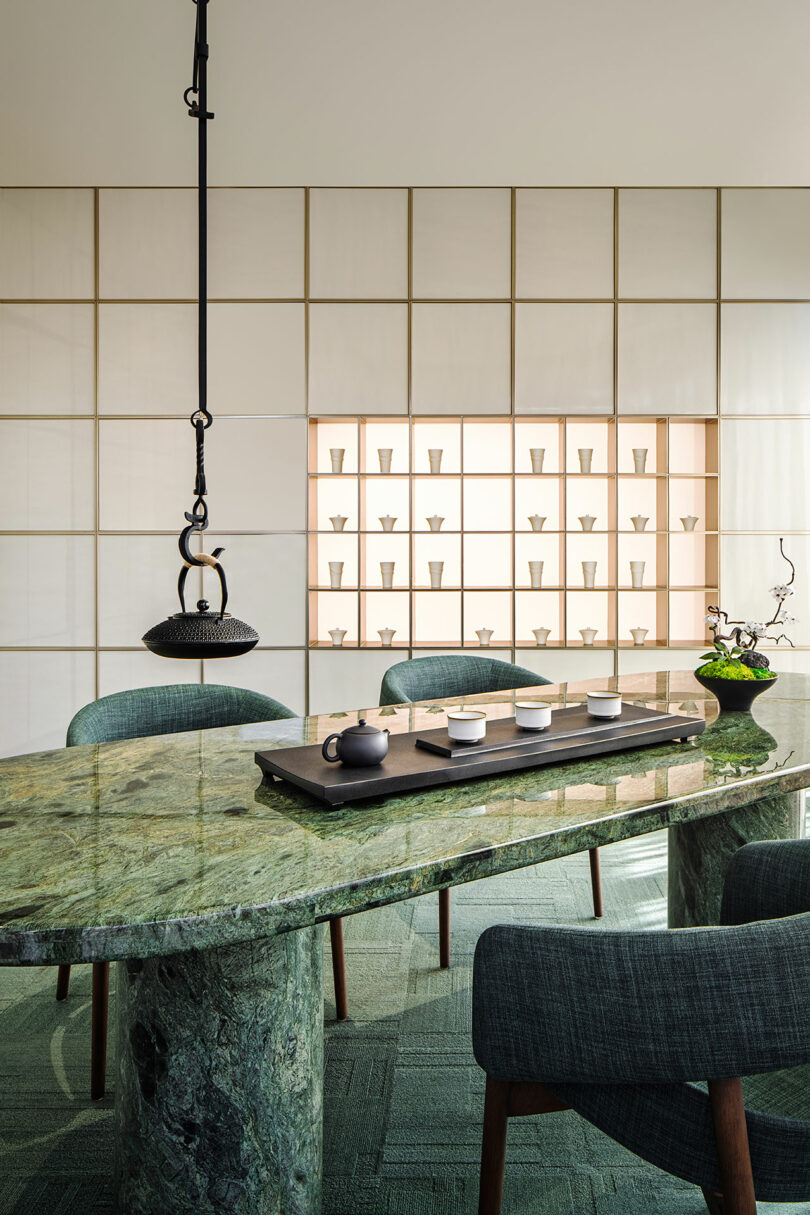
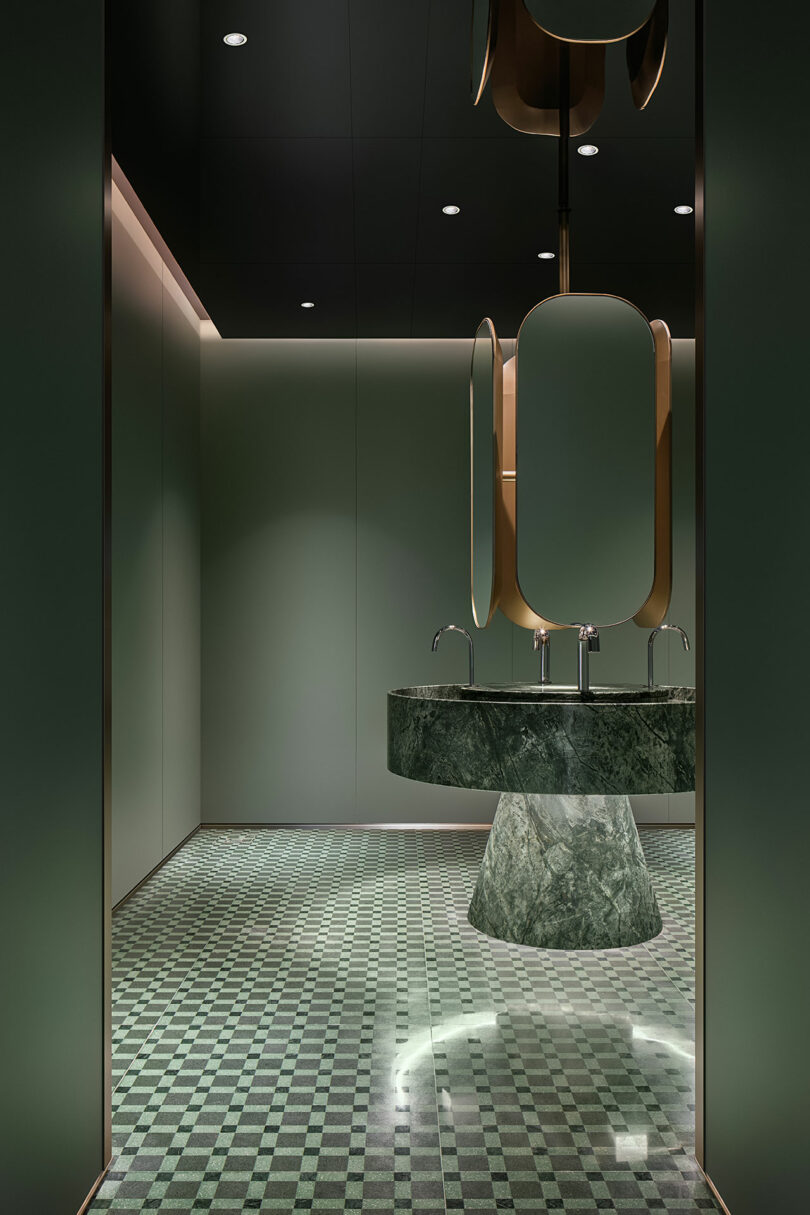
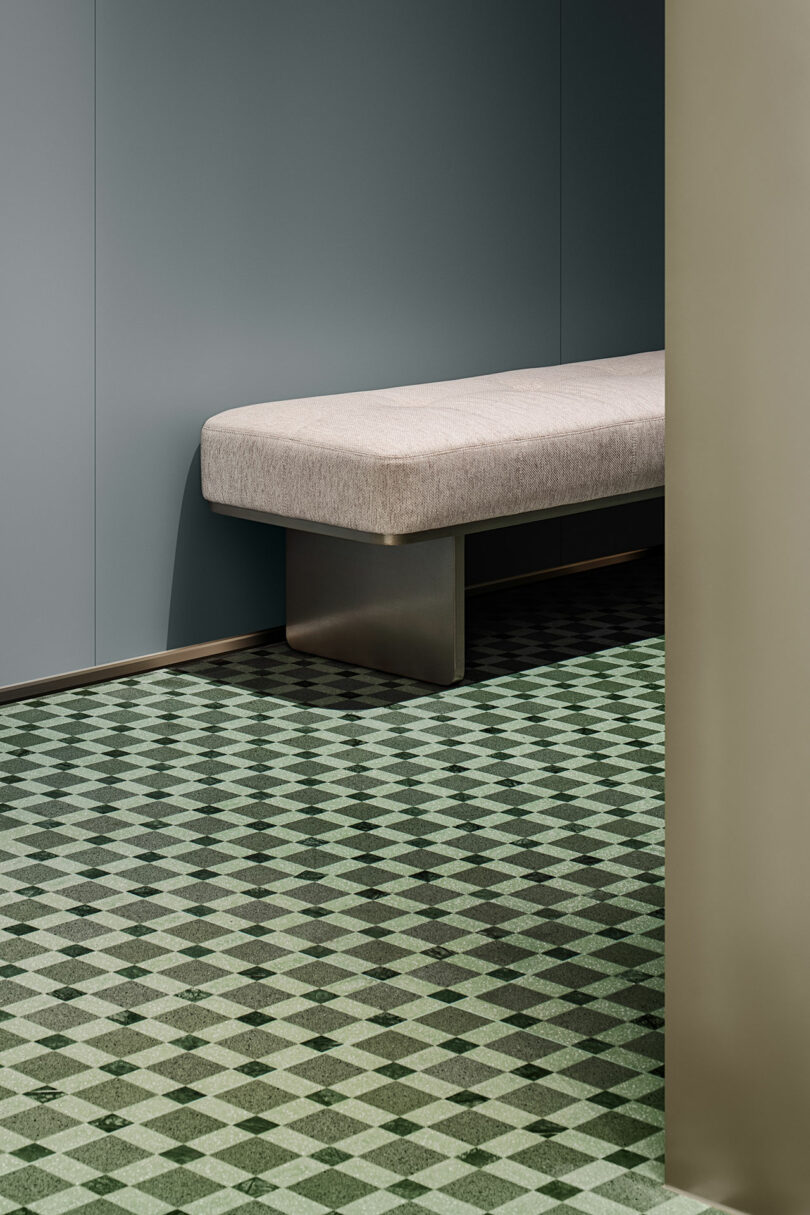
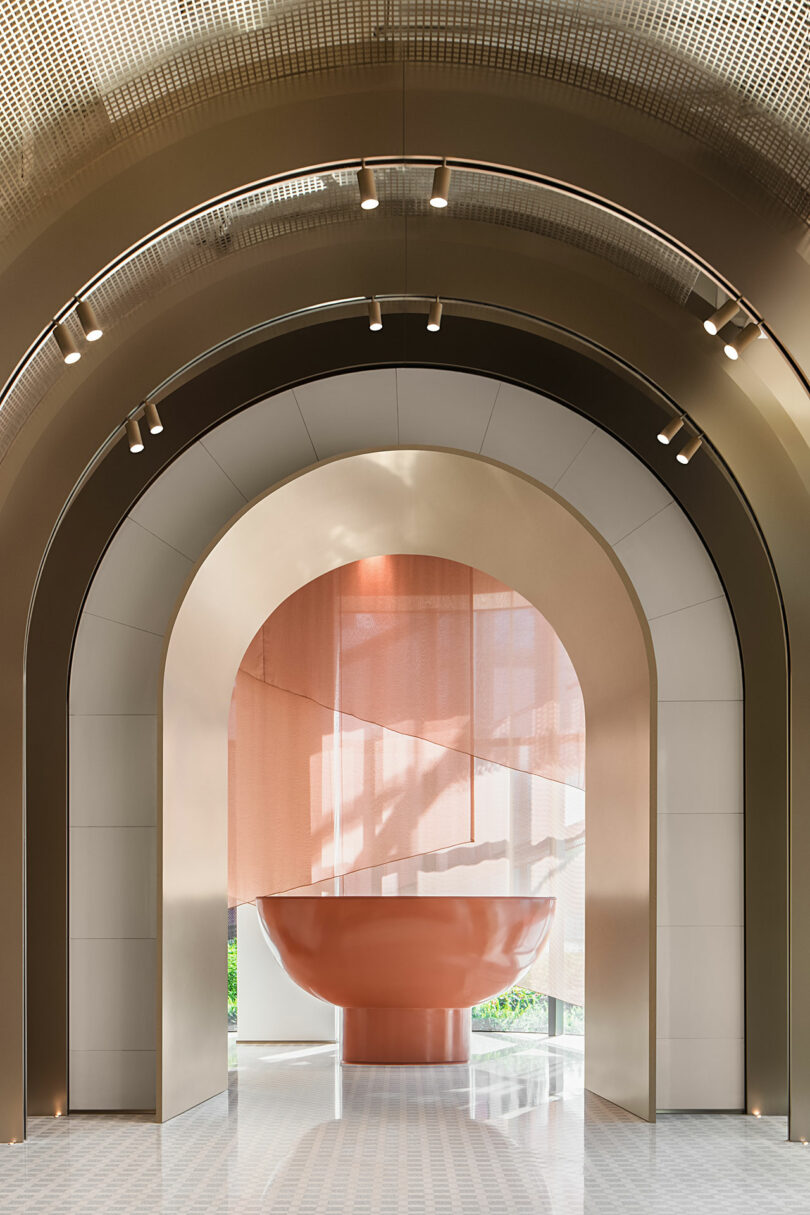
To learn more about the MAX Zone office in Foshan, China by Ippolito Fleitz Group, please visit ifgroup.org.
Photography by Zhu Di, courtesy of Ippolito Fleitz Group.
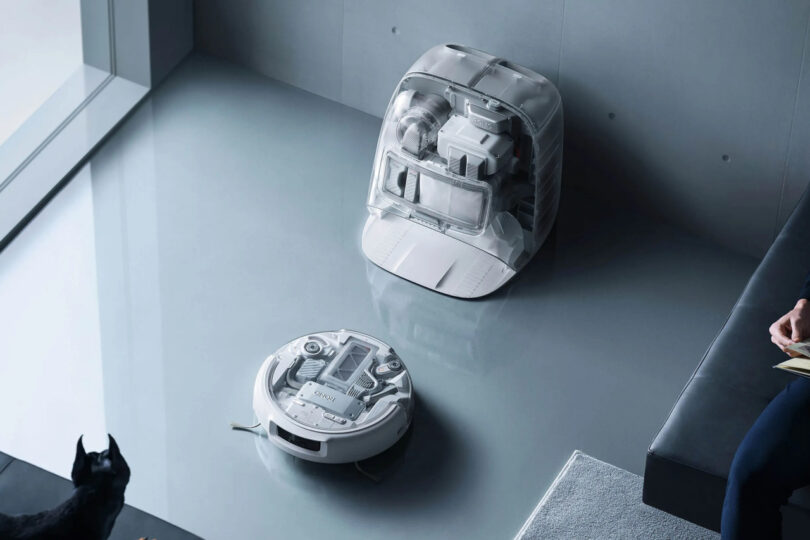
DJI is best known for its drones, but now it wants to leverage its years of experience in image processing for another category of products: robot vacuums. The DJI Romo is the company’s first robotic vacuum, and it could prove great, not just for its advanced object recognition tech, but also for its unique design.

So what’s so special about its design? Well, much of it comes down to the transparent outer shell. There are actually a few models in the Romo lineup, including the DJI Romo P, Romo A, and Romo S. Both the Romo A and Romo S have a white plastic housing, but the Romo P swaps out that look for transparency.
Both the docking station and the vacuum itself make use of transparency, with almost the entire docking station having a see-through outer shell and the vacuum having a clear top.

Thankfully, not everything is transparent. Looking through the outer shell, you can see the bag that holds debris from the vacuum, along with the tanks that hold both clean and dirty water, but the tanks themselves are a solid plastic, so you won’t see a tank full of dirty water every time you look at your vacuum.

Even cooler than the transparent design could be how well the vacuum works. DJI is new to the robotic vacuum space, so it’s hard to tell if it’ll be able to perform as well as the likes of Roborock, Ecovacs, and so on. But the company does have tons of experience in advanced image recognition tech, thanks to its drones. According to DJI, the vacuums can automatically create the most efficient cleaning path using some of the tech that it created for drones. Those routes are stored in the vacuum itself, so they won’t be uploaded to the cloud, which could be a potential privacy issue.

It’ll also change its cleaning approach if it recognizes objects like spilled food. For example, it can slow down both how fast it’s moving and how fast the brush is spinning to avoid flinging that debris out of the way. It does this by simultaneously increasing its suction power momentarily to ensure that all of the bits and pieces are vacuumed up.
The vacuum itself, which is the same no matter which model you go for, offers up to 25,000Pa of suction power, which is pretty massive and beats the vast majority of even higher-end robotic vacuums out there. It has a built-in anti-tangle double roller brush, along with two sweeping brushes that can extend out from the side of the vacuum to get into corners and edges. Last but not least, there are two spinning mop pads that can be raised when the vacuum detects carpet or a rug.

The DJI Romo is available for $1,899 via djidroner.com, and you can learn more about it at its dedicated website, romo.tech.
Photography courtesy of DJI.
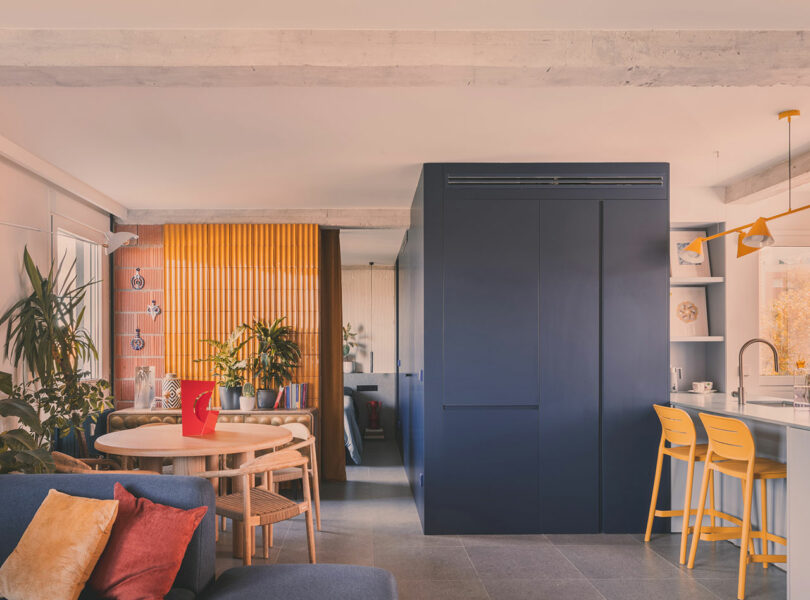
Despite its compact 689-square-foot size, House 64 manages to feel bright and expansive after a recent transformation. The project takes its name from both its 64 square meters of usable space and the 64 years that passed between the building’s construction and the start of OOIIO Architecture’s renovation. What began as a cramped fifth-floor apartment on a modest residential block built in 1960 – one that once tightly housed nine people – has been reimagined by OOIIO Architecture into a vibrant, materially driven home for two.
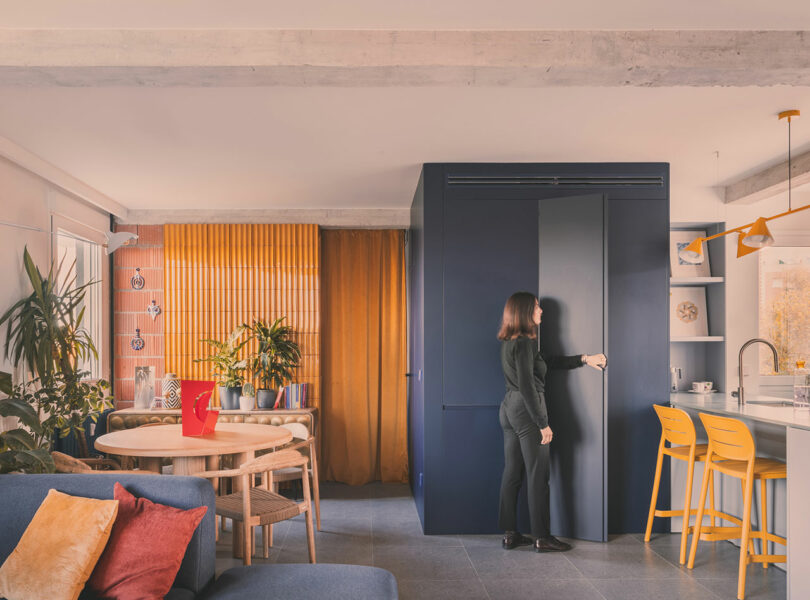
Madrid’s Carabanchel district has come a long way since this building marked the edges of the city. Back then, large rural families facing hardships in the Spanish countryside arrived in Madrid looking for stability and a better life. Today that road is buried beneath the adjacent park, the building is served by an elevator, and the neighborhood sits comfortably on the shoulder of central Madrid – a place shaped by global movement. House 64 mirrors this evolution: once dark and subdivided, now bright, fluid, and open to new patterns of life.
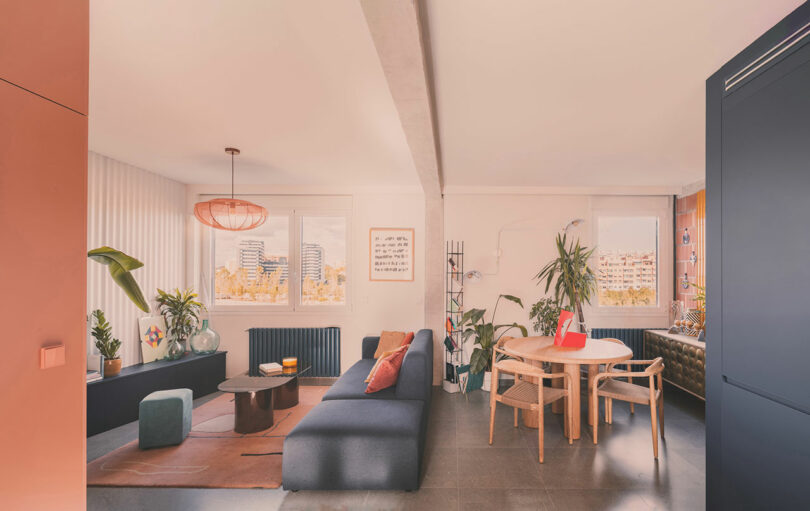
OOIIO approached the renovation as a total reset. The interior was gutted, the tiny rooms cleared to allow natural light to stretch from both facades, which run parallel. Cross-ventilation – a luxury the original residents mostly ignored in favor of pure necessity – now becomes a defining comfort. With the shell stripped bare, the architects layered the apartment like a three-dimensional collage, using color, texture, and carefully curated materials to create new spatial experiences.
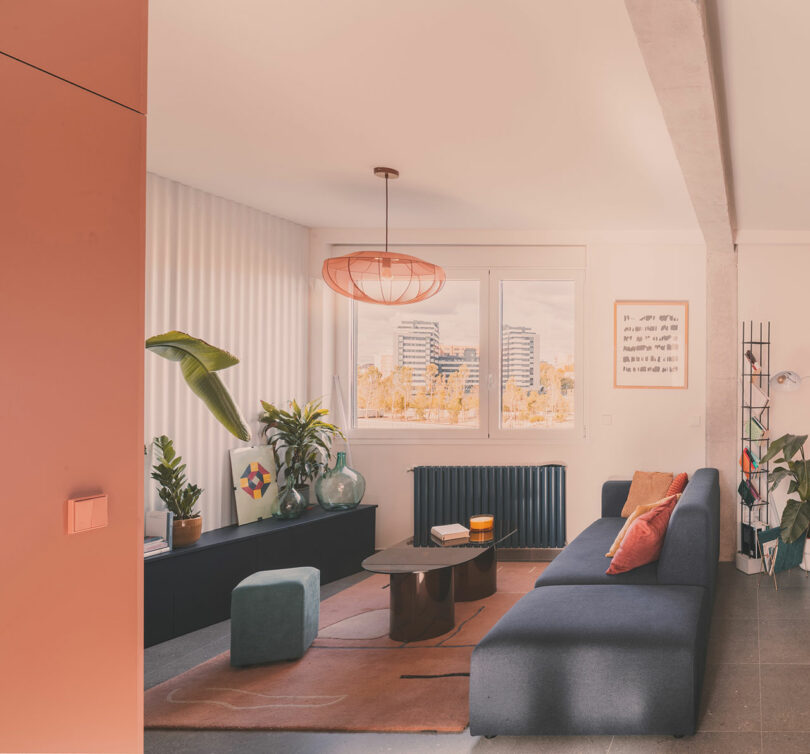
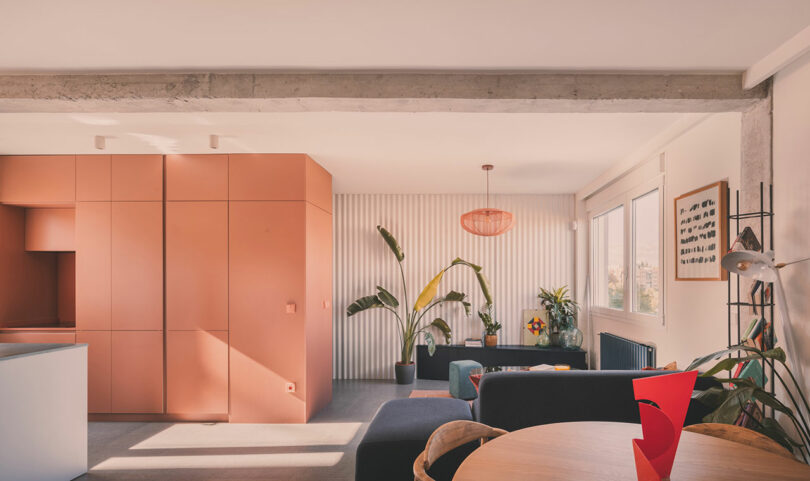
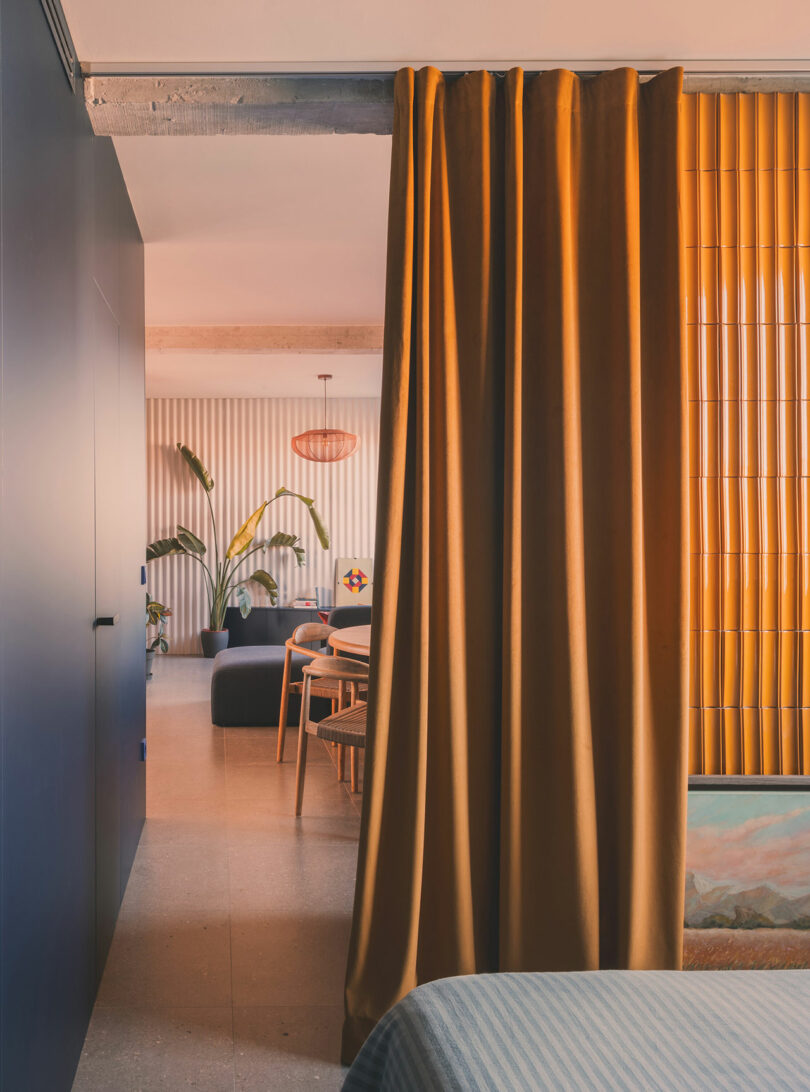
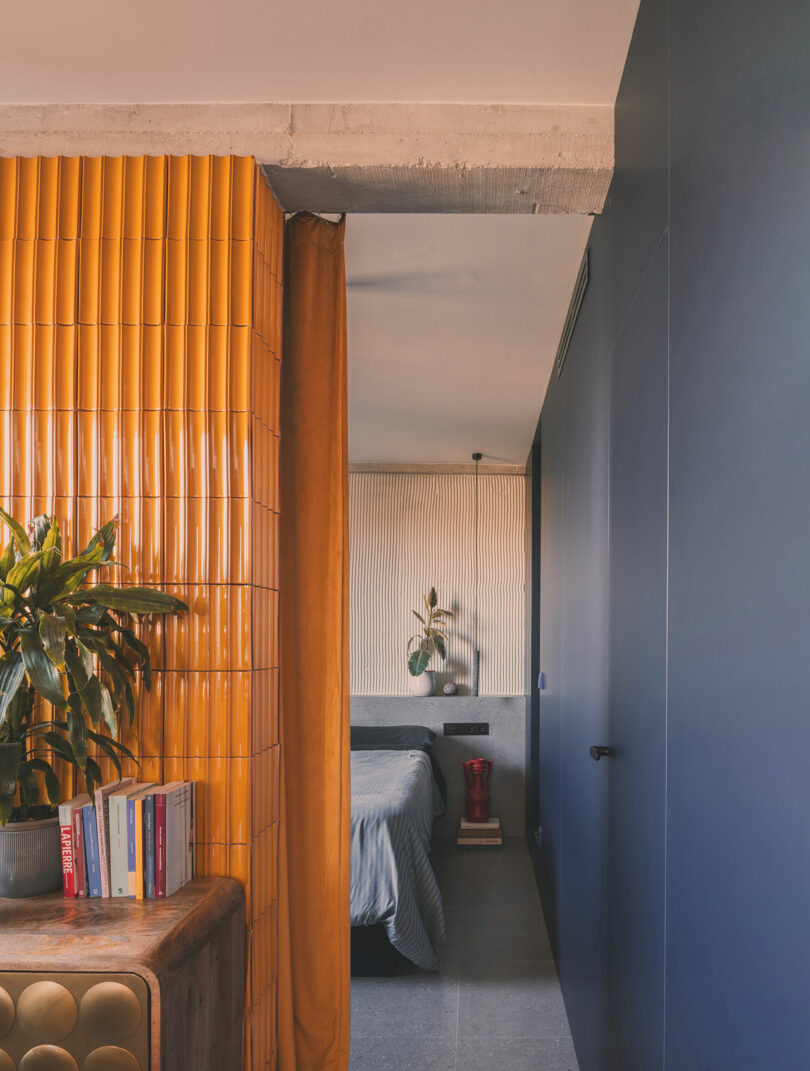
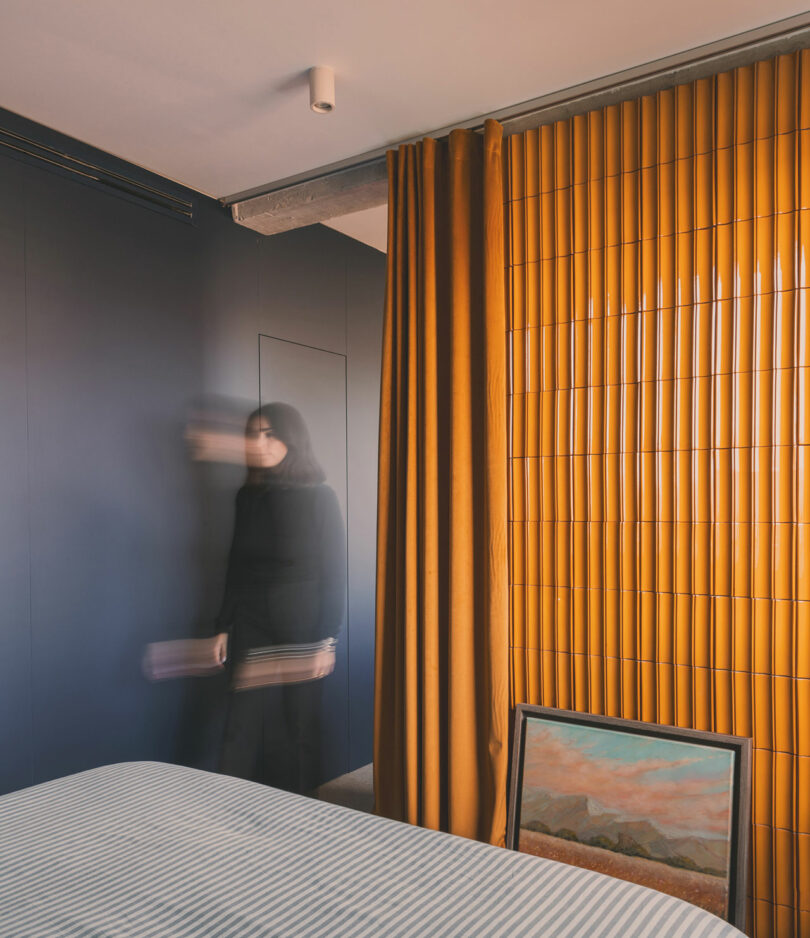
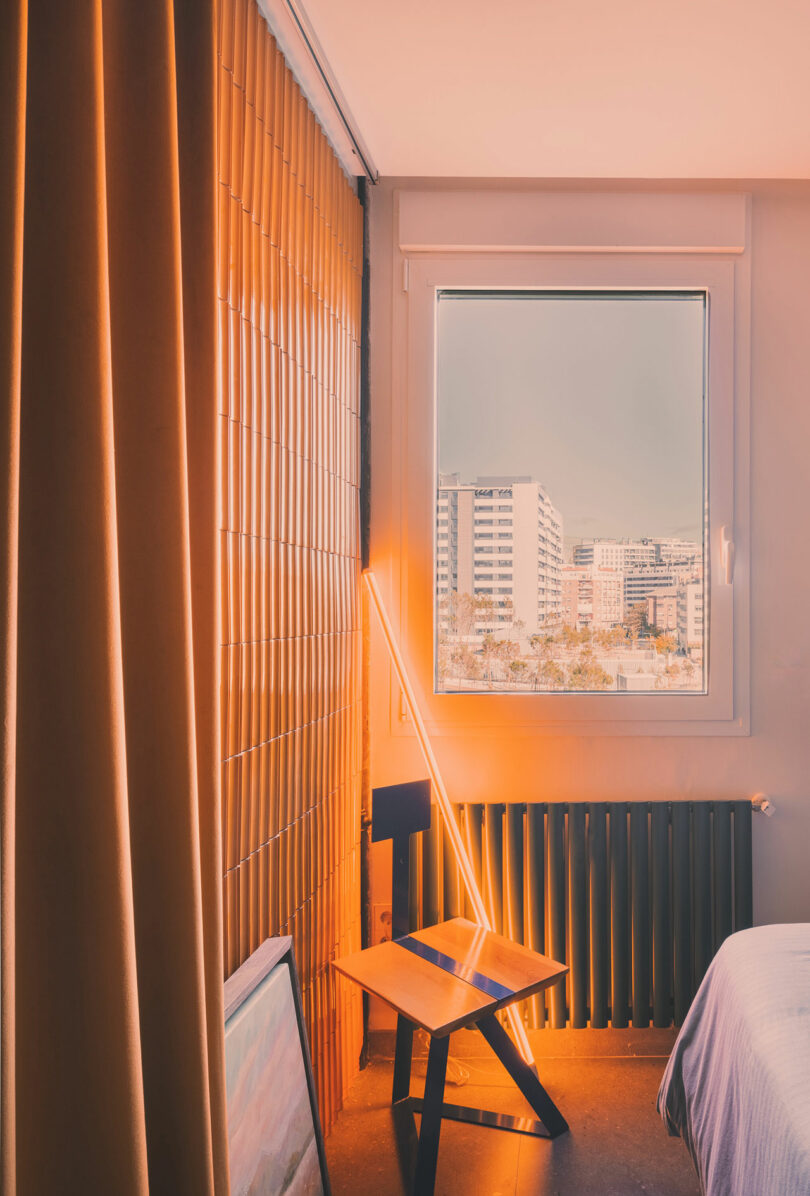
Instead of fixed spaces, the project relies on strategic insertions that feel both sculptural and purposeful. Each wall becomes a surface to house various materials like art, ones that are reflective, corrugated, tiled, or colorful. These aren’t arbitrary aesthetic choices but the connective elements that form a cohesive space. A white, corrugated metallic plane lives opposite a deep blue sofa; a triangular cabinet beneath it picks up the hue and complements the boxed blue structure by the kitchen. A golden velvet curtain hangs in front of the bedroom for privacy, visually echoing the wall of wavy yellow tiles next to it. In front of the yellow tiles, an olive green sideboard adds a grounded counterpoint, while clay, sky blue, and earthy tones show up throughout in the lamps, counters, and wardrobe finishes.
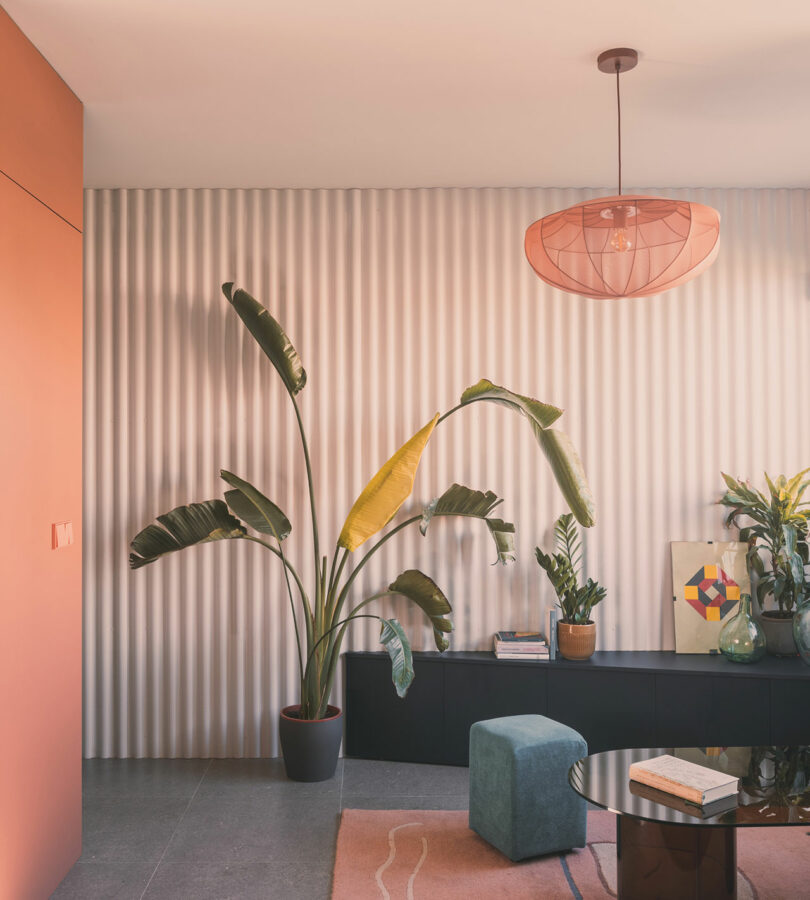
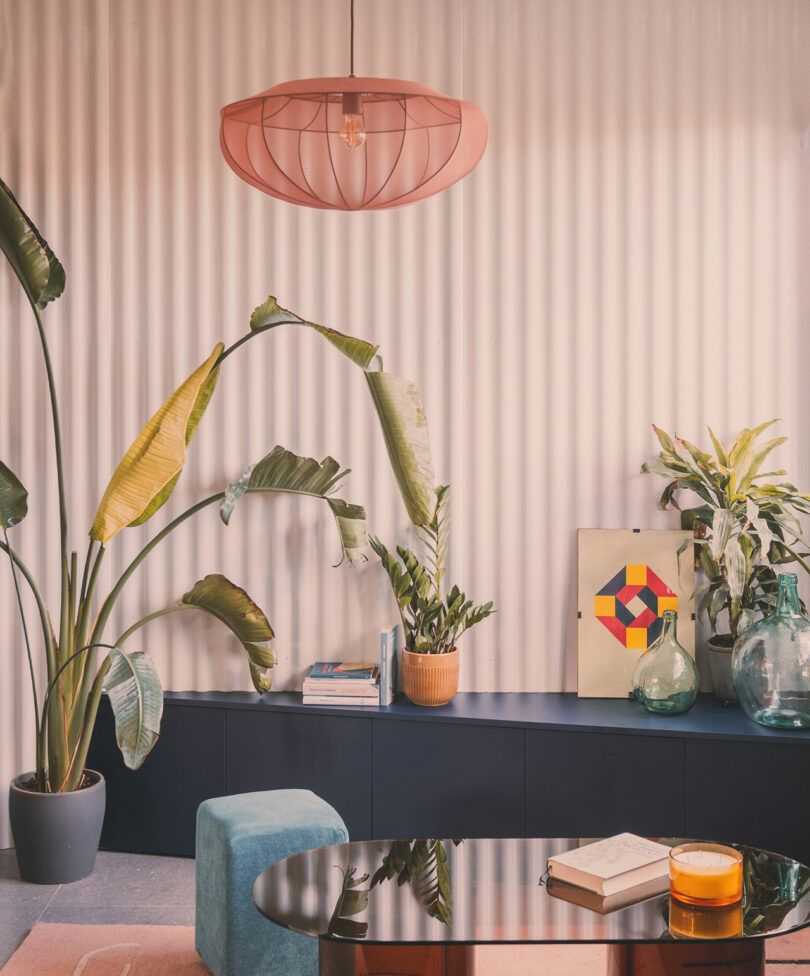
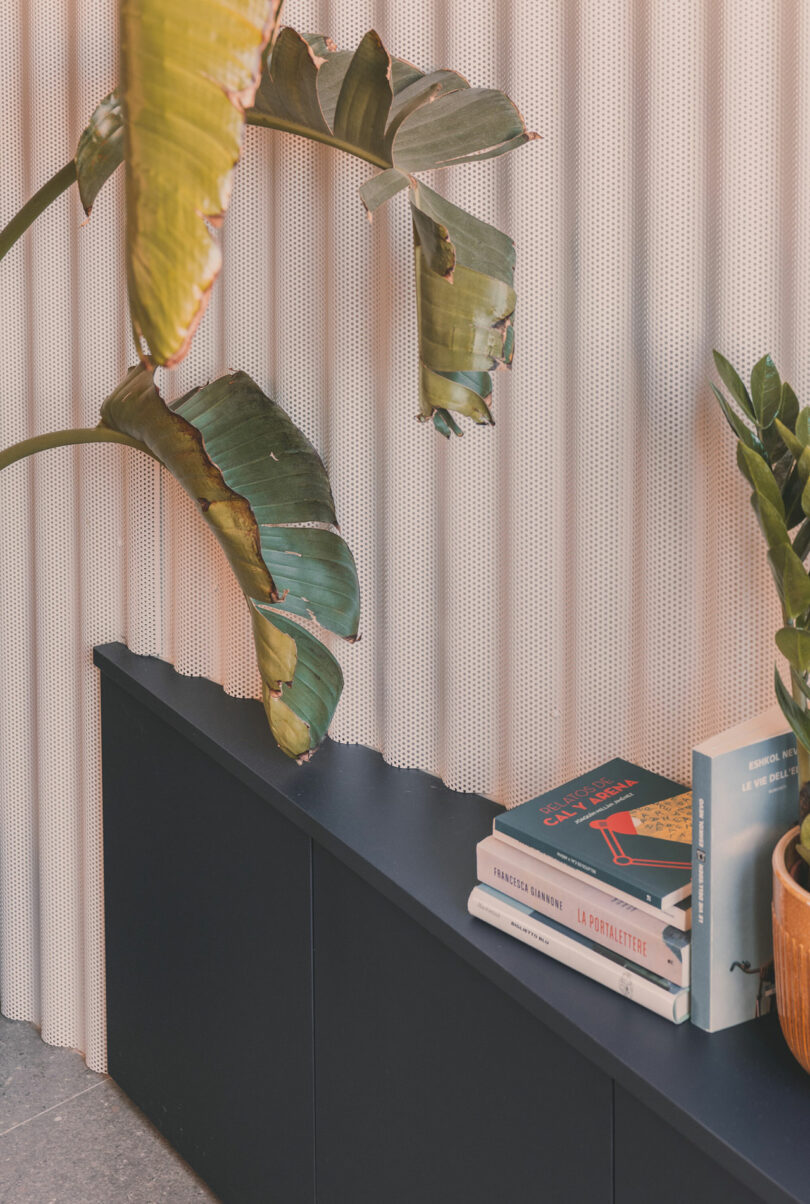
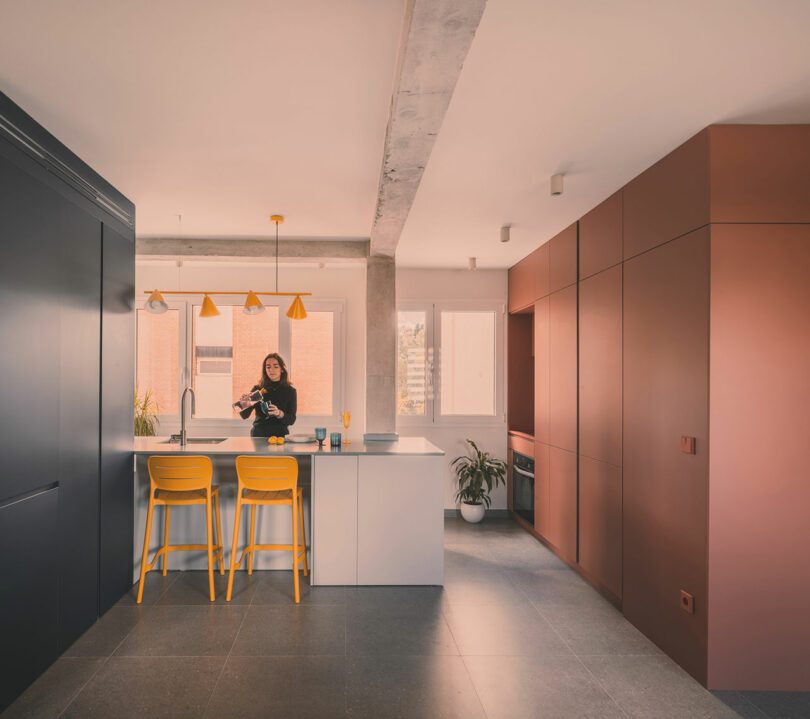
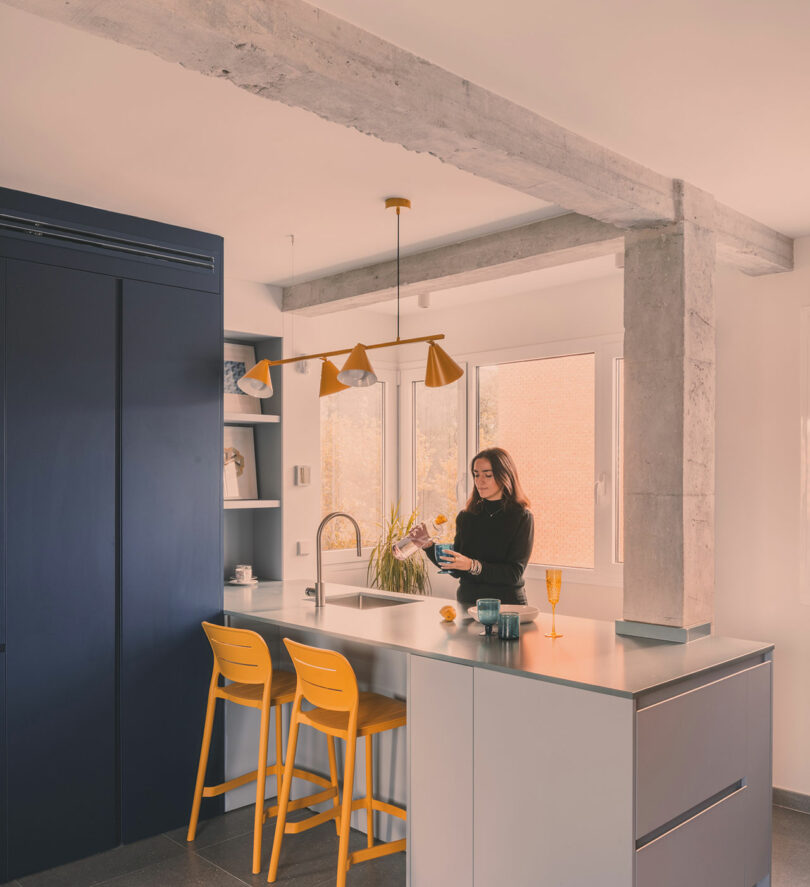
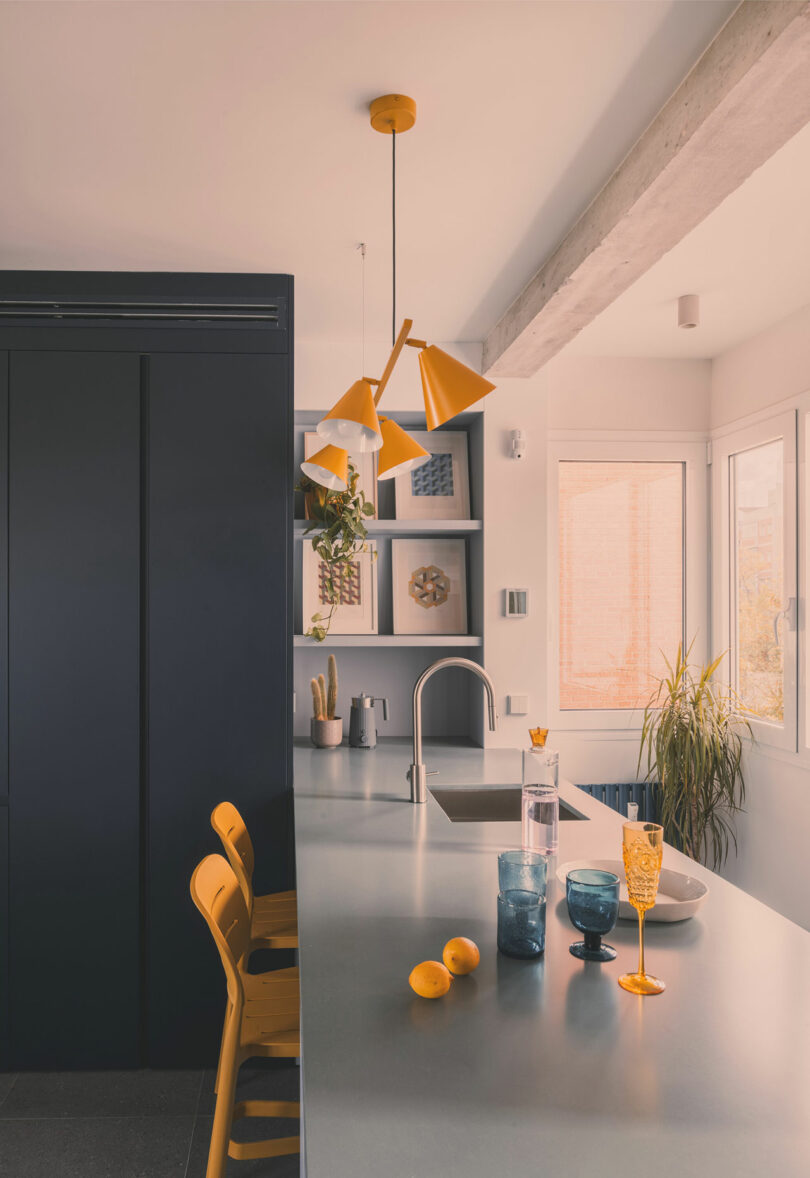
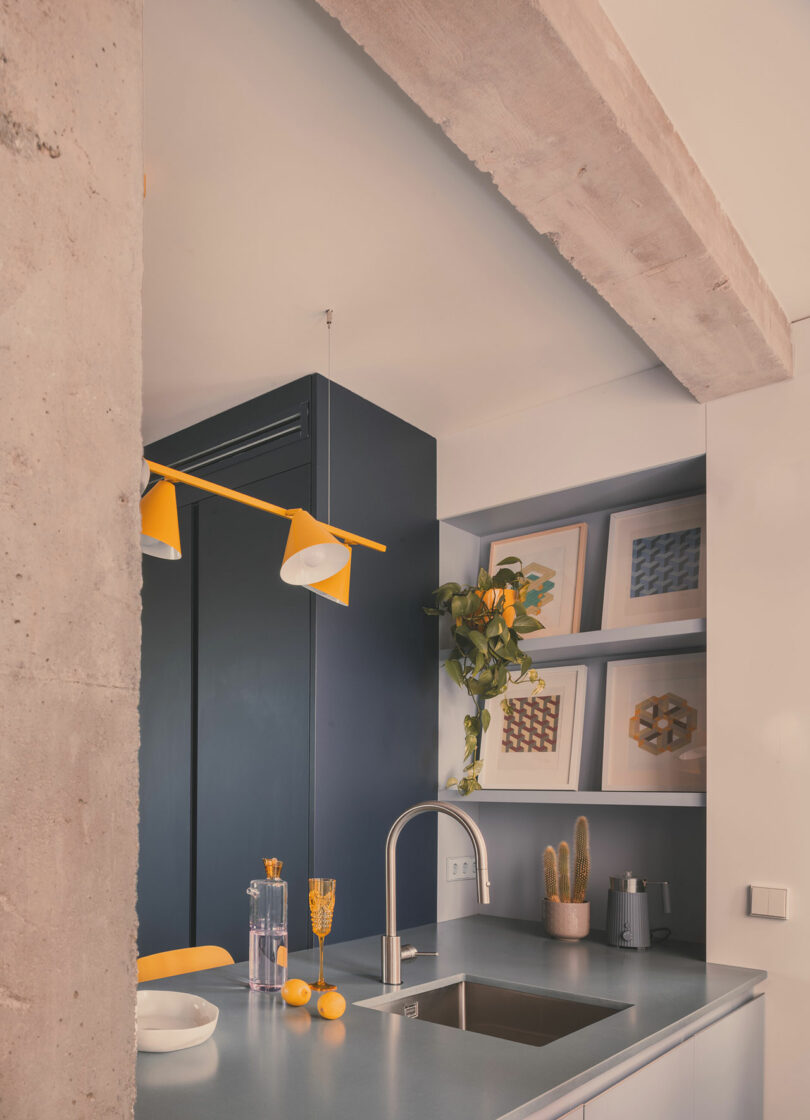
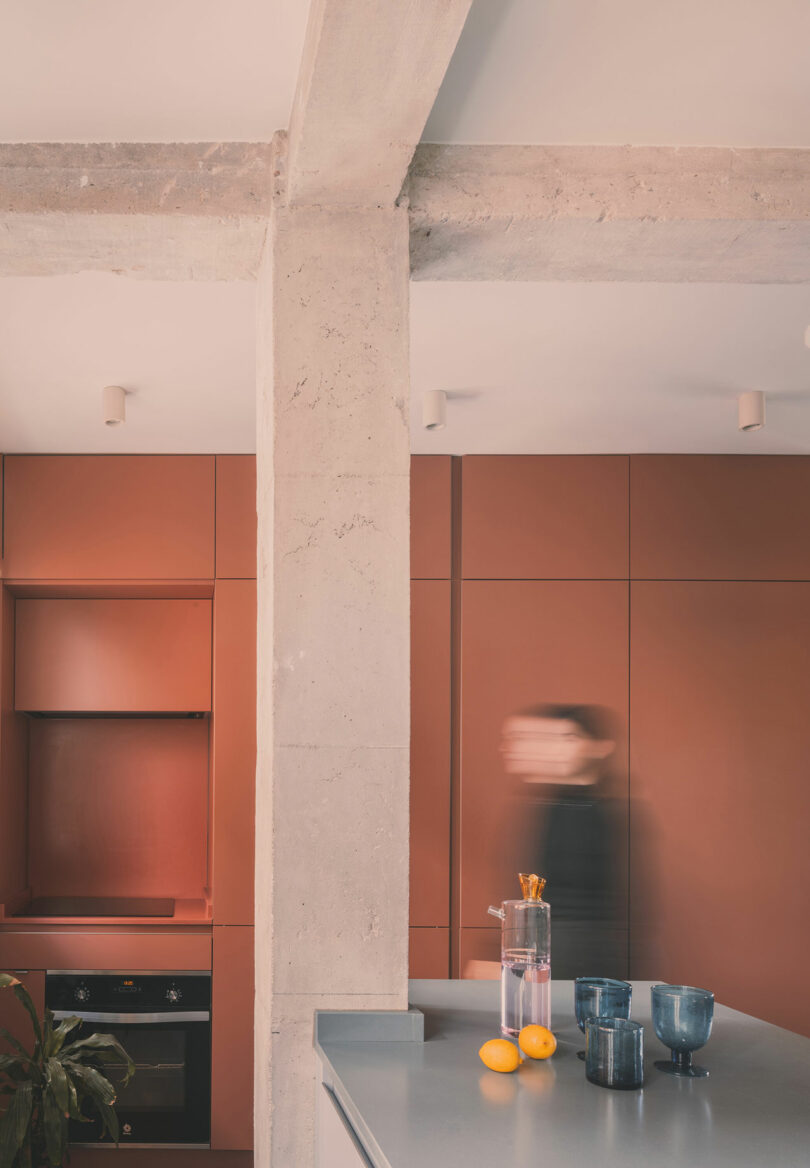
Furniture is a key component in the design – almost as important as the fixed pieces. Brands like HAY, Kave Home, Cosentino, Grespania, and others in handpicked colors and materials, outfit the rest of the space in an array of fun colors, including pops of sunny yellow, dusty corals, rich blues, making every surface feel intentional.
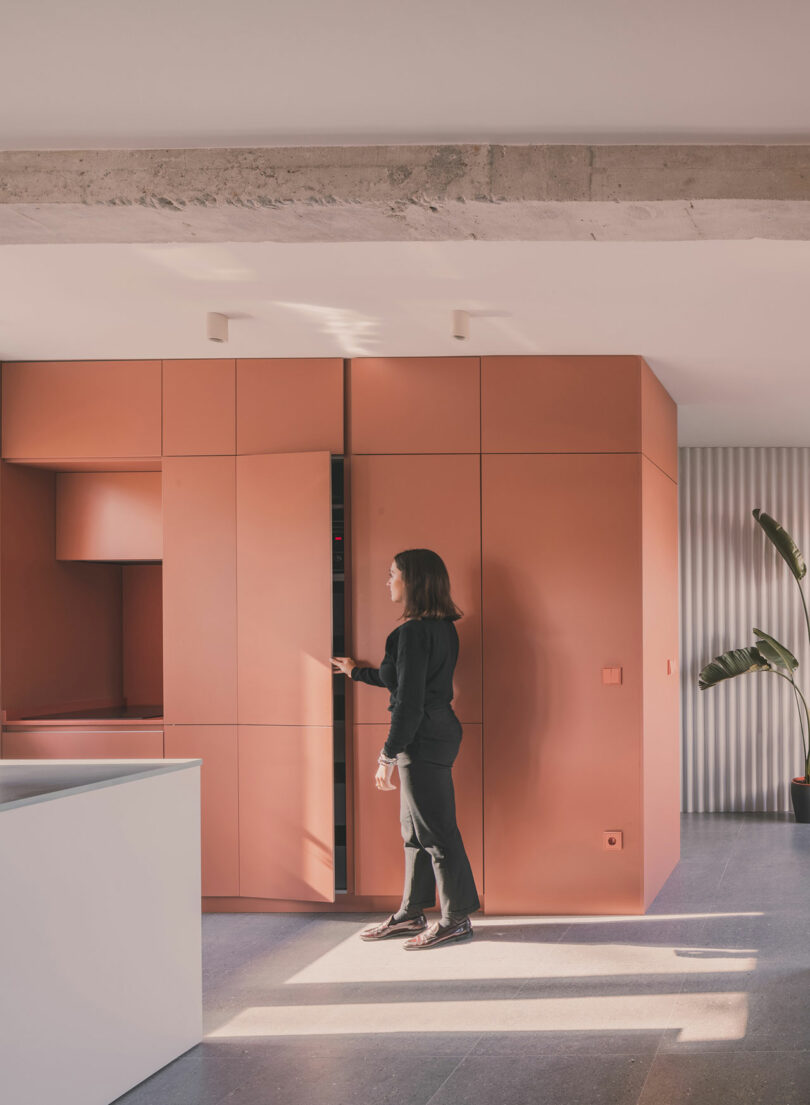
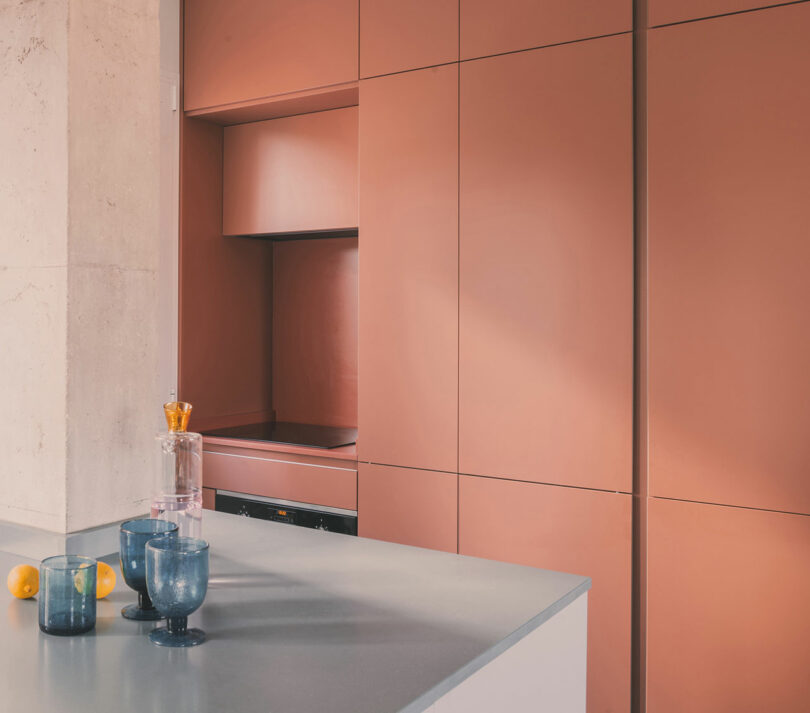
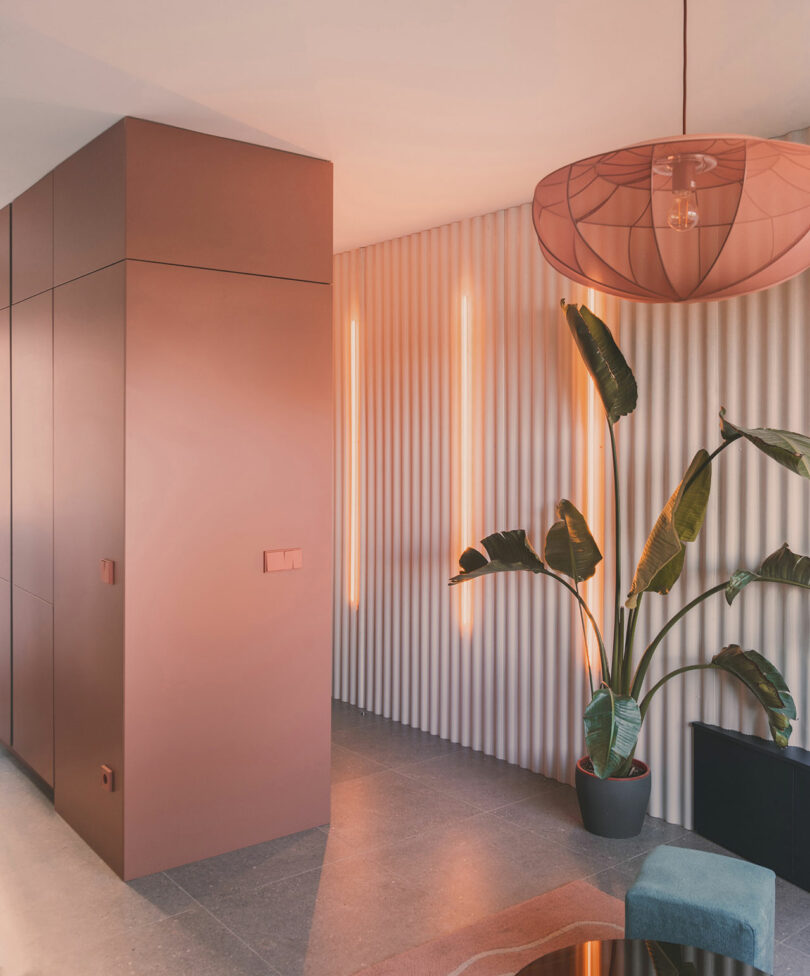
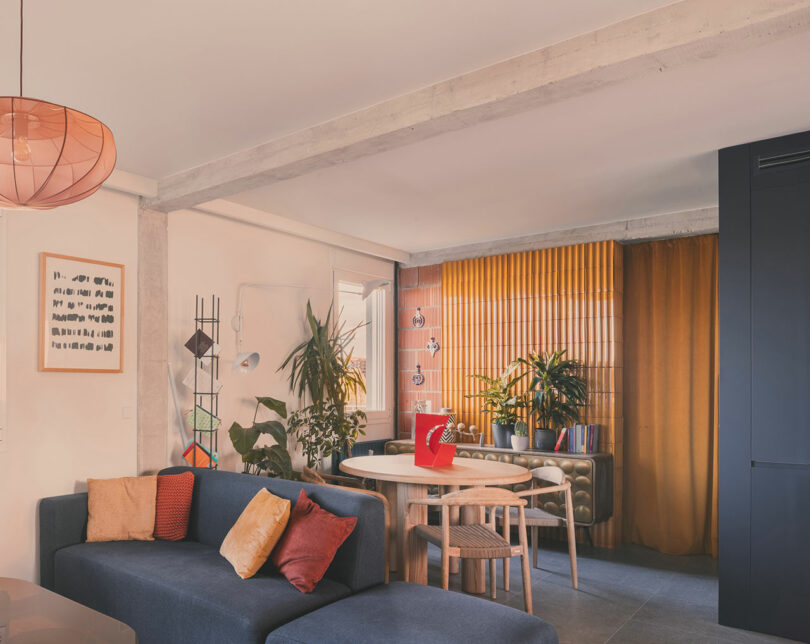
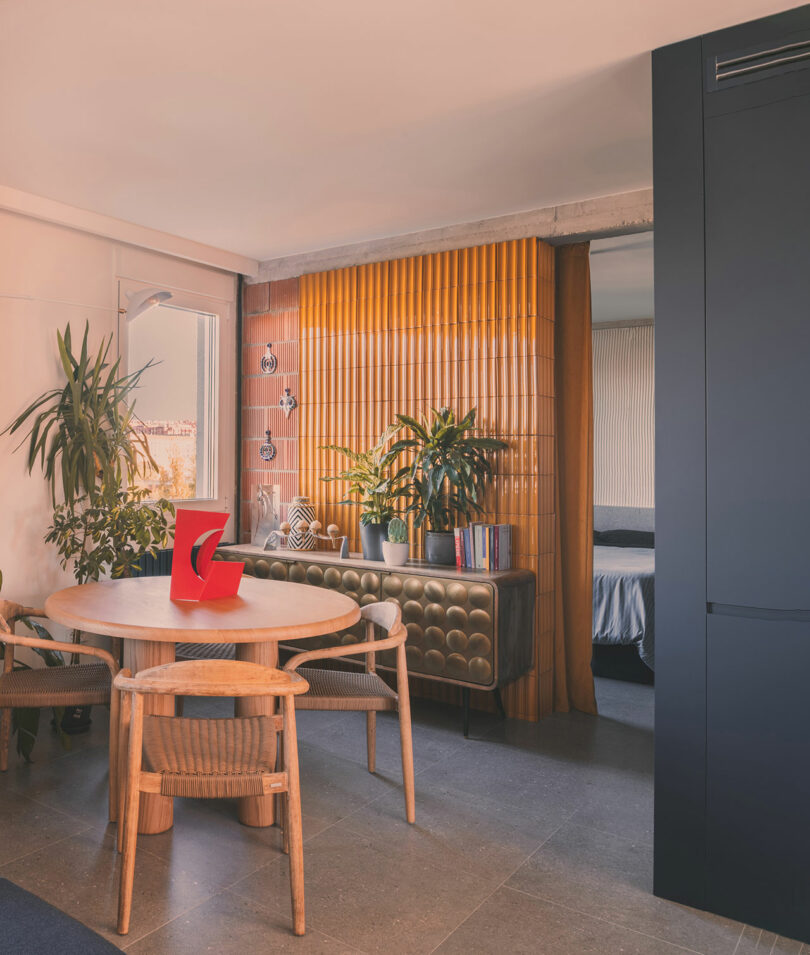
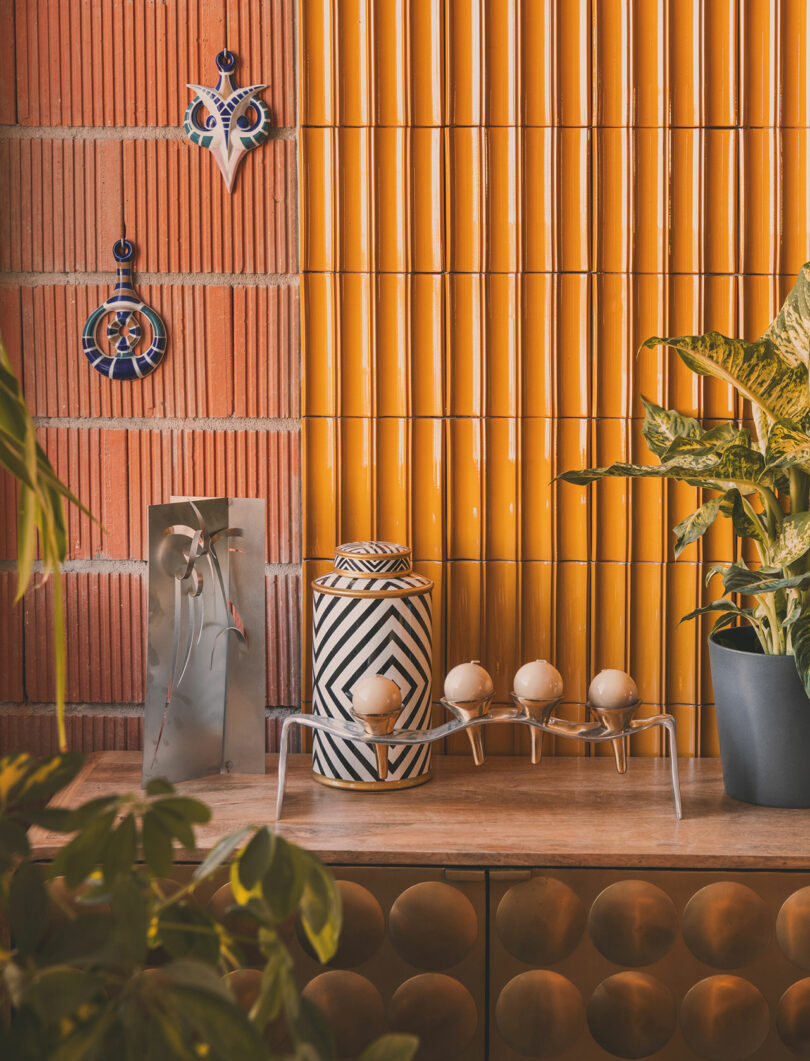
The sleek, box-like structures in blue and coral, not only help define the compact layout, but they add valuable storage throughout the apartment.
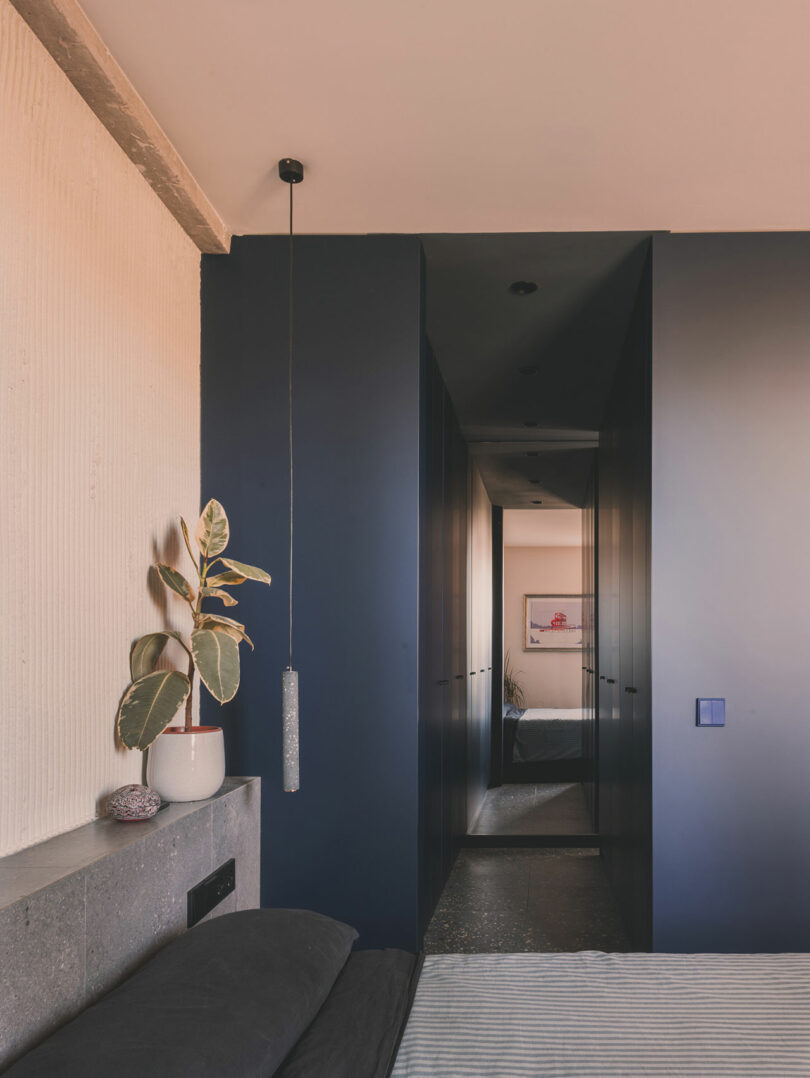
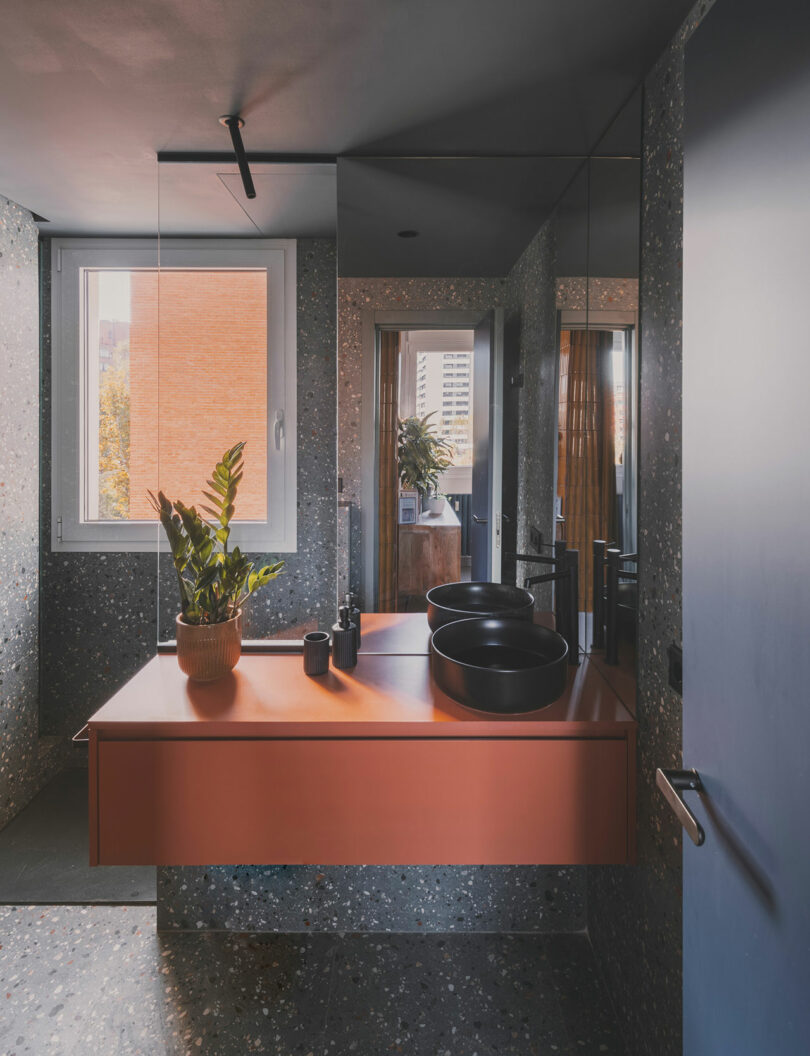
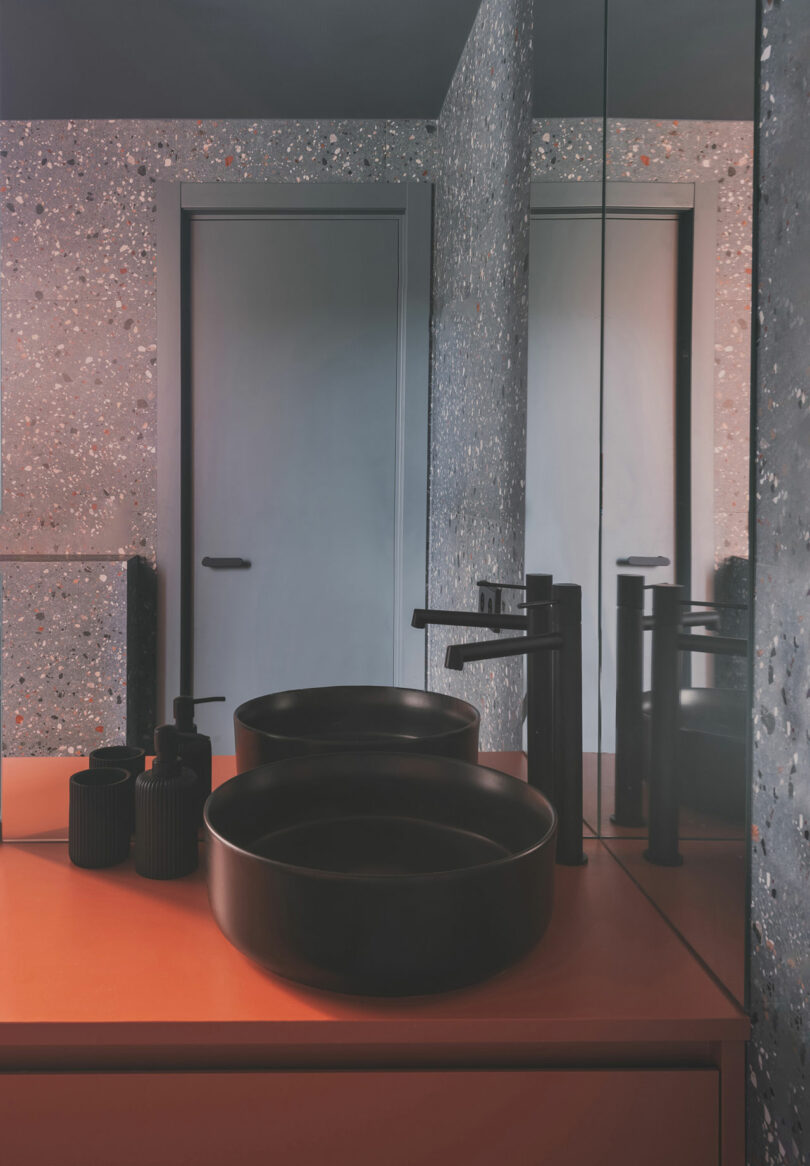
The hues seen in the main living area of House 64, continue into the apartment’s bathroom. The floating sink vanity is finished in the same coral shade as part of the kitchen cabinetry, while blue tones can be seen in the terrazzo surfaces that clad the floors, walls, and shower. Rounding out the space is a black vessel sink and faucet that add a sense of drama.

For more information on House 64 by OOIIO Architecture, please visit ooiio.com.
Photography by Javier de Paz.