Resident of the world, traveling the road of life
69069 stories
·
21 followers

This Pared Down Stereo System Takes-on Cubist Dimensions

1 Share

This Pared Down Stereo System Takes-on Cubist Dimensions

Often overshadowed by his contemporary Pablo Picasso, artist George Braque was instrumental in establishing the highly influential, early 20th-century art movement Cubism. Paying tribute to this unsung talent is the new eponymously named stereo system just released by Swedish brand Nocs and industrial designer Daniel Alm.

Studio D.A and Nocs debut the Braque stereo system: two minimalist, cube-shaped speakers with black upper halves containing the drivers and metallic lower halves, set against a dark background.

In Braque’s paintings, collages, and prints, the polymath set out to distill bucolic landscapes and rural village scenes as broken up and then re-assembled geometric compositions; decidedly abstract yet still slightly recognizable representations. Through this revolutionary approach, he examined how objects could be depicted from multiple perspectives—multiple sources of light—as if superimposed portrayals of the same setting rendered at different times of day.

A single black speaker with a square design is centered against a dark background, showcasing the sleek aesthetics of Studio D.A and Nocs' debut—the Braque stereo system.

Close-up of a black speaker with a visible circular woofer on a dark background, highlighting the design as Studio D.A and Nocs debut the Braque stereo system.

This ever-refined exploration was not merely a refute of the established artistic conventions that had come before but a response to the ever speed-up advancement of technology defining the era; a mutation of Impressionism—that emerged when the camera replaced the need for realistic illustration or the attempt thereof. Cubism, itself, eventually transmuted into Purism: the ultimate paring-down of fundament, meticulously proportioned, form.

Studio D.A and Nocs debut the Braque stereo system: two black, rectangular speakers with visible circular drivers positioned side by side against a dark background.

Close-up of a modern black speaker from Studio D.A and Nocs' debut Braque stereo system, featuring a matte upper section, a brushed metal lower section, and part of the speaker driver visible on the top right.

The new speaker comprises two seamlessly interconnected by slightly contrasted cubes. As a nod to Braque’s mastery of duality, the device is precision engineered in both plywood and steel, the base in the latter and the main cone encasement in the former. The stacked compositions might not reflect the perceivably erratic nature of Cubist configuration and much more the rationalism of say a Mies van der Rohe, but the intent is clear, if subtle.

Two black rectangular speakers from Studio D.A and Nocs debut the Braque stereo system, positioned side by side against a dark background.

A square metal tag with text and a ball chain hangs against a background of dark, brushed metallic surfaces—echoing the refined design language seen as Studio D.A and Nocs debut the Braque stereo system.

It comes down to how both cubes and finishes. While the steel base is cut, welded, and brushed by hand—giving each limited-edition Braque system a bespoke patina—the plywood component—assembled in nearby Estonia—takes a more unified matte coating. Both elements are black but the bottom piece takes on many more simultaneous dimensions as it refracts the light coming in from all directions. This is where the connection to its namesake holds true.

A metal tag with a ball chain is attached to a metallic surface, displaying text about the object, including "BRAQUE," "No: 1," "2025," and "Made in Europe”—marking Studio D.A and Nocs' debut of the Braque stereo system.

Close-up of the Braque stereo system, a collaboration by Studio D.A and Nocs, showing a black speaker with a visible round driver at the top left and a brushed metal panel below, photographed in low light.

It isn’t just aesthetic however. The speaker is unabashedly performative. “Braque is about space, physical and sonic,” says Alm. “By working with a larger enclosure and a coaxial driver, we were able to shape a sound that’s natural, open, and honest. It reveals what’s in the recording without adding anything of its own, which is the core of our Studio Sound approach.”

Close-up view of a modern black speaker with a visible woofer, featuring sharp lines and geometric shapes against a dark background, as Studio D.A and Nocs debut the Braque stereo system.

Studio D.A and Nocs debut the Braque stereo system—a black, minimalist speaker with a visible circular driver, set against a dark background.

“Braque opens up new possibilities for us,” he adds. By the very nature of its essential, boxy form—but also weightiness—the device can be mounted on a stand or suspended. It can also be multiplied—not unlike an installation—as part of a larger installation.

To explore products specifications and shop the device, visit nocsdesign.com.

Photography provided by Daniel Alm.

Read the whole story
mkalus
23 minutes ago
reply
iPhone: 49.287476,-123.142136
Share this story
Delete

Here’s the Memo Approving Gemini, ChatGPT, and Copilot for Use in the Senate

1 Share
Here’s the Memo Approving Gemini, ChatGPT, and Copilot for Use in the Senate

A top Senate administrator approved OpenAI’s ChatGPT, Google’s Gemini, and Microsoft’s Copilot for official use in the Senate, the New York Times reported on Tuesday. 404 Media has obtained the full text of the memo and is publishing it below.

“The Sergeant at Arms (SAA) office of the Chief Information Officer (CIO) has approved the use of three Generative Artificial Intelligence (AI) platforms with Senate data,” the memo starts. It also says the SAA will provide each Senate employee with one free license to either Gemini Chat or ChatGPT Enterprise, with Copilot also available at no cost.

💡
Do you know anything else about the government's use of AI? I would love to hear from you. Using a non-work device, you can message me securely on Signal at joseph.404 or send me an email at joseph@404media.co.

The memo says Copilot “can help with routine Senate work, including drafting and editing documents, summarizing information, preparing talking points and briefing material, and conducting research and analysis.” 

As the New York Times wrote, questions remain around how staffers who deal with sensitive or classified information might use the tools. And more broadly, it shows the spread of AI chatbots across government, although how much the Senate will use it in this case is unclear.

The full memo reads:

The Sergeant at Arms (SAA) office of the Chief Information Officer (CIO) has approved the use of three Generative Artificial Intelligence (AI) platforms with Senate data. Microsoft Copilot Chat is available now for use by all Senate employees at no cost. Google Workspace with Gemini Chat and OpenAI ChatGPT Enterprise also have been approved for use with the assignment of a Senate license. The SAA will provide each Senate employee one Generative AI license at no cost for either Google Workspace with Gemini Chat or OpenAI ChatGPT Enterprise. More information about licensing for those two platforms will be provided by the CIO in the next thirty days. 

ABOUT COPILOT CHAT Copilot Chat is an AI assistant that is integrated into the Senate’s Microsoft 365 environment. It can help with routine Senate work, including drafting and editing documents, summarizing information, preparing talking points and briefing material, and conducting research and analysis. You can access the Copilot Chat web app here or download the Copilot Chat app on your mobile device. You may also see Copilot offered as a sidebar tool within Microsoft applications like Word and Excel. 

Important Note: Copilot Chat does not have access to any Senate data unless that information is explicitly shared within a prompt. Copilot does not search internal drives, shared folders, email, Teams chats, or any other Senate resources on its own. Copilot Chat operates in Microsoft’s secure government cloud and meets federal and Senate cybersecurity requirements. 

Data shared with Copilot Chat stays within the secure Microsoft 365 Government environment and is protected by the same controls that safeguard other Senate data. To learn more about Copilot Chat, take the Copilot Chat Training. Use of artificial intelligence tools is governed by the Senate AI Policy and applicable officelevel policies. To learn more about Senate AI initiatives, visit the Artificial Intelligence Webster Page.

Read the whole story
mkalus
23 minutes ago
reply
iPhone: 49.287476,-123.142136
Share this story
Delete

Cybertruck Tried to Drive 'Straight Off an Overpass' Attorney Claims

1 Share
Cybertruck Tried to Drive 'Straight Off an Overpass' Attorney Claims

A Cybertruck owner in Texas is suing Tesla for $1,000,000 in damages for “ grossly negligent conduct” following an accident on a Houston highway that involved the vehicle’s self-driving feature. According to the lawsuit, Tesla is to blame for the crash because CEO Elon Musk has oversold the truck’s ability to drive itself.

As originally reported by the Austin American-Statesman, Justine Saint Amour bought a Cybertruck from a used car dealership in Florida and drove it until it crashed on a Houston overpass on August 18, 2025. That summer day, Saint Amour was driving down Houston’s 69 Eastex Freeway with the vehicle’s full self-driving (FSD) mode engaged.

“Something terrifying happened, without warning, the vehicle attempted to drive straight off an overpass,” Bob Hilliard, Saint Armour’s attorney, told 404 Media in an emailed statement. “She tried to take control, but crashed into the barrier and was seriously injured—mostly her shoulder, neck, and back.”

Hilliard shared a photo of the aftermath of the crash and dashcam footage with 404 Media. In the video, the Cybertruck proceeds down the highway and hops an intersection instead of turning to the right and following the road. It’s stopped when it slams into a signpost on the overpass.

The lawsuit blames the crash on Musk. “Elon Musk is an aggressive and irresponsible salesman, who has a long history of making dangerous design choices, and over-promising the features of his products,” the lawsuit said. “This promotion of products, for capabilities that they do not have, is the reason for this incident.”

Musk has spent the past few years prompting Tesla’s ability to drive itself, a feature that costs $99 a month and is sold as “Full Self-Driving.” But, the lawyers said, the FSD feature doesn’t work as advertised and it’s irresponsible of Tesla and Musk to market their vehicles as having the feature. “Despite this dangerous condition of Tesla’s ‘self-driving’ vehicles, Elon Musk and Tesla have made representations in the year 2019 that Tesla’s full ‘self-driving’ vehicles were fully operational and safe.”

Tesla and Musk have gotten in trouble for this before. In February, the company agreed it would stop using the terms “autopilot” and “full self-driving" when advertising its vehicles in California. There have been multiple fatal and non-fatal crashes involving Tesla vehicles running on autopilot, including a man who hit a parked police car in 2024. In August, a judge ordered Tesla to pay $200 million in punitive damages and another $43 million in compensatory damages to a family of a 22 year old who died in a crash involving the car’s Autopilot system.

According to the lawsuit, one of the reasons this keeps happening is because Musk intervened directly to make Teslas cheaper by using cameras instead of LiDAR, which uses laser light to create a 3D map of the surrounding area. “Elon Musk’s intervention into the design of Tesla vehicles has long been reckless and dangerous. While engineers at Tesla recommended the super-human vision of LiDAR be included for self-driving vehicles, and competitors like Waymo and Cruise relied heavily on LiDAR, Musk chose instead to rely only upon cheap video cameras,” the lawsuit said. “Musk referred to the LiDAR used by his safer competitors as expensive and unnecessary.”

Fully automated driving is a hard tech problem. LiDAR is better than basic cameras, but they’re still not perfect and LiDAR-based self-driving cars crash too. There are other problems too. In cities operating Google’s Waymo cars, passengers are leaving the doors open and Waymo is contracting DoorDashers to close them for $10 a pop, a Waymo in LA attempted to drive through a police standoff, and woman in San Francisco was trapped in a Waymo after men blocked the car and started to harass her.

Read the whole story
mkalus
16 hours ago
reply
iPhone: 49.287476,-123.142136
Share this story
Delete

Video Shows US Tomahawk Missile Strike Next to Girls’ School in Iran

1 Share

New video footage shows a US Tomahawk missile hitting an Islamic Revolutionary Guard Corps (IRGC) facility in Minab, Iran, on Feb 28, showing for the first time that the US struck the area.

The footage, released by Mehr News and geolocated by Bellingcat, also shows smoke already rising from the vicinity of the girls’ school where 175 people were reportedly killed, including children.

The footage would appear to contradict US President Donald Trump’s claim that it was an Iranian missile that hit the school.

Left: Image showing a Tomahawk missile from the airstrike in Minab. Right: A Tomahawk missile flying over Tehran earlier in the conflict.

The US is the only participant in the war that is known to have Tomahawk missiles. Israel is not known to have Tomahawk missiles.

The red cone superimposed over this image shows the estimated area of impact of the missile visible in the footage. The graphic also shows the position of a clinic, the school and other damaged buildings.

Geolocation by Bellingcat showing the strike’s estimated area of impact.

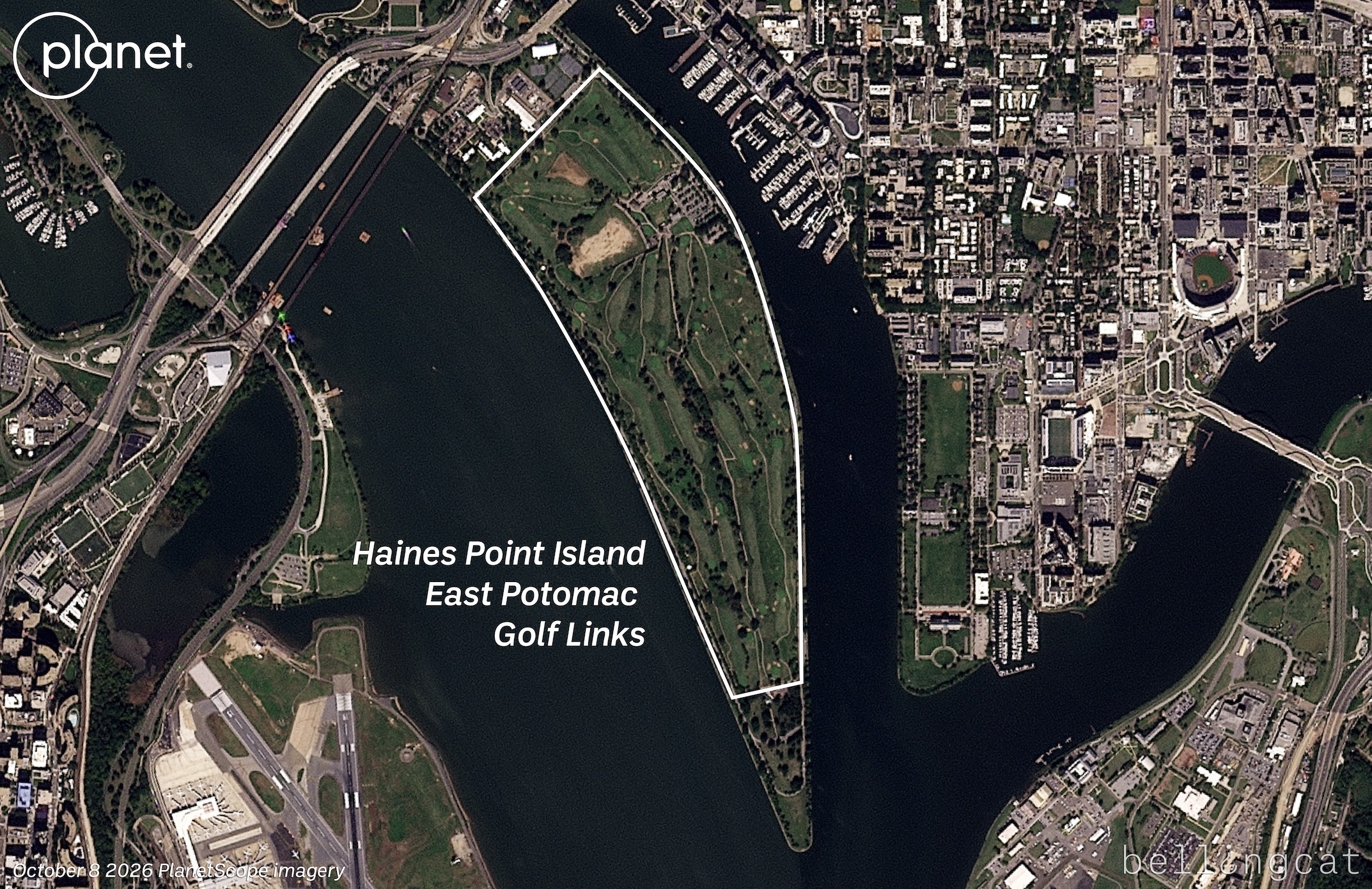
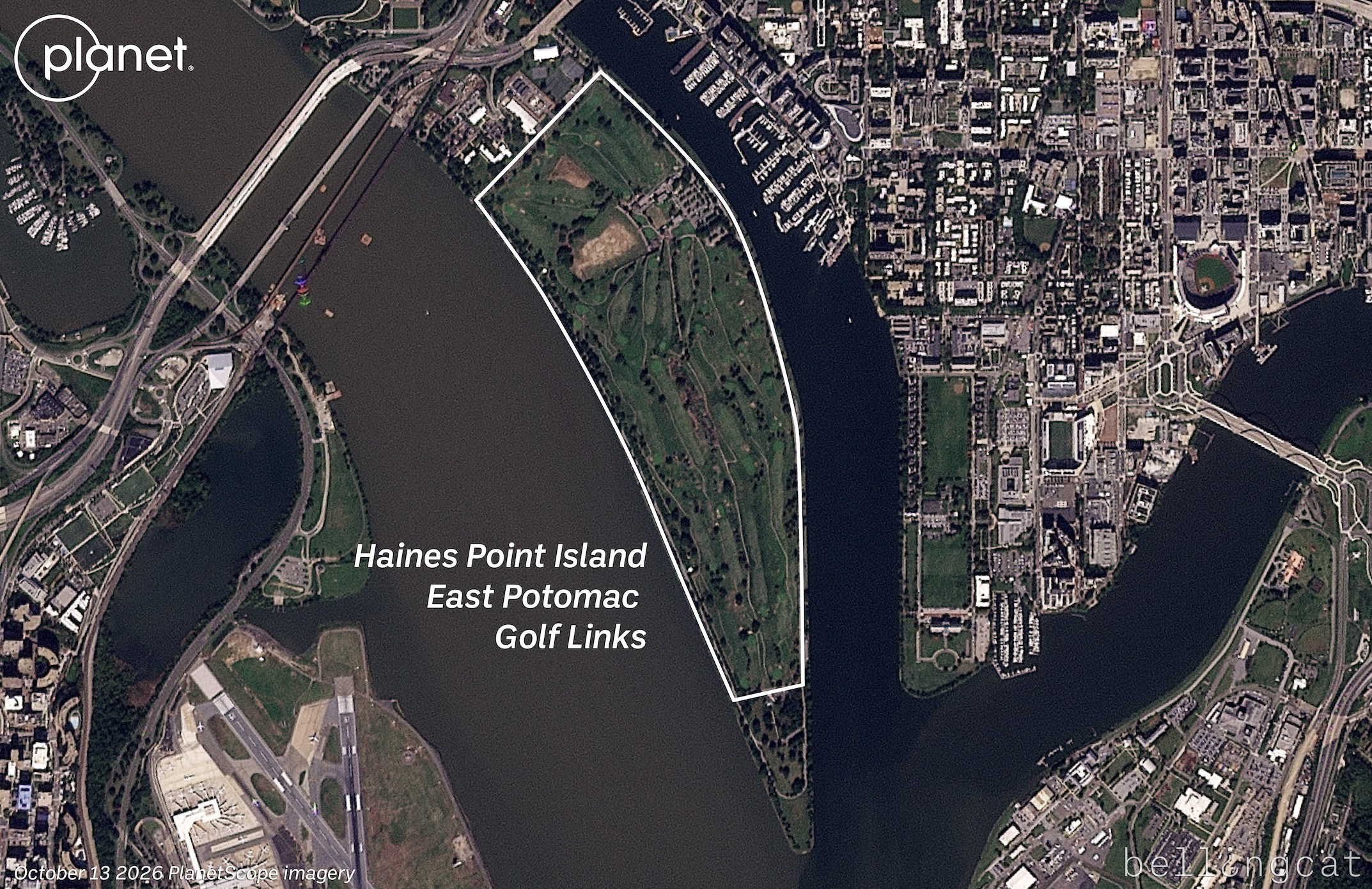
Planet Labs satellite imagery shows that only two structures within this red cone were damaged, including a clinic.

The other structure appears to be an earth-covered magazine or bunker.

Imagery showing two damaged structures. Source: PlanetLabs.

Giancarlo Fiorella and Merel Zoet contributed research to this piece.

Bellingcat is a non-profit and the ability to carry out our work is dependent on the kind support of individual donors. If you would like to support our work, you can do so here. You can also subscribe to our Patreon channel here. Subscribe to our Newsletter and follow us on Bluesky here, Instagram here, Reddit here and YouTube here.

The post Video Shows US Tomahawk Missile Strike Next to Girls’ School in Iran appeared first on bellingcat.
Read the whole story
mkalus
20 hours ago
reply
iPhone: 49.287476,-123.142136
Share this story
Delete

Block’s AI layoffs are fake too

1 Share

Twitter cofounder and ayahuasca beard weirdo Jack Dorsey has a company called Block that does a useful thing — CashApp — and a lot of stupid stuff with bitcoins and so on. On 26 February, Block announced a huge layoff — over 4,000 people, 40% of the company.

Morale has been down at Block — not least because everyone is forced to use AI. Especially when it’s stupid, because Dorsey thinks AI is the most effective thing ever: [Wired]

Block employees are currently expected to send an update email to Dorsey every week, who then uses generative AI to summarize the thousands of messages.

The layoffs started slowly from the start of February, which is a great way to make your employees feel happy and secure. So Dorsey got the rest done in one hit on the 26th.

Dorsey wrote a long tweet and a more soberly-phrased letter to shareholders about the layoff. It’s not profit, no no, profit’s going great. It’s about the amazing gains AI will surely bring: [Twitter, archive; Q4 2025 Shareholder Letter, PDF, archive]

The core thesis is simple. Intelligence tools have changed what it means to build and run a company. We’re already seeing it internally. A significantly smaller team, using the tools we’re building, can do more and do it better. And intelligence tool capabilities are compounding faster every week.

Stock analysts call BS on this. The headcount at Block ballooned starting in 2020 — it had 3,835 staff in 2019 and around 12,430 in 2022, then went down to just over 10,000 this year. [Bloomberg, archive]

Zachary Gunn from Financial Technology Partners said:

When I look at the overall employee number, this is more about the business being bloated for so long than it is about AI.

The stock price promptly went up 24%, of course. Wall Street loves AI — but it really loves layoffs.

Can AI replace the laid-off employees? Of course it can’t. A pile of laid-off Block staff spoke to the Guardian and called out Dorsey’s AI delusions at length. One said: [Guardian]

There’s a distinction between what’s technically possible and just – pardon my French – whatever CEO bullshit will happen based on their own interpretation of how AI works.

A lot of the workers Block wanted to keep got offered retention bonuses so they wouldn’t just walk, now their job was herding AIs that couldn’t do their fired coworkers’ jobs. Many of those walked anyway — including Naoko Takeda, a data scientist, who was offered a one-off bonus and a 75% pay rise to stay at her newly impossible job: [LinkedIn, archive]

On my immediate team, the only people left were me and a new hire who had started 3 days ago.

And over on Twitter, Dorsey straight-up admitted to overhiring during the COVID lockdown: [Twitter, archive]

yes we over-hired during covid because i incorrectly built 2 separate company structures (square & cash app) rather than 1, which we corrected mid 2024.

The Block layoffs were never AI — they were a corporate restructure. If anyone tells you the Block layoffs were AI, point them at Dorsey’s tweet.


Read the whole story
mkalus
21 hours ago
reply
iPhone: 49.287476,-123.142136
Share this story
Delete

How much water do the data centres use? It’s a secret

1 Share

The AI companies insist: we barely use water, hardly a drop!

But we won’t tell you how much water we use. And we’ll take you to court to stop you from finding out.

Google wants to build a new data centre in Roanoke in Virginia. They did the deal in June 2025. How much water will it need?

Roanoke gets its drinking water from Carvins Cove Reservoir. The locals tried to find out just how much water Google would be taking. But Google wanted the water and power numbers kept secret: [Roanoke Rambler]

Neither the power company nor the water authority would specify the amount of electricity and water the project might need. By the time of the Botetourt County announcement, project representatives had already persuaded electricity and water officials to sign non-disclosure agreements.

Henri Gendreau from the Roanoke Rambler sued the Western Virginia Water Authority for the details. The judge agreed with him: [ruling, PDF, archive]

The water usage information being sought is not a right, much less a right associated with ownership or possession. It is not a thing that is possessed. It is not information that is owned by Google. It is not an item that is made or marketed. Considering the plain meaning of the word, the court finds that WVWA has not established that the water usage information is proprietary information.

But the Water Authority said it would appeal the ruling. Why? [Roanoke Rambler]

Because Google strongly believes the redacted information is proprietary.

The details were finally released last week: [WSLS, video]

Carvins Cove here behind me is not just the main drinking source for Botetourt but most of the Roanoke Valley. Officials say they can handle that two to eight million gallons a day, but if it exceeds that demand, they’re going to have to start looking for a new water source.

That’s 7.5 million to 30 million litres of drinking water every single day. This is the reservoir’s entire remaining capacity. Google is taking absolutely the limit of all the water they can.

How about the other AI vendors, like OpenAI? Well, Sam Altman assures us that water is fake: [YouTube]

Anant Goenka, Indian Express: The amount of natural resources that are going into the data centres, the amount of water, the amount of …

Altman: Water is totally fake. It used to be true, we used to do evaporative cooling in data centres, but now that we don’t do that, you see these things on the internet where, don’t use ChatGPT, it’s 17 gallons of water for each query or whatever, this is completely untrue. Totally insane. No connection to reality. What is fair, though, is the energy consumption. Not per query, but in total, because the world is using so much AI, is real, and we need to move towards nuclear or wind and solar very quickly.

Notice what Altman did there — he started with the headline claim “water is totally fake” then he gave a made-up example ending with “or whatever.” What he did not give was anything like a number. A current number.

(Also, Altman’s actual power solution is all the gas turbines he can get.)

Last year, in June 2025, Altman said an average ChatGPT query uses: [blog post]

about 0.000085 gallons of water; roughly one fifteenth of a teaspoon.

That many US gallons is 0.32 of a millilitre. As of June 2025, ChatGPT was running about 2.6 billion queries a day. That works out to 837,000 litres a day. [Substack]

I’m not inclined to believe that’s the entire number until I see precisely how OpenAI calculated it and what they included — and didn’t include. Like ongoing training.

OpenAI did not respond to any of the press queries asking how Altman got this number. So I see no reason to trust it’s the number anyone else would calculate.

Given the secrecy, assume all the hyperscalers use a huge amount of fresh water. Until they give us official numbers somewhere they’re not allowed to lie. They’re not fighting to keep the numbers secret because they’re good.

Read the whole story
mkalus
21 hours ago
reply
iPhone: 49.287476,-123.142136
Share this story
Delete
Next Page of Stories