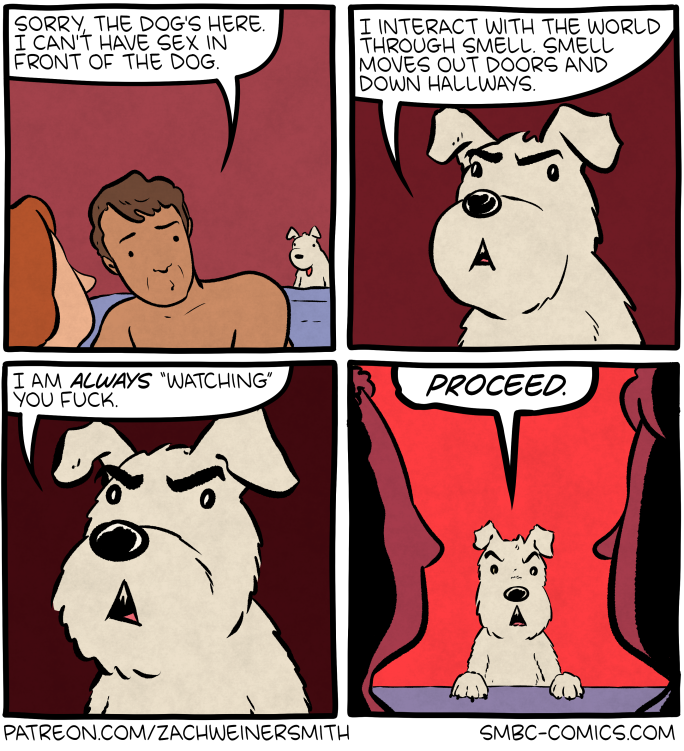
Today we have a podcast interview! I spoke to Kim Crawley and Ryan Wilson from StopGenAI.com. 32 minutes. Contains mild salty language concerning generative AI.
Kommen wir nun zu etwas ganz anderem. Es ist ja so, dass wenn du kleine Kinder hast, du Musik, ob du willst oder nicht, ganz anders hörst als ohne. Ich weiß das, auch wenn das bei mir jetzt doch schon sehr lange zurückliegt, erinnere ich mich gut daran. Auf langen Reisen entscheiden dann eben die Kinder, was gehört wird. Das kann mitunter leider halt auch sehr triviales Zeug sein. mogreens, der noch kleine Kinder hat, zeigt hiermit, dass es auch durchaus anders geht. (Nicht nur) Kinderlieder, die Normen, Werte und Haltungen zu vermitteln versuchen. In Zeiten wie diesen wichtig, auch wenn man damit natürlich nicht alle erreichen wird, aber das war ja nie anders.
Ich jedenfalls finde die kleine Reise in ein Genre, aus dem ich lange nichts gehört habe, tatsächlich schöner, als ich mir das vorher vorgestellt habe. Ohrwürmer sind garantiert und ich mag die Idee, die hinter diesem Mix steht, wirklich außerordentlich gerne. Toll!
As with all my previous ‘Reflection’ year-end mixes, I begin with a collection of albums, EPs, and compilations that resonated with me over the past year. From there, I curate tracks to build the mix - a process that’s as much about omission as inclusion. Inevitably, many of my favorite tracks and albums don’t make the final cut, simply because they don’t fit the flow of the mix or get lost along the way. There are plenty of albums I played on repeat that aren’t included here, but I enjoy this process much more than creating lists.
As I remind myself each year, this isn’t meant to be a definitive “best-of” list. Instead, it’s a snapshot of some of my favorite music from the year, distilled into one cohesive and listenable format. Compiling these mixes under self-imposed restrictions is my way of revisiting and celebrating the music I’ve loved critically, while sharing it with you in a way that’s both meaningful and accessible. For me, listening back to these mixes is like flipping through an audio photograph, capturing the essence of my year in music and invoking memories from special moments.
I encourage you to use this mix as a jumping-off point—dive into each artist, explore their albums in full, and check out the labels behind the music. You can find a Buy Music Club list linked below to help you dig deeper. If you’re curious about the broader scope of music I’ve supported this year, my Bandcamp collection is always up to date. And for the ASIP year-end label compilation, that’s coming very soon…
~
2025 was nearly the year of breaking point with my time and effort spent on the label. A new job, a third child, and… well that’s enough to do it I guess. So as the year-end drew closer, the idea of completing this mix became laughable in its scope and I thought it might be the first year in over a decade I haven’t completed one.
It’s helped that I haven’t done many mixes this year, so approaching it pulled on some much needed creativity, but even when looking back at what music I had supported on Bandcamp and the records on my shelves, it took me a long time to organize, make sure I had it downloaded, and even pull the trigger on items in my wishlist (my wishlist often revolves around vinyl I’ve picked up with no BC download code offered - gripe). Those who go through this obsessive process know how much time it can take up.
Looking back at the mix now it’s complete, I’ve managed to include around 80% of what was in high rotation for me this year (there’s always some that don’t make it into mix form) and the styles are on point as usual in reflecting my taste over the year. We’re starting with the deep ambient cuts, moving into more IDM and techno, and moving through a lot more energetic tracks towards the end - from Jungle to Trance…
One of the only live gigs I got to emerge from my family life to see was WNDFRM and Patricia Wolf in Seattle, so of course, Patricia’s newest installment on Balmat (who also had another epic year as a label) is included. Related to that event, organizer Raica (Chloe Harris) made a return with two albums this year, I believe - both worthy of praise, but her piece for (another relentless outpost) Quiet Details was the standout. One of the only artists to make a return on this list from last year is MPU101 on Ilian Tape - a BoC-vibe regular who always manages to tickle the right part of my ears. Alex Kassian had about three tracks or remixes in my original shortlist (including the lush remix of Spooky) so I had to do my best to not over-indulge - his remix of a classic Pianoman melody will bring back the Global Communication / Tangerine Dream vibes. Skee Mask is still releasing archive material that defies expectations. In one of the most welcome moves of the year, finding All Possible Worlds on Bandcamp made many people ecstatic, not least because of the full release of Irini’s odyssey, or the random track found on their profile. Light of Cacti got my Schnauss tastebuds tingling. Anushka Chkheidze has been on my radar for a long time now, so it was a treat to see her collaborating with the much-respected Robert Lippok across a very interesting record. OPN landed late in 2025 but arguably released one of his most welcome albums for die-hard fans, hooking me right back into his unique worlds. Simon Littaeur came into my feed through his Instagram videos (normally something that doesn’t always result in a quality album), but his production lived up to the visual hype. The album by jp on emerging label Theory Therapy was full of big tracks, and I did my best to make sure one was included on here. Talking of big, Djrum’s latest didn't disappoint, and he’ll continue to be classed as an innovator with output like this year. I nearly stopped at the Barker track, as it doesn’t get much bigger than that euphoric high, but something told me to bring it back down a little bit more, so into a slight trance we went with a superb debut by Alvar (Teo Bachs) and of course, the masters of hypnotizing techno, Voices from The Lake making a much needed return. The ending comes from vinyl selector Chee Shimizu, a unique piece of music that would bring the sun down on any horizon, and one of two great tracks included in the mix from the ESP LA fundraiser.
The top titles, unique viewing habits, and actors that defined the year in streaming on Plex
Another Breakout Year in Film, Television, and Streaming Entertainment
When a year kicks off with a Golden Globes spotlighting bold new entries like Emilia Pérez and The Brutalist and reaffirming breakout hits such as Shōgun and Baby Reindeer, you know you’re in for another defining year. No one’s bingo card had KPop Demon Hunters as early-summer breakout ‘stars’ but that’s exactly what happened, and releases like Superman and Wicked: For Good connected hardcore fans in theaters around the world, and Avatar 3 is right on their heels. Prestige TV kept pace, with House of the Dragon, The Bear, and Bridgerton dominating screens and social feeds alike. It was a year that proved, again, just how thrillingly unpredictable entertainment can be. It’s that very surprise that keeps us watching. That very momentum is what keeps us ticking.
In that same vein, it was another milestone year for Plex. As viewers turned to Plex to navigate an increasingly complex streaming universe, we saw new viewing patterns take shape, unexpected titles rise to the top, and a few beloved stars dominate screens around the world. So before we hit play on another year of discovery, let’s rewind and look at the numbers.
What We Watched and When
2025 Top Movies Each Month on Plex1
Only 8 different movies topped the list in the eleven months we’re reporting, with several movies dominating two months in a row, based on cumulative minutes streamed on Plex:
January: Perfect Strangers
February: The Devil’s Advocate
March: Lawless
April: Homefront
May: Homefront
June: Kandahar
July: Angel Has Fallen
August: Angel Has Fallen
September: Wrong Turn
October: Halloween
November: Halloween
2025 Most Popular Genres on Plex
We needed the laughs this year. Comedy breaks out in 2025 for the first time in five years, dethroning Action as the #2 most-watched genre. Drama is consistently #1 for over five years running.
2025: Drama, Comedy, Action
2024: Drama, Action, Comedy
2023: Drama, Action, Comedy
2022: Drama, Action, Comedy
2021: Drama, Comedy, Action
1Based on total minutes streamed between January 1, 2025, and December 12, 2025, for on-demand content available on Plex.
What Ruled Universal Search This Year2
With a wide range of titles searched for every day, no matter what platform they’re on, these titles topped Plex user searches:
Squid Game
The Summer I Turned Pretty
The Rookie
Stranger Things
Game of Thrones
2Based on cumulative searches for titles searched on Plex between January 1, 2025, and December 12, 2025.
>> Plex users searched for Squid Game 2.6x more than Game of Thrones and 2.3x more than Stranger Things.
>> Romance drives 45% more searches than sci-fi horror.
The Stars Driving Discovery
Even in a world of endless content, viewers continue to follow the stars. In 2025, Plex searches made it clear: familiar faces, comedy staples, and action legends are driving discovery.
Top-Searched Actors and Actresses of 20253
Actors
Adam Sandler
Jason Statham
Jack Black
Tom Cruise
Keanu Reeves
Actresses
Scarlett Johansson
Ana de Armas
Jenna Ortega
Anya Taylor-Jo
Emma Myers
3Based on cumulative searches for actors on Plex between January 1, 2025, and December 12, 2025.
What Pulled Viewers In…and Kept Them Watching
We never know what cultural moments, legends lost, or unexpected hits are going to move viewers to watch more, but this year, it was a bit of everything:
Top U.S. Shows: Knots Landing…at #14
Viewers keep circling the cul-de-sac and can’t get enough of it:
Knots Landing
Weeds
The Drew Carey Show
Z Nation
The Following
4Based on total minutes streamed between January 1, 2025, and December 12, 2025, by U.S.-based users for on-demand content available on Plex.
>> Long-running, episode-dense series are driving year-long engagement.
Trending Moments: Where Culture Spiked Streaming Habits
Wicked
Universal searches for the original Wizard of Oz jumped nearly 3x in November, compared to the month prior, driven by Wicked: For Good in theaters and reminding everyone that there’s no place like Oz.
Louvre Heist
Following the Louvre Heist, streamers were Feelin’ Heisty: 2x more users marked films from the Ocean’s franchise as watched on Plex in the month after the heist compared to the month prior, and there was a more than40% increase in universal searches for the films.
Top Heist Movies Streamed on Plex in 2025 (from our very own Feelin’ Heisty hub):
Triple 9
Weeds
The Maiden Heist
Bandits
King of Thieves
Flawless
Legends Lost but Forever Loved: Keaton + Redford
In the week following Diane Keaton’s passing, minutes watched for titles of hers available on Plex jumped by over 2.5x, compared to the week prior.
Top Diane Keton movies watched on Plex in 2025 were:
And So It Goes
The Big Wedding
Mama’s Boy
Bandits
Smother
Love, Weddings, & Other Disasters
Viewers streamed 35% more minutes of Robert Redford titles in the week after his passing, compared to the prior week.
The top Robert Redford movies watched on Plex in 2025 were:
All Is Lost
Spy Game
Mama’s Boy
A Walk in the Woods
National Parks Adventure
Truth
It’s the Most Wonderful Time of the Year
Since the year isn’t over, there’s still plenty more to fit in before the ball drops.
Holiday Highlights: Festive Favorites Took Over
As the holidays roll in, audiences across the U.S., U.K., and Canada are leaning into seasonal comfort watches – with It’s A Wonderful Life and A Christmas Carol proving to be universal go-tos – showing just how much tradition shapes what we stream.
Top Holiday Watches by Country5
United States:
Hallmark Movies & More channel
Holiday Favorites by Lifetime channel
It’s A Wonderful Life
Holiday Baking Championship
A Christmas Carol
United Kingdom:
Nativity 2: Danger in the Manger!
GREAT! Christmas
It’s A Wonderful Life
A Christmas Carol
A Christmas Horror Story
Canada:
It’s A Wonderful Life
Heartiest Christmas
Deck The Halls
A Christmas Carol
Reindeer Games
5Based on total minutes streamed on Plex between November 1, 2025, and December 1, 2025, by U.S., UK, and Canada-based users.
What 2026 will bring is hard to say, but we’re liking this momentum and expecting the unexpected.
About Plex Data & Insights
Plex connects entertainment lovers to their streaming content, no matter where it’s hosted – in their own digital libraries, across any of their premium subscription services, or free streaming content that’s available directly on Plex. So we know what the viewers are searching for, what they want to watch next, and what is inspiring their next watch (no matter where it is). With more than 45k free, on-demand (AVOD) titles and 1,500 FAST channels, streaming free content on Plex is more accessible than ever before. The 25MM monthly active users from across over 240 countries and territories, and a decade and a half in providing streaming viewers access to discover the widest selection of streaming television and film content, Plex data is a true compass for streaming behavior and insights.
Glitzeringo aka Jimm Koerk aka Der Käpt’n mit einem Mix, der gespickt ist mit Tracks aus der „schönen Zeit“. Also wenn ich die Frage richtig interpretiere. Eine Antwort auf diese Frage habe ich nicht. Wäre mir jetzt auch ein wenig zu sehr musikphilosophisch Spaß an dem Set habe ich trotzdem – und ziemlich gute Laune noch dazu. Denn heute ein letztes Mal arbeiten in diesem Jahr. Das Wetter ist super, um dahin nochmal die 50 Kilometer auf dem Rad zu machen. Mit eben diesem Sound auf den Ohren. Jetzt schnell noch Gesundheitscheck und danach endlich Urlaub. Könnte alles gerade eigentlich nicht gar schöner sein. Bis darauf, dass mir der hiesige Datenbank-Struggle tierisch auf den Saque geht, aber darum kümmere ich mich dann im Urlaub
Und weil Freitag und wegen allem: Discokugeln und das sich aus denen ergebene Glitzer. Tanzen ist erlaubt. Was wollen wir mehr?
Style: Deep House Length: 01:02:55 Quality: 320 kBit/s
Tracklist:
Tim Green – Helpless Sun
Frankey & Sandrino – Wandering (Original Mix)
Nandu, Radeckt, Tripolism – Dope Dance (Extended Mix)
Djuma Soundsystem & Aki Bergen – Love Her Madly
Lunar Plane – Children of Rain
Rockin Moroccin – You Got the Love (Original Mix)
Made In TLV, Mano Negra – Sueno De Solentiname (Rampa Version)
WhoMadeWho – Keep Me In My Plane [DJ Koze Hudson River Dub]
Daniel Bortz – Boyz 2 Men (Original Mix)
Martin Eyerer feat. Ruede Hagelstein – Hey Hey
Alle der diesjährigen Kalendermixe finden sich hier.
All the best for the festive season, and best wishes & good health for 2026 to all readers. Thoughts on the following will be appreciated. – vreaa
1. A home is simply a place to live
A home is first and foremost a place to live – that is its core purpose and ultimately its real value.
2. A home is a basic human need
It’s odd that a society obsessed with the importance of human needs such as clean air, water, food, childcare, education, and healthcare can allow a similarly basic and important human need – shelter – to become a speculative vehicle, for decades.
3. You can calculate the fair financial cost of a home
Housing’s fundamental fair-value pricing can be calculated from historical ratios of (i) local wages and (ii) rental yields. By those measures, and even taking into account recent price weakness, Vancouver homes of all types remain among the most overvalued globally, and can be argued to be roughly two to three times overpriced.
4. Some people will pay a bit more for the benefits of ownership
People may be prepared to pay for the convenience and (in some cases) pride of owning over renting, but this usually modest ‘ownership premium’ does not alone result in prices that are wildly higher than fundamentals justify.
5. Commonplace use of extreme leverage is unique to the housing market
Leverage – borrowing heavily to buy – is routine in housing. The 10-to-one or even 20-to-one leverage that is common in RE (10% down or 5% down respectively) is justifiably seen as cowboy-level risk taking in other markets. Try getting that kind of basic leverage in a margin stock account. RE is the only way in which most citizens are exposed to leveraged investing. And it works seemingly magically on the way up … a young couple’s entire net-worth may double in a year where housing prices leap 5% or 10%. But on the way down, leverage is hellish. This large leverage/deleverage phenomenon is a central factor fuelling both the virtuous and vicious stages of a bubble.
6. Unusual housing tax incentives tempt and drive buyers
Tax-free capital gains on principal residences create big incentives to buy at any cost. In a social system that aims to tax fairly across the board, why fuel speculation in homes by tempting buyers with the promise of this massive reward? And the rewards are indeed outsized – in recent years, in many parts of Vancouver, millions of dollars tax free. How long does it take an average Canadian household to save a million dollars, after tax? A life time? A fairer system might only shield long-term gains that match core inflation.
7. Mortgages stimulate an economy in a profound and unearned fashion
Where do mortgages come from? Answer: Banks create them out of thin air through their lending under our fractional banking system. Most people, even those amongst the most educated members of our society, are unaware of this fact. Test this by asking some of your friends. Most believe mortgages come from other people’s savings. In actual fact, they are created from almost nothing, in the process essentially expanding the money supply (and, yes, fuelling inflation). This results in an economy looking far better than its fundamentals merit, as a bubble expands. Sellers suddenly have large amounts of money to spend now, that they did not earn in any conventional sense. Of course, on the other end of the deal a buyer has promised to pay all this back, but that’s in the future.
8. Decades of unusually low interest rates misprice risk and encourage speculation
Artificially low interest rates since the late 1990s – thanks to celebrity central bankers egged on by eager politicians – made borrowing cheap and fuelled endless price growth. The cost of borrowing was mispriced; citizens could borrow and risk the capital without proportionate consequences. We experienced serial asset bubbles (tech, US housing, everything, AI). Interest rates are still low by historical standards, even though many are complaining that they are ‘too high’ compared with record lows of recent years. The current 5 year rate is ball-park 4%; the average 5 year rate from the 1950s to the present is about 8%.
9. A Speculative Mania
Speculation means buying largely for price appreciation, rather than primarily for income or use. Rising prices draw in more buyers, FOMO kicks in, ‘animal spirits’ take over, and pretty much everyone is dragged into the vortex. We have long maintained that everybody buying in Vancouver, over the last 20 years or so, was doing so with the conscious or unconscious expectation of continuous unrealistic price gains. This applies equally to buyers who argued that they were simply buying for use – the truth is that they would never have contemplated buying at mania prices if they thought that prices may stay flat, or (unimaginably) decrease. They bought based on the assumption of price gains. This local-buyer speculative component was a powerful force driving the market.
10. Stories that Fuelled the Vancouver Bubble
“We are running-out-of-land”, “we are the best-place-on-earth”, “rich foreigners will buy everything”, “endless immigration”. These themes in various combinations were touted widely as reasons for the astronomic prices, and reasons to expect prices to rise indefinitely. Some actual effects in all of these, but more important was the way that these narratives drove relentless buying/speculation by locals.
11. Serial undeserved and unnecessary bailouts
Vancouver RE received a bailout-shot-in-the arm in the form of very low interest rates in early 2009, when it didn’t even need it. This resulted in the second booster stage of the bubble. The ridiculously loose money of the COVID pandemic has proven to be the last booster shot, causing the 2021-2022 blowoff. We quipped at that time that all Vancouver RE prices would need to truly go into orbit would be a devastating earthquake. Price corrections thus far appear to have removed the COVID blow-off part of the bubble – but prices are still in the stratosphere.
12. Taking a second job as landlord/property manager in order to buy
Many owners became unintended landlords, buying properties with rental suites just so they could stretch to make the mortgage payments and get into the market. Thus citizens routinely got to use only a fraction of their home, and took on a second part-time job (informal property manager) to be part of all this. Many homes became de facto businesses. Is this really how we choose to live, and to spend our time?
13. Shady borrowing and lending practices further increased price pressures
One income supporting a series of mortgages. Using equity from one property to leverage the next. Fraudulent income declarations to secure larger loans. Blind-eye to the same from the lenders to compete for business.
14. No intention whatsoever to actually repay the mortgage debt
Market historians will have heard stories from a half century ago, of ‘mortgage burning parties’. This was where home owners got together with friends and celebrated finally paying off their debt. “What losers!”, thought Vancouver speculators of the last 20 years. Didn’t people know that mortgages could simply be rolled over, and finally eclipsed by the massive gains in housing prices when you sold? Why bother to pay down your debt with actual earned money, when your appreciating house value could look after all that for you? [These assumptions, of course, get very rudely destroyed when prices plunge.]
15. There is no shortage of land in Canada, only a shortage of will to use it.
Aliens (both those from other countries and those from other planets) are confused – why does a country with the second largest landmass on the planet, and such a low population density, not take advantage of this useful resource? We are most certainly not ‘running out of land’.
16. Vested interests push up prices and benefit from unaffordability
Politicians with multiple properties, realtors posing as neutral experts, media dependent on developer advertising, vocal elites with massive RE ‘portfolios’, influential boomers dependent on the value of their houses for their retirements, many other examples: all have interest in keeping the market hot and prices high. Don’t expect those in positions of influence to take any real action that may make housing affordable. True affordability would have to mean that prices would fall to the vicinity of fair fundamental value levels. Witness the first public statement by the current Federal Minister of Housing (ex-Vancouver-mayor [2008-2018] Gregor Robertson): not to worry, housing prices will not come down. He happens to own multiple BC properties.
17. Realtors are almost never impartial, and show bullish bias
Realtors earn from transactions, not from getting either the buyer or the seller the best deals. Realtors want volume; and they get the most volume in an optimistic, bullish market. Witness the market pause and reduced sales of 2025. Take any opinion, advice, or forecast from anybody in the RE industry with a grain of salt the size of your head.
18. A Real Estate Bubble causes a vast misallocation of resources
A housing bubble sucks the oxygen out of other activities in the society. Talent and capital is distracted… and flows into real estate. Professionals, distracted by stories of massive gains, become condo flippers. Youth become roofers for quick cash (and F150s!) instead of studying to become nurses or engineers. Capital is diverted from innovation, industry, manufacturing. The economy becomes overdependent on activity related to RE: by many calculations this sector swells to over 20% of all of BC’s economic activity.
19. In a bubble everything to do with housing goes up in price, because it can.
Prices increase at higher rates than inflation in construction, renovations, landscaping, yard care, condo maintenance fees, etc. Owners see their property values increase in leaps and bounds, and these expenses seem relatively affordable and appropriate – they are easy to ignore. In a related effect, demand for services increase, and the quality of many housing related goods and services appear to go down.
20. Housing invades mental space and defines the culture
A multi-decade housing bubble takes up a massive amount of mental space, both for those ‘in’ or ‘out’ of the market. It starts defining a culture. News anchors declare that they ‘love’ real estate. Social interaction is commonly dominated by talk of housing prices, unrealized profits, renovations. Infatuated owners spend an inordinate amount of money and time caring for or refurbishing their homes, which are now their most important ‘investments’. Renters experience chronic anxiety; they anticipate forever being disenfranchised. Sleep is affected. How much does a society suffer from all of this distraction and unproductive activity? Consider how far this is from the default: “A home is first and foremost a place to live”.
21. Owners and renters become two different classes of citizens, often on generational lines
The bubble divides the society. On paper, there emerges huge wealth inequality. Inter-generational conflict festers. Boomers’ retirement hopes (ridiculously high prices) clash with younger generations’ shot at a normal life (prices at fundamental values). Essentially the boomers are asking the youth to fund their retirements by overextending into RE and taking on massive debt for life. Discouraged young people leave town. Owners hunker down and try to protect their paper gains. Politicians express concern about social consequences with sober frowns, but affordable housing talk remains nothing more than talk.
22. Unintended (and not immediately apparent) consequences
Your family doctor, instead of working until 70 to build their retirement nest-egg, retires comfortably at 56 after cashing out by downsizing their primary residence and selling their large clinic space in 2022. Recall prominent architect Bing Thom’s comment on making more money on his Vancouver home than by working “an entire lifetime”. “This tells you something”, he said.
23. Wealth effect spending further boosts the economy
Owners track the prices of comparable properties, feel rich on paper and spend accordingly. They ignoring the need to save and perhaps even build further debt against their home. This makes the economy look stronger than it actually is.
24. Bubbles always end
They are destined to end once they start. When they do start deflating, participants will invariably look for triggers and reasons. Currently they blame tariffs, land claim uncertainty, immigration slowdowns, the exposure of fraud & money-laundering, youth emigration, etc. All of these factors may contribute to a market slowdown, but they should not distract one from understanding that the underlying structure of a bubble is ultimately unsustainable, and will at some point have to collapse, even without external cause.
25. Timing the top is impossible
The market can stay irrational for a long, long time. At the end of 2009 we predicted that the bubble would pop by 2019… out by an outrageous 6 to 16 years, depending on how you calculate. And, yes, retrospectively it would have been better to have purchased in 2005… or 2001… or 1996… but retrospect is cheap. The second lesson any market participant must learn (after learning about speculative manias) is that one has to learn to get over that ‘coulda-shoulda-woulda’ feeling as painlessly as possible.
26. Vicious cycles then follow; the downward-spiral is self-reinforcing
Negative equity, forced sales, banks protecting themselves, construction grinding to a halt, jobs vanishing, incomes dropping, rents falling, prices resetting lower; rinse and repeat until all speculation is flushed from the market. When prices are falling, speculators vanish – and a market that has been based almost solely on speculation implodes.
27. Price targets are lower than most can imagine
When big bubbles burst, prices often eventually drop to below fundamental values (over 50%-off from current Vancouver prices). These price targets look impossible to all but dedicated students of market history. Prices revert to the mean. Prices drop to levels supported by fundamentals. Prices drop until all bullish sentiment is completely squeezed out. All manias end like this. In RE it can take many years. We currently have (rare) predictions from industry insiders of price drops for the coming year; of the order of 4% for Vancouver. Four percent is noise, not even a correction.
28. A market that is suffering the effects of a deflating speculative mania cannot be rescued
A popping bubble involves so many powerful self-reinforcing forces that, once underway, it will simply play itself out. Attempted rescues may alter the course somewhat, but are unlikely to change the ultimate outcome and real-price targets.
29. On the way down, do not be misled by ‘buyers’ market’ descriptors
Sellers’ and buyers’ markets, in RE agent parlance, are defined by inventory:sales ratios. Currently there has been a surge in inventory and a very large drop in sales – but prices have only modestly softened. Already we have hopeful realtors calling this a ‘buyers’ market’. Do not be fooled – you will hear these calls all the way to the bottom – this indicator will ‘stick to the wall’ all the way down, as panicked sellers pile on the inventory and most buyers sit on their hands (remember: speculators hate falling prices). A true buyers’ market will emerge when prices approximate levels determined by fundamentals.
30. In the aftermath, housing may genuinely become affordable again
Affordable housing? Nothing that a good clean speculative-mania collapse cannot sort out. Once the dust clears (and it will take years), we are likely to go through a period where housing is again priced near fundamental value. This will ultimately be good for the society, and hopefully we will have learned from the entire cycle. The path getting there will be gruesome, however.
31. The human cost of a deflating RE bubble is brutal
Bankruptcies, shattered retirement plans, vanished paper wealth, and a lot of regret. Everybody suffers, in different ways, and at different times. Broadly, bulls can be destroyed in the bust; bears were massively inconvenienced and distressed during the run up. But literally everybody suffers when living in a society weathering a bubble deflation and aftermath.
32. We should try to discourage speculative manias, especially in basic needs
In the end, this is why everything possible should be done to minimize the risk of market manias in future. Humans will always be vulnerable to ‘animal spirits’ and attracted to get-rich-quick schemes – but we could take measures to ensure that structures within the real estate markets, the financial system, the taxation system, and perhaps even education, deter rather than fuel such manias.
33. Not so fast… we could be wrong (yet again)
Perhaps Vancouver RE prices will turn on a dime and boost from stratosphere to actual orbit. But, this time, it does seem like something is genuinely ‘broken’. We will see.
The bubble is maintained not just by interest rates and bad financing and desperation but also by real supply constraints. We haven’t built enough, especially where people want to live.