Resident of the world, traveling the road of life
69230 stories
·
21 followers

Community Votes to Deny Water to Nuclear Weapons Data Center

1 Share
Community Votes to Deny Water to Nuclear Weapons Data Center

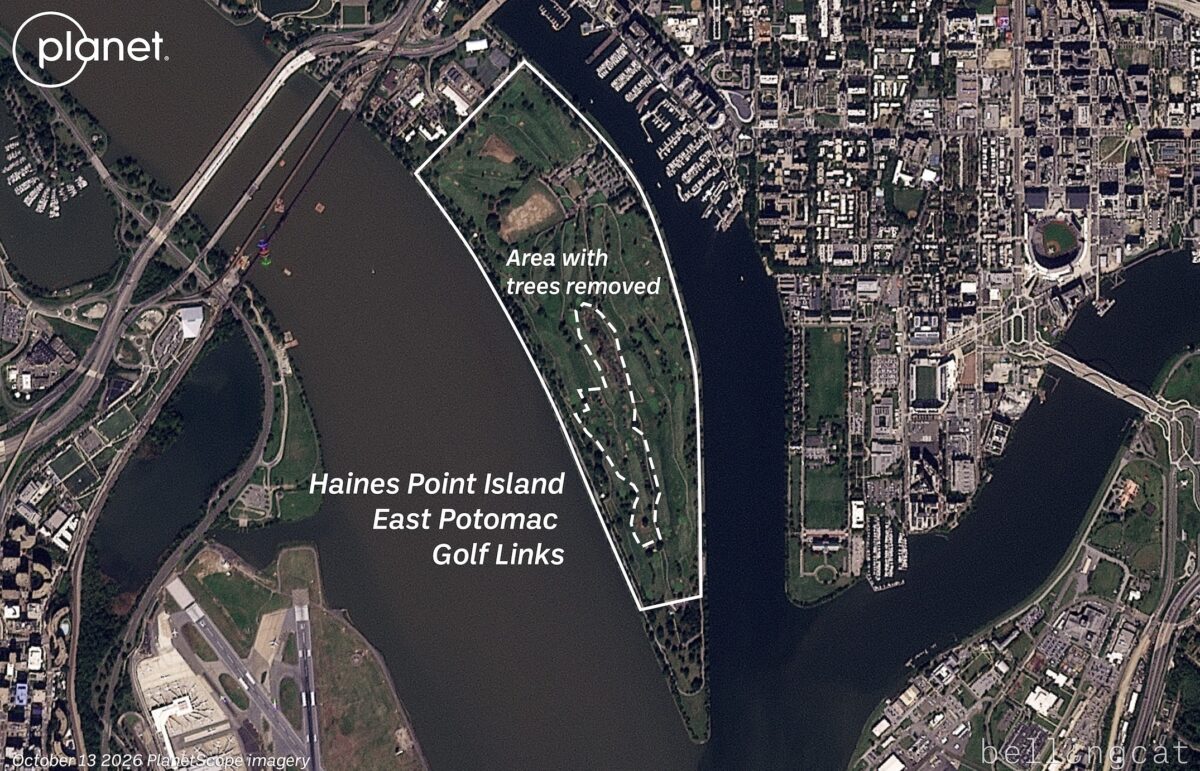
Ypsilanti Township in Michigan is attempting to cut off the flow of water to a planned data center that would power a new generation of nuclear weapons research. On Wednesday, the Township’s Board of Trustees voted to institute a 365 day moratorium on the delivery of water to hyperscale data centers so the township can study the impact of the building’s massive water needs.

The proposed data center in the Ypsilanti Township’s Hydro Park has been a sore spot for the community since its proposal. The $1.2 billion 220,000 square foot facility would be used by Los Alamos National Laboratories (LANL) some 1,500 miles away for nuclear weapons research. In February, UofM’s Steven Ceccio told the University of Michigan Record that the facility would consume 500,000 gallons of water per day and that the University planned to buy it from the Ypsilanti Community Utilities Authority. (YCUA)

The YCUA has spent the past month lobbying for a moratorium on providing water and sewer access to hyperscale data centers and “artificial intelligence computing facilities,” according to notes on a presentation stored on the organization's website. The moratorium would include LANL’s data center.

The YCUA cited an American Water Works Association white paper about data center water demands and concluded it needed more time to investigate the matter. “Hyper-scale data centers, as well as other mid-sized data centers, artificial intelligence computing facilities, and high-performance computational centers are ‘high-impact customers’ for water and sewer utilities,” YCUA said in its presentation.

The moratorium places a 12-month stop on serving water to data centers while the YCUA conducts a long-term water supply analysis and looks into the environmental sustainability studies. “During the 12-month moratorium period, the Authority will refrain from executing any capacity reservation agreement.”

This is a delay tactic on the part of a Township that does not want to see the data center constructed. Many in the community have strong feelings about the use of parkland for a facility that researchers nuclear weapons. Beyond the moral and ethical concerns, some are worried about becoming targets in a war. Last month, Township attorney Douglas Winters told the Board of Trustees that building hosting the data center would make Ypsilanti Township a “high value target.” He pointed to the recent bombing of Gulf Coast data centers by Iran as evidence.

America is embarking on a new nuclear arms race and Ypsilanti Township is one small part of it. The Pentagon has called for US nuclear scientists to design new kinds of nuclear weapons and Trump’s 2027 budget proposal almost doubled the money set aside to create new cores for nukes. UofM has repeatedly said that the data center would not “manufacture” nuclear weapons.

“Los Alamos is tasked with nuclear stewardship—not conducting live tests on weaponry, but instead using advanced computation to ensure the safety and reliability of our existing stockpile without the need for nuclear testing, especially as our stockpile ages. Computation provides an important tool for LANL to achieve this mission,” UofM’s Ceccio told the Record.

But during a public open house about the data center, LANL deputy laboratory director Patrick Fitch confirmed it would be used for weapons research. “One of the two computers we’re planning in our 55 megawatts (section)—if this facility is built—will be for what’s called secret restricted data. So it’ll be for the nuclear weapons program. Not exclusively, but it’ll be able to do that work,” Fitch told the Michigan Daily.

During the Wednesday meeting of the Ypsilanti Township Board, attorney Winters gave a clear eyed summary of the Township’s place in the new nuclear arms race. “This facility they’re proposing in partnership with the UofM is the digital brain for everything that’s going to take place in New Mexico. Make no mistake about it, you can rename, reframe, and repackage all you want. It is a high value target,” Winters said

Even with the proposed water moratorium, the University and LANL plan to break ground on the data center on Monday. The University of Michigan did not return 404 Media’s request for a comment.

Read the whole story
mkalus
9 minutes ago
reply
iPhone: 49.287476,-123.142136
Share this story
Delete

An Architecture Firm Celebrates Canadian Design and Craft in a New Office

1 Share

An Architecture Firm Celebrates Canadian Design and Craft in a New Office

Corporate interiors are designed with function in mind, outfitted with contract furnishings made to support employees as they perform daily tasks. Yet there is little emphasis on the locale where duties are actually performed. When it came time to design their own hub, the architects at STARK decided to create a studio that was also a showcase of regional makers and craftsmanship: a celebration of both people and place.

A modern lounge area with orange chairs, a gray sofa, wooden tables, and a large wall art piece featuring a word search design.

A modern living room with a gray sofa, wooden coffee table, open book, abstract floor lamp, and a wall featuring repeated bold words in a grid pattern.

Located in Squamish, British Columbia, the 3,200-square-foot Queensway office emphasizes an interplay of materials which sets the tone at the entrance. Custom millwork in Canadian-sourced maple veneer adds warmth, and contrasts with the predominant crisp white tone.

Modern office lounge with orange chairs, wooden bench, abstract art on the wall, and a person walking past a glass-walled meeting room.

The material library forms the heart of space. Designers can pair flooring, tiles, and hardware and envision how each piece might enhance a project. This curated archive of finishes, textiles, and sample boards is not only an essential resource, but also a spot that provides endless inspiration for staff members.

A man works at a desk in a modern office while a yellow Labrador retriever lies on the floor nearby.

A modern meeting room with wooden shelves, a long wooden table, blue chairs, and a ceiling light, viewed through glass doors.

Adjacent breakout rooms are ideal for moments of quiet focus. Glass-enclosed conference rooms offer transparency with just enough privacy. Select words and phrases such as “creative boldness” and “authenticity” decorate the clear surfaces. A wood partition has the same terms carved out of the panels, playful reminders of the firm’s ethos.

Wooden shelving unit with books, small plants, decorative objects, architectural models, and a colorful painting; a leafy plant is in the foreground.

In alignment with STARK’s clear approach, every element is on view rather than tucked away. Exposed mechanical systems, bare walls, and concrete floors have an industrial appeal. Acoustic comfort in the open environment is key. Felt ceiling grids and covered panels dampen sound but do not detract from the streamlined style. The lighting program, developed in partnership with a local consultant, defines sectors designated for groups and yet still meets the demands of detailed work.

A woman sits alone at a table in a small, modern meeting room with padded benches, writing on paper under a desk lamp.

Modern bathroom with a long rust-colored countertop, integrated sink, large mirror, and sculptural glass pendant lights hanging from the ceiling.

Strategically placed pops of color produce visual energy without overwhelming the rest of the interior elements. Orange chairs and dividers animate the main zones of the office, while a rich rust tone envelops the largest boardroom. A linear fixture in a soft blue seems to float above the desk area, with seats in a similar tone set in the rooms below.

Minimalist kitchen with light wood cabinets, built-in shelves holding bottles and plants, a microwave, and a light wood dining table with blue chairs in the foreground.

Minimalist kitchen with light wood cabinets, stainless steel backsplash, built-in coffee machine, and three blue chairs at a matching wood table under a modern pendant light.

At this office by and for STARK, colleagues can fully engage with one another, with the space as part of the dialogue.

A person walks through a modern office lounge with orange chairs, a gray sofa, wooden accents, and a perforated wall panel with text.

Read the whole story
mkalus
3 hours ago
reply
iPhone: 49.287476,-123.142136
Share this story
Delete

After 77 Years, You Can Now Live in the Eames Pavilion System

1 Share

After 77 Years, You Can Now Live in the Eames Pavilion System

Charles and Ray Eames are synonymous with the burgeoning field of ergonomics, the Eames Lounge for Herman Miller an iconic example of what can happen when innovative design meets considered craftsmanship. The Eameses were highly interested in material exploration, using traditionally industrial parts to create a thoroughly cohesive project: the Eames Pavilion System, shown for the first time at Triennale Milano. Brought to life with through the collaboration of Eames Office and Kettal, each part is colorful, distinct, and most importantly, humane.

Interior view of a modern building with floor-to-ceiling glass panels, geometric patterns, a staircase, lounge chair, and minimalistic decor.

The facade is designed for the natural flows of life–windows open wide to refresh air inside, with the colorful panels available in custom configurations, equipped for privacy or public view. Yes, these are containers: containers for life, that one can place like blocks, however we wish.

Two-story modern interior with large glass windows, exposed metal beams, wooden walls, a red sofa, spiral staircase, hanging globe lights, and minimal furnishings.

For the Eamses, the house was first and foremost a design problem. The confluence of architecture, with Charles’ background, and the expertise of a painter’s eye from Ray made for a beautiful understanding of human nature, which they then translated to the built environment. “In the almost 40 years I have been Director of the Eames Office, I have been asked time and again whether it is possible to purchase a reproduction of the Eames House. One-to-one replicas can be interesting, yet we were always holding out for something else – a true systems approach that was also international in its solution. The new system advances prefabricated Eames buildings from prototype to product. Not a facsimile or collector’s edition, but a fully engineered architectural ecosystem. The Eames houses – many of them unbuilt – were always milestones and prototypes for such evolution. Our grandparents’ writings clearly show that even when designed for a specific site, the intent was series production of human habitation,” stated Eames Demetrios, Director, Eames Office, and grandson of Charles and Ray Eames.

Two-story modern building with glass walls, black metal framing, a staircase, and red accent panel; interior features industrial decor and potted plants.

A round pendant light hangs from a ceiling with parallel beams near the corner of a room with frosted glass windows and soft, diffused natural light.

A mid-century modern room with wood panel walls, a red sofa, two framed artworks, a striped rug, and a small yellow lamp on the floor.

A balance and a symmetry dominate the form, an extension of their design philosophy through and through. Not satisfied with creating an object for beauty’s sake, each aspect of the house reflected a deep understanding of human movement, trajectory, and nature: the gathering around the kitchen counter, the pile of shoes in the hallway. Of course, standards vary across cultures, yet there are certain things that we continue to hold true, about ourselves and others. This is what the Eameses were truly interested in, and it shows.

A yellow paper lantern sits in front of a partition wall with frosted glass and yellow panels, casting soft shadows of plants.

Close-up view of black-framed, open windows with wire mesh, revealing a red bench and a white lamp inside a modern interior space.

A white cord is tied around a wooden dowel and hangs from a ceiling with diagonal, shadowed slats.

A modern staircase with dark metal railing and wooden steps stands against a wall with vertical wooden panels.

Modern building facade with a large blue abstract panel above a yellow section, featuring glass, metal, and wood elements, along with a black door and mesh details.

A brilliant burst of blue and yellow among the industrial black and grey are signature Eames, creating personality and bringing Ray’s sensibility as an artist into view. Industrial details and cold metal soften within the sensibility of family and connection, a settling of the mind that is a talent unto itself.

A modern black door is partially open, revealing an interior with wood paneling, a staircase, and a long cord with knots hanging from the door handle.


A modern, box-shaped room with geometric patterns on its exterior walls, featuring large windows, a chair, a side table, and a lamp inside, set against a black background.

A modern meeting room with a round table, two white chairs, a large round ceiling light, and a potted plant, viewed through glass walls.

A modern, glass-walled meeting room with geometric-patterned exterior panels stands on a platform, furnished with a round table, four chairs, and a hanging circular light.

To learn more about the Eames Pavilion System, visit kettal.com.

Photography by Yosigo, Rocafort, courtesy of Kettal.

Read the whole story
mkalus
6 hours ago
reply
iPhone: 49.287476,-123.142136
Share this story
Delete

Future Simple Studio Trades the Spa Playbook for Roman Civic Logic

1 Share

Future Simple Studio Trades the Spa Playbook for Roman Civic Logic

RECESS occupies a peculiar gap in Montreal’s urban fabric. The city has no shortage of places to sweat, and cold plunges have become a wellness cliché—but it lacked a space where thermal bathing doubles as social infrastructure. Future Simple Studio’s 4,500-square-foot project in Griffintown attempts to fill that void, positioning itself as Montréal’s first social hot–cold circuit experience. Founded by Adam Simms and Marilyne Gagné, RECESS is conceived less as a spa and more as a contemporary ritual—an “ode to stillness” that encourages people to pause, reset, and reconnect with themselves and others.

Minimalist retail store interior with metal counter, glass brick wall, shelves of products, a white vase with branches, and soft natural light.

Roman thermae were not primarily about health—they were where deals were struck, and social hierarchies navigated. RECESS is not replicating this model directly, but it draws from the same underlying premise: that shared physical discomfort produces a specific social chemistry that casual conversation does not.

Modern minimalist interior with a black sink, countertop, and toiletries in front of a glass block wall; a vase with branches sits on the counter, and a sign reads "RECESS.

Here, that exchange is structured into a 75-minute, cyclical experience—20 minutes of heat, a two-minute cold plunge, and intervals of rest and conversation—creating a rhythm that bridges individual restoration with collective presence. Future Simple Studio organized the plan as a linear sequence of compression and release, each zone calibrated to a different mode of interaction.

A narrow hallway with blue lighting leads to a dark, curtained doorway. Shadows and light create a calm, minimal atmosphere.

From there, an elongated tunnel wraps the perimeter, guiding visitors along a gentle ramp as refracted light patterns flicker across its surface—a spatial cue that references water before it is ever encountered. The passage opens into an all-gender locker room, deliberately hushed and efficient, functioning as a decompression chamber between city and ritual.

An indoor pool area with blue lighting, frosted glass panels, and the blurred silhouette of a person standing behind the glass.

Another corridor of frosted glass panels leads toward the post-plunge lounge, where layers of diffused curtains encircle the room, doubling as projection surfaces for a rotating program of art installations, DJ sets, and guided breathwork sessions. Together, these elements extend the social framework beyond the thermal circuit itself, positioning RECESS as both wellness space and cultural venue.

Modern indoor spa room with blue lighting, a small pool with steps, a stone-textured wall, and a bench with a towel on it.

A small illuminated indoor pool with steps leading in, surrounded by blue lighting and a textured brick wall in the background.

Materially, the project is organized in gradients: cold-rolled steel and aluminum define the public-facing zones, recalling both clinical precision and the reflective depth of water, before giving way to warm oak and natural stone in the bathing areas. Emerging from the locker rooms, visitors enter a sauna environment defined by golden light and enveloping timber. At its center, a custom circular enclosure scaled for fifty people anchors the plan—far larger than the four-to-eight-person volumes typical of most thermal facilities.

A modern shower area with two shower heads, gray tiled walls, and a large, textured stone wall partially lit with blue lighting.

The geometry is intentional: a freestanding cylinder inserted into a rectilinear shell, its monumental radius accommodating guided, performative group sessions that emphasize breath, proximity, and shared experience.

A minimalist spa interior with stone benches, wall-mounted lights, tiled floor, and curved wooden walls; a white towel is placed on one bench.

After heat comes immersion. A sculptural sequence of showers—concealed behind stone—evokes a cool, natural rainfall before leading to a communal cold-plunge pool sized for twelve, where bodies submerge together beneath blue light. The effect is both physiological and social: circulation recalibrates, endorphins release, and conversation resumes with a different cadence.

A modern circular sauna with wooden benches lining the walls, a central metal stove filled with rocks, and a gong hanging on the right. Natural light enters from a round ceiling window.

Circular wooden sauna interior with slatted walls, curved bench seating, central pillar, skylight, and a stone heater on a tiled floor.

The result is less a spa than a structured framework for connection—one that repositions contrast therapy as a collective ritual in a city that has largely outsourced togetherness to screens.

Curved wooden bench seating with vertical slats and soft, indirect lighting in a modern, minimalist interior space.

To learn more about this and other works by the firm, visit futuresimple.studio.

Photography by Felix Michaud.

Read the whole story
mkalus
6 hours ago
reply
iPhone: 49.287476,-123.142136
Share this story
Delete

Trump Wants to Double Production of New Nuclear Weapon Cores

1 Share
Trump Wants to Double Production of New Nuclear Weapon Cores

Trump’s proposed 2027 budget would almost double the budget for plutonium pits, the chemical filled metal sphere inside a nuclear warhead that kicks off the explosion in a nuclear weapon. The same budget would slash almost $400 million from nuclear environmental cleanup. The budget request follows a leaked National Nuclear Security Administration (NNSA) memo calling on America’s nuclear scientists to prototype new kinds of nukes and to double plutonium pit production from 30 to 60 triggers a year.

About the size of a bowling ball, a plutonium pit is an essential part of a nuclear warhead. The implosion of these plutonium filled balls in a nuclear weapon triggers the massive explosion and unleashes the weapon’s destructive potential. Until 1992, American manufactured 1,000 plutonium pits a year. Now it makes fewer than 30. Trump wants to change that and he’s willing to throw money at the problem to make it happen.

The 2027 White House budget request sets aside $53.9 billion for the Department of Energy (DOE). This includes a 87 percent increase of funding for pit production at the Savannah River Site—$2.25 billion up from $1.2 billion—and an 83 percent increase in pit funding at Los Alamos National Lab (LANL)—$2.4 billion up from $1.3 billion.

These are shocking increases, especially given that there are around 15,000 existing and unused plutonium pits sitting in a warehouse in Texas. “We have thousands of pits that should be eligible to be reused. The NNSA has publicly acknowledged that they will be reusing pits for some number of warheads,” Dylan Spaulding, a senior scientist at the Union of Concerned Scientists, told 404 Media.

Many of those plutonium pits are old and some in the American government have concerns that they no longer function. But a 2006 and 2019 study from an independent group of scientists said the nuclear triggers should have a lifespan of 85 to 100 years. But some interpreted the 2019 study as cause for alarm.

Why the US General In Charge of Nuclear Weapons Said He Needs AI
Air Force General Anthony J. Cotton said that the US is developing AI tools to help leaders respond to ‘time sensitive scenarios.’
Trump Wants to Double Production of New Nuclear Weapon Cores

“They essentially said we haven’t learned anything alarming about detrimental degradation to pits, but nonetheless the NNSA should resume pit production ‘as expeditiously as possible.’ So those words ‘as expeditiously as possible,’ that raised a lot of alarm because it suggested there was something to worry about,” Spaulding said. “I don’t think it’s clear to me that there’s any physical evidence that pits have a shorter lifetime…we should have decades left to solve the pit production problems and I think using aging as an excuse to go back right now is sort of a red herring.”

For Spaulding, the budget increase isn’t about replacing old pits. It’s about making new ones for new and different kinds of nuclear weapons. “The new budget really corresponds to a new push to accelerate everything in the nuclear complex that this administration has increasingly emphasized,” he said.

A leaked NNSA memo dated February 11, 2026 from Deputy Administrator for Defense Programs David Beck outlined a plan for new weapons aimed at “enhancing American nuclear dominance.” The memo was first published by the Los Alamos Study Group, an independent community think tank. 

The Beck memo outlined an ambitious project for plutonium pit production. “Complete near-term modifications at Los Alamos National Laboratory’s Plutonium Facility (PF-4) to enable production of 100 pits and achieve a sustained production rate of at least 60 pits per year and begin production,” it said. “Position the Savannah River Site (SRS) to facilitate expanded pit production at PF-4 until Savannah River Plutonium Processing Facility (SRPPF) achieves full operations.”

Spaulding said that getting LANL to produce 60 pits a year at a sustained rate was going to be difficult. “They were already going to be struggling to get to 30 in the next few years. It's not clear that 60 is feasible,” he said. “I don't think that LANL is incapable of doing that if they choose to do it, but it's putting a lot of additional strain on a system that was already struggling to meet half the requirement.”

Spaulding also pointed out an interesting line in the Beck memo that seemed to call for new weapon designs. “They’re adding new requirements to LANL. One of those is to demonstrate what they call two new ‘novel Rapid Capability’ weapon systems, and for LANL to produce what they call ‘design-for-manufacture’ pits.’”

Spaulding said he interpreted these new tasks as the federal government asking America’s nuclear scientists to figure out how to get new weapons from the drawing board to prototype fast. “I think one of the things they’re thinking about is to be able to have increased flexibility in the 2030s to be able to produce different kinds of warheads,” he said. “We’re seeing calls for next generation hard and deeply buried target capabilities…it really seems like NNSA is shifting their philosophy from life extension and refurbishment…to all new production. This boost is really to try to get this industrial base moving faster than it is.”

Xiaodon Liang, a senior policy analyst for the Arms Control Association, also interpreted the increased plutonium pit budget as a sign of a new nuclear arms race. “There are new warhead designs that are currently in the early stages of production, if not late stages of development. One of those is the W87-1, which is a new warhead for the Sentinel,” he told 404 Media.

The Sentinel is a new intercontinental ballistic missile that’s set to replace the Minutemans that dot underground silos across the United States. The Sentinel program is billions over budget, will require the digging of new ICBM silos, and has no end in sight.

Liang pointed to the W93 warhead, another new design that’s set to be used in submarine-launched ballistic missiles. “I think the case has been even weaker as to why the existing warheads don't satisfy requirements,” he said. “And I would add that part of the argument for the W93 is that the British were very strongly in favor of it because the British are reliant on our sea based systems for their own deterrence. So they lobbied very hard for the W93 and the case for why the United States needs it was never made clear.”

Both the United States and Russia have about 5,000 nuclear weapons each. None of the other nuclear countries have anywhere close to that number. Experts estimate that China has the next biggest stockpile with only around 400 warheads. It begs the question: Why do we need more? Why make more plutonium pits at all?

“People are pointing at China as an emerging threat. There’s a widespread assumption in the defense world—which UCS disagrees with—that China is necessarily seeking parity with the United States in terms of numbers of weapons,” Spaulding said.

The amount of nuclear weapons began to plummet at the end of the Cold War. A series of treaties between Russia and the United States limited the amount of deployed weapons and both countries began to decommission the weapons. But all those treaties are gone now and global instability—largely driven by America and Russia—has many countries reconsidering their anti-nuclear stance.

The US military is worried it won’t have enough nukes to deter everyone who might get one in the future. It’s also worried about hypersonic weapons, AI-driven innovations, and nukes from space. “That doesn’t mean it’s still a game of numbers,” Spaulding said. “That sort of simplistic thinking that applied to the Cold War with the arms race against Russia was, well, if they have X number, we have to have X number. Once there's sort of horizontal proliferation across nine nuclear armed states. It's not clear that this sort of tit for tat numbers game works the same way. More and more weapons are not the solution to nuclear proliferation elsewhere, that doesn't lead us to a safer state in the world.”

Tiny Township Fears Iran Drone Strikes Because of New Nuclear Weapons Datacenter
The attorney for the township of Ypsilanti, Michigan, said the construction of the data center puts “a big bulls eye target on this entire township.”
Trump Wants to Double Production of New Nuclear Weapon Cores

That hasn’t stopped the US from throwing billions at making new nuclear weapons triggers and asking its scientists to step up production. But it’s unclear if that’s even possible in the short term. In 1992, when the US was making 1,000 pits a year, it did so because of a plant in Rocky Flats, Colorado. The plant closed because the FBI raided it. The plant was an environmental disaster that killed its workers and irradiated the surrounding community. But it met quotas.

Since the closure, America’s nuclear scientists have worked on preserving the pits they had instead of making new ones. “I think the feeling is that science based stockpile stewardship was not enough because it did not leave us with the capability to respond to geopolitical change,” Spaulding said. “I think it’s being looked at quite a bit as an indicator of how well the United States is meeting this new aspiration even if the goals and quantities we’re setting are completely unbounded by reality, which is one of the problems right now.”

The budget and NNSA call for South Carolina’s SRS to manufacture the bulk of the plutonium pits in the future. But it’s unclear if that will ever happen. The ACA’s Liang is skeptical. “The key unanswered question is whether the Savannah River Site will ever come online,” he said. “The current estimate is 2035 for when it’ll reach construction’s end.” Current projections predict the pit factory will cost $30 billion, making it one of the most expensive buildings ever constructed in the US.

All that money and time making new plutonium is less that goes towards other projects. “There’s ongoing remediation work that the state of New Mexico says should be done, that the NNSA has not performed because it claims ‘we are expanding pit production, we can’t do this until later,’” Liang said. 

“Los Alamos will start producing pits at some number soon. The question to me is, at what cost. Not just financial cost,” he said.  “If you look at the DOE budget, what is getting cut? The Trump administration has tried to cut $400 million from the Environmental Management budget twice in the last two years."

Ramping up pit production will lead to more radioactive waste that the DOE will be responsible for cleaning up. “We know from historical experience when pits were produced before…that this is a dangerous and hazardous process. Plutonium is radioactive. It’s a carcinogenic material. It results in large amounts of waste…which present human and environmental risks, not only to the workers who will be charged with carrying this out but to communities around these facilities,” Spaulding said at a press conference on Wednesday.

The United States spends billions of dollars every year cleaning up its radioactive messes, including around Rocky Flats where it once produced most of its plutonium pits. If this budget is approved, and it looks like it will be, then America will spend less money on helping people poisoned by nuclear weapons and more money making new ones.

Update 4/22/26: An earlier version of this story stated an incorrect statistic regarding cuts to environmental management. We've updated the piece with the correct information.

Read the whole story
mkalus
23 hours ago
reply
iPhone: 49.287476,-123.142136
Share this story
Delete

Jonoya by Masakazu Tsujibayashi Is Anything But Ordinary

1 Share

Jonoya by Masakazu Tsujibayashi Is Anything But Ordinary

All architecture is a dance between the public and the private. The things we choose to show, and the things we keep to ourselves – usually quite telling. Among the small streets of Osaka, things that happen on street level are usually of the public’s interest, and therefore the public’s business. Jonoya by Masakazu Tsujibayashi creates a rich inner world, one that stays relatively hidden, an oasis among the dense urban sprawl.

A narrow street lined with residential buildings, bicycles, and overhead wires, with a modern house and high-rise buildings visible in the background.

Inside, interiors are bathed in warm wood, an ode to the natural undulations and growth patterns divined by nature. Large skylights add a beautiful brilliance to the wood, catching the confluence of chatoyance and sun. Wood slat floors retain a sense of loftiness to the top floors, a treehouse that somehow exists within the trunk.

Modern wooden interior featuring natural wood walls, a slatted floor, a desk with a plant, and a desk lamp near a window with soft natural light.

A view through a wooden-framed doorway into a minimalist white room with a desk, chair, shelving unit, and organized storage boxes on the right.

Interior space with wooden walls and ceiling, a skylight, a metal slatted floor, a white railing, and a window letting in natural light. A plant and a folded ladder are visible in the corner.

Corners that would otherwise be quite unapproachable become places of visual interest – windows are situated close to the floor, with a generous skylight directly above. A curious and delightful upending of traditional placement carries throughout the house, providing more instances for a changing of perspective throughout the everyday. This philosophy could carry far past the built environment, to introduce new ways of thinking to far corners of the mind. Storage is plentiful on the top floors, offering a density of knowledge and reflection, a library of life.

Modern interior with wooden walls and shelves, a staircase in the center, potted plants, framed artwork, and a large bookshelf filled with books.

Modern office interior with wood paneling, a built-in desk, a desk lamp, bookshelves, and a potted plant. Natural light comes through an opening in the ceiling.

A modern interior showing a white staircase with a wooden handrail, surrounded by wooden and concrete elements, with natural light and green plants at the base.

This grand staircase is the axis on which Jonoya House turns – bathed in light, and accented by an almost completely mirrored wall, the staircase echoes the simplicity and clear craftsmanship that extends throughout the project. Joinery is visible and celebrated, a nod to the ancient technologies that have allowed brilliant architecture to take place.

Interior view of a modern building featuring exposed wooden beams, a partial staircase with a white railing, and natural light filtering through slatted ceiling panels.

Modern interior with light wood beams, a central wood column, white staircase, and a dark wall with a small lit room visible in the background.

Modern interior with wooden floors and walls, a dining table with chairs, a staircase with white railing, and a potted plant beneath the stairs. Natural light enters through windows.

A minimalist living room with wood paneling, a built-in bench, a TV on a shelf, a window with bamboo blinds, and a chair near a small table with flowers.

Generous curvatures keep the interiors warm and approachable among more technical design language. A long table signals an invitation to host, an easy eventuality when there’s room for all.

Modern dining area with a large wooden table, mixed chairs, wooden flooring, and open shelving, connected to a living space with natural light and contemporary decor.

Modern house with dark siding and wooden accents on a quiet urban street, with several potted plants along the entrance and sidewalk.

The simple facade belies the depth of interiority underneath, light and privacy two central tenets of the design. No window at waist height, and many corners below a traditional right angle, Jonoya House offers a novel space to create and work, but mosy importantly, relax and live.

A modern, angular house with a gray sloped roof sits at a street corner beside a wooden utility pole with overhead wires in an urban neighborhood.

To learn more about Jonoya House and the work of Masakazu Tsujibayashi, visit instagram.com.

Photography by Yosuke Ohtake.

Read the whole story
mkalus
1 day ago
reply
iPhone: 49.287476,-123.142136
Share this story
Delete
Next Page of Stories