Resident of the world, traveling the road of life
69722 stories
·
22 followers

Groups Associated With India’s Far-Right Receive Millions Through US Donor-Advised Funds

1 Share

Sign up here to receive Bellingcat’s biggest investigations by email as soon as they are published.

US non-profits whose founding leaders or organisations have been associated with India’s controversial Rashtriya Swayamsevak Sangh (RSS) – or initiatives the Hindu nationalist group has endorsed – received millions of dollars over recent years through grants that allow donors to remain anonymous, a Bellingcat analysis has found. 

The right-wing and Hindu nationalist volunteer organisation is widely considered the ideological parent of India’s ruling Bharatiya Janata Party (BJP). Prime Minister Narendra Modi, a former RSS worker, is one of its most famous supporters. 

But the RSS’ vision of India as a Hindu nation is controversial both at home and abroad: it was previously banned in India three times, and a bipartisan US commission on religious freedom recently called for the US government to sanction the group “for their responsibility and tolerance of severe violations of religious freedom”. Almost a hundred US politicians, both Democratic and Republican, recently pledged not to take funding from RSS-linked entities. 

India’s far-right Hindu nationalist volunteer group RSS remains an unregistered entity in India. Source: Prabhat Kumar Verma/ZUMA Press Wire via Reuters Connect

While there have been efforts to map out RSS-related entities, it can be challenging to establish concrete links between the organisations because the RSS remains an unregistered entity in India and has no formal membership, maintaining that it is a “body of individuals” with shared ideological views.

“The RSS functions without independent oversight of its resources, finances, influence, and activities,” said Dr Angana P Chatterji, an anthropologist and scholar of South Asia studies at the University of California, Berkeley. “This is not proportional to the vast power, reach, and influence it possesses. Its leadership and cadre are protected from accountability and scrutiny,” she added.

The RSS had not responded to multiple requests for comment, as of publication.

Bellingcat identified two US-registered non-profits that appeared to have past and present ties to the RSS, or organisations associated with them, based on the non-profits’ or RSS websites and publications, as well as statements by the non-profits’ founders and spokespeople. The non-profits were the Ekal Vidyalaya Foundation of USA Inc (Ekal USA) and Sewa International Inc (referred to as Sewa USA). 

We looked at all Form 990s – tax returns that US non-profit organisations are required to file annually – listing Ekal USA and Sewa USA as grant recipients, as well as the Form 990s of the charities themselves, from 2020 to 2024. As of September, the latest available Form 990s for Sewa USA were for the fiscal year ending December 2024, while Ekal USA also filed a form for the fiscal year ending December 2025, which was excluded for consistency, although the same pattern was observed during this period.

This analysis showed that the charities received at least US$24.4 million from 34 organisations that manage donor-advised funds (DAFs), or 20.7 percent of the total $117.8 million they reported receiving in contributions and grants during this period. 

The actual amount from DAFs may be higher, as we excluded filings that covered partial years outside of this period – for example, June 2019 to June 2020. The filings from the two charities we identified were based on the calendar year.

The Form 990s also revealed that the vast majority of the money spent by these two charities on grants to other organisations or individuals was in India or the South Asia region rather than in the US: Ekal USA donated $33.7 million in foreign grants – all of which went towards the Ekal Vidyalaya project in India according to its filings –  and none in domestic grants in the five years from 2020 to 2024, while Sewa USA reported $29.7 million in foreign grants and $622,613 in domestic grants during the same period. 

Support Bellingcat

Your donations directly contribute to our ability to publish groundbreaking investigations and uncover wrongdoing around the world.

DAFs are common vehicles for people in the US who want to make donations to charitable causes while receiving tax relief or benefits. Donors do not control the money once they donate it but can advise on which charities the money eventually ends up at.

These funds are legally maintained and operated by non-profit sponsoring organisations. As public charities, DAF sponsor organisations detail the amounts and recipients of grants that they make on behalf of their donors in their Form 990s. However, they do not disclose who their donors are, and donors can choose to remain anonymous. (Note: Bellingcat US receives grants from donor-advised funds, and some grants do not disclose the name of the grant recommender. However, many of our donors are listed on our funding page.)

There are many more organisations reportedly linked to the RSS that are not included in this analysis, but we focused on these two because of the large amounts of grants they received through DAFs, with the original sources of the funds untraceable from public information, as well as evidence pointing to both historical and current connections between them and the RSS or organisations associated with the RSS. 

It is worth noting that some of the evidence we found pointing towards a connection between the two charities and the RSS or organisations associated with the RSS was from before or after the period we analysed (2020 to 2024). There is no evidence that DAF grants funded the RSS, only that they went to organisations that appear to have connections with the RSS. Experts told us that DAF grants undergo less regulatory scrutiny than other charitable donations and that DAF sponsor organisations have discretion over whether to restrict or permit donations to certain recipients.

Ekal USA

Houston, Texas-based Ekal USA is a non-profit that describes its mission in its Form 990s as “to provide free elementary education and free primary healthcare to children in remote and rural India”. The USA branch of Ekal Vidyalaya, according to its website, was founded in 2001 as part of efforts to “reach out to the global diaspora” in order to achieve a goal to “expand the reach of Ekal to 100,000 villages”. 

RSS chief Mohan Bhagwat has appeared at multiple Ekal Vidyalaya events in India promoting the initiative over the years, as far back as 2014 and most recently in May.

Ekal USA was started in the late 1990s as a programme of the Vishwa Hindu Parishad of America (VHPA), or World Hindu Council of America, VHPA spokesperson Shyam Tiwari told Bellingcat in an email response. He added that it was set up as an independent organisation in early 2000. According to VHPA’s website, Ekal USA was established in 2002.

VHPA is based in the US, while the similarly named Vishwa Hindu Parishad (VHP) is in India. VHP lists VHPA in the “Hindus Abroad” section of its website. A 2017 article from VHPA’s magazine states that late founder Mahesh Mehta was trained by the RSS since he was 10 years old, and that the VHPA was born after Mehta was advised by the former supreme leader of the RSS to “build VHP in USA”. The national spokesperson of VHP in India, Vinod Bansal, said that it is an independent organisation that “sometimes shares ideology” with VHPA.

RSS’ website states that VHP was launched to organise Hindus and “reconvert all those who had been knowingly or unknowingly proselytised to alien faiths and are now desirous of coming back to the Hindu fold”. Bansal referred to VHP as an “independent part of the RSS” and an “ideological brother”. 

Ekal USA Chairman-Advisor Subhash Gupta wrote in an Ekal USA publication this year that in the ‘80s and ‘90s, he was “president of the VHP’s Houston chapter” and “often received many high-profile guests from RSS and VHP”.

Related articles by Bellingcat

How Four Hindu Nationalist Websites Make Their Money

How Four Hindu Nationalist Websites Make Their Money

Gupta did not respond to requests for comment as of publication.

From 2020 to 2024, Ekal USA reported receiving more than $48.4 million in contributions and grants. Of this amount, at least $8.3 million was from DAF grants, based on Form 990s that listed Ekal USA as a grantee. 

According to Ekal USA’s Form 990s, it transferred $33.7 million in foreign grants during this period and none in domestic grants for organisations or individuals. The forms also show that all the foreign grant money went towards building Ekal Vidyalaya schools in India. The rest of its expenses involved operational costs such as staff salaries.

The Ekal Vidyalaya movement has been criticised over reports that allege the schools are used to indoctrinate millions of India’s poorest and most vulnerable children and women with Hindu nationalist ideology, including that Muslims and Christians are “enemies of Hinduism”. Ekal Vidyalaya in India did not respond to multiple requests for comment.

Ekal USA did not respond to Bellingcat’s questions about these reports or any relationship it may have with the RSS. However, on its FAQ page, the group states that it does not teach religion in its schools and “does not discriminate based on caste, religious affiliation or linguistic affiliations”.

Sewa USA

Sewa USA, also based in Houston, describes itself as a “Hindu faith-based, humanitarian, nonprofit service organisation” and is listed under the heading of “Sewa Movement” on the website of India-based charity group Sewa International. 

Sewa USA Vice President of Public Affairs Rakhi Israni told Bellingcat over email that the organisation “does not operate as a branch or affiliate of the RSS” or participate in political activity. 

But multiple pages on the organisation’s website appear to indicate a connection between the non-profit and the RSS. In 2022, Sewa USA reposted an article on its website referring to Sewa International as “the US-based charitable non-profit organisation with links to the Rashtriya Swayamsevak Sangh (RSS)”. In a press release about the death of its founding member Ved Prakash Nanda in 2023, it noted that Nanda was “immersed in the ideals of the [RSS]”. And two different blog posts from 2021 and 2024 on Sewa USA’s website had volunteers citing RSS-led activities as the starting point for their involvement.

In addition, Sewa USA has also posted multiple times on social media and its website about an India-based organisation – Sewa Bharati – that appears to have the support of the RSS. 

Sewa USA referred to Sewa Bharati as a “sister organisation” in an X post in 2014, and its regional chapter in Purvanchal as a “partner organisation” in a Facebook post in 2022.

On its website, Sewa USA said in a post that volunteers from its “partner organisations in India” had participated in rescue operations related to the 2023 train accident in Odisha, and listed several initiatives by Sewa Bharati in India. It also launched a fundraiser for families affected by floods in Maharashtra in September 2025, which mentioned that over 100 Sewa Bharati volunteers were already on the ground clearing debris and assisting communities. 

“Foreign grants awarded to partner agencies in India, including service-oriented NGOs like Sewa Bharati, are strictly project-based, fully audited, and evaluated based on measurable humanitarian impact in education, health, and disaster relief,” Israni told Bellingcat.

RSS’ website links directly to the main website of Sewa Bharati through a tab on its main navigation bar labelled “Sewa”, and Sewa Bharati is mentioned in RSS’ 2016 annual report under the heading “Seva Vibhag”, a Sanskrit term for “service department”. 

A blog post on Sewa Bharati’s website from December 2024 about an event the group organised described Indian Defence Minister Rajnath Singh as highlighting the role of RSS leaders in establishing Sewa Bharati in his address and noting that “RSS not only builds the nation but also the individual”. RSS Joint General Secretary Alok Kumar also spoke at the Sewa Bharati event, according to the blog post. 

In response to Bellingcat’s queries, Israni said that Sewa USA had “no role in Sewa Bharati’s governance or operations”. Sewa Bharati did not respond to multiple requests for comment as of publication.

Sewa USA received almost $69.4 million in contributions and grants from 2020 to 2024, according to its Form 990s. Filings listing Sewa USA as a grantee show that at least $16 million was from DAFs. In its expenditure statements, Sewa USA reported giving $29.7 million in foreign grants to groups in South Asia during this period and about $622,613 in grants domestically in the US, while the rest of its expenditures included operational costs such as salaries and travel. It is not specified in the forms how much funding, if any, Sewa USA transferred to Sewa Bharati during this period, and Sewa USA did not respond to questions about any amounts transferred as of publication. 

‘Cause-Neutral’ Funding

Experts told Bellingcat that there was less regulatory scrutiny of grants distributed through DAFs than some other types of charitable donations.

“For donor-advised funds, there’s actually less oversight by the IRS because donor-advised funds are considered public charities rather than private foundations,” said Samuel Brunson, a law professor at Loyola University Chicago.

“If a private foundation were giving money to organisations in India, that would be a little bit trickier. But if it’s a public charity … there’s not really a ton of oversight on that as long as the money that the US tax-exempt organisation is giving meets its charitable purpose.”

Lloyd Hitoshi Mayer, a law professor at the University of Notre Dame who specialises in non-profits, said that it was “irrebuttably presumed” that funds granted to US organisations with the non-profit 501(c)(3) tax status were being used for good charitable purposes.

“The existing federal tax laws related to donor-advised funds put some restrictions on what grants donor-advised fund sponsor organisations, which actually control the funds, can make. But the big exception is that Congress said, ‘If you make a grant to a Section 501(c)(3) charity, you’re good.’ You don’t have to do any additional oversight.”

Some DAF sponsor organisations have previously faced criticism for granting money to charities that have promoted homophobic, anti-immigrant or anti-Muslim views. Several were also criticised for pausing funding to the Southern Poverty Law Centre earlier this year, although this case demonstrated how DAFs can prevent funds from going to some groups recommended by donors, if the DAFs deem them unsuitable. 

Brunson told Bellingcat that DAF sponsor organisations “absolutely have the right and ability” to halt processing donations to certain organisations. “Whether we want them to do that or not is a separate question,” he said. 

Bellingcat reached out to the top three DAF sponsor organisations that donated to the two non-profits we identified – Fidelity Investments Charitable Gift Fund (Fidelity Charitable), American Online Giving Foundation (AOGF) and Charles Schwab-affiliated Donor Advised Charitable Giving (DAFgiving360; known before 2024 as Schwab Charitable) – to ask about their internal policies on assessing charities receiving donations through their funds. In total, the three DAFs accounted for almost $20 million, or 81.7 percent, of the DAF grants to Ekal USA and Sewa International for full reporting years between 2020 and 2024. 

Fidelity Charitable, AOGF and DAFgiving360 all told Bellingcat that they had due diligence processes in place when evaluating non-profits. 

Fidelity Charitable’s website states that it is a “cause-neutral” charity, but it ensures grants are used solely for charitable purposes. AOGF said non-profits must comply with eligibility requirements regarding hate speech, discrimination and the use of funds. 

Meanwhile, DAFgiving360 said that a grant recipient may be subject to monitoring or placed under temporary suspension “due to circumstances that DAFgiving360 deems appropriate”, such as if there is a public interest consideration or if the recipient does not further DAFgiving360’s mission.


Bellingcat is a non-profit and the ability to carry out our work is dependent on the kind support of individual donors. If you would like to support our work, you can do so here. You can also subscribe to our Newsletter and follow us on Bluesky here, Instagram here, Reddit here and YouTube here.

The post Groups Associated With India’s Far-Right Receive Millions Through US Donor-Advised Funds appeared first on bellingcat.
Read the whole story
mkalus
1 hour ago
reply
iPhone: 49.287476,-123.142136
Share this story
Delete

Dubstep and BookTok, a perfect match?

1 Share
Dubstep and BookTok, a perfect match?

Sorry for the late newsletter today, we’re still a little sleepy. To ease you into this afternoon, I have an interview with the guy who coined the term “smutstep,” and has become a sensation among a very specific section of dark romance BookTok — as well as a lot of haters. I thought he had some interesting things to say about the content creation game and not taking yourself too seriously while respecting your own craft and audience. Enjoy.

Dubstep and BookTok, a perfect match?

The Creator of ‘Smutstep’ Wants You to ‘Let Your Freak Flag Fly’

Last week, a video came across my feed of a man saying horny lines over a dubstep beat. “On your knees,” he snarled. As the beat dropped, he growled, “Mmm, now look at me.”

“Instagram reels just showed me a guy who makes 'smutstep' for the booktok crowd and it is the funniest thing I have ever watched,” the person reposting the video on X wrote. The replies are predictably harsh: “I think this is actually the worst thing I have ever heard.” “Who the FUCK is demanding this 😭” 

People demanding this is why it exists. DARQ DAGR, whose real name is James, is a dubstep musician and voice artist who’s been working in the voice acting world for years. But smutstep is what’s made his work go viral, in large part thanks to the people who hate it so much. Smutstep emerged as a reaction to BookTok, a subculture within TikTok built by book lovers and their various followings. Within BookTok, the romantasy book genre thrives, with series like The Fourth Wing and A Court of Thorns and Roses (ACOTAR) gaining massive readerships for their blend of elven high fantasy and dragon-based erotica. The romantasy genre is not a quaint fandom. It’s a billion-dollar industry.

Like so many online communities devoted to things a little horny and misunderstood, the wider world tends to scrutinize and discredit romance readers, especially when Fae fucking is involved. James, who wants people to know he does read the books too, saw a way into two niches that could compliment each other.

“I think what I like about the whole culture — the BookTok culture and dubstep culture — it's just letting your freak flag fly in a way,” he told me in a call. “It’s accepting and embracing what you're into within a safe and healthy space. I think that's a really beautiful thing.” 

Read the rest of this story here.

MORE FROM 404

Sentry mode? The “security protocols” on a Tesla stopped a Homeland Security Investigations agent from placing a tracking device on it, according to a warrant reviewed by 404 Media. On Halloween of 2025, an HSI Special Agent filed a more than 60 page application to place a tracking device on the Tesla of a suspected drug trafficker in Milwaukee. Agents had been watching alleged drug dealer Sam Stair — a local landlord they believed was using his rental properties as the front for a drug trafficking operation — for months when they asked a judge to let them install a tracker on his car. According to the warrant application, Stair went everywhere in a white Tesla and the agents wanted to see where it was when they couldn’t keep eyes on it.

FROM AROUND THE WEB

Ghosting much... SpaceX will testify before the New York City Council this week about AI safety risks. This is after Elon and co ditched a hearing on Oct. 5.  

“Hmmmmmm.” This is from last month but I hadn’t seen it until this morning when the creator Rajeev Basu emailed me: a plushie data center that hums with a recording of a real data center in Virginia. “Squeeze Bezzy’s torso and the sound bursts out. It’s a screeching few seconds of a recording taken by a neighbor of a data center in Virginia. The tag on the Bezzy plushie reads, ‘Hug me for ear-piercing forever hum,’” Wired reported. 

Things are going fine. Following the announcement last week from SecDef Hegseth that the execution of Nidal Hasan by firing squad would be livestreamed, experts are issuing warnings and guidelines to caregivers of children on how to cope with kids seeing that material or hearing about it in general. Cool stuff. 

So extra. But I do love a slow mo bee video. From Ars Technica: “Scientists have now determined that the stinger is able to continue pumping venom into its unfortunate victim even after the bee flies away, thanks to a unique double-piston pump-like mechanism, according to a new paper published in the Proceedings of the National Academy of Sciences.” 

Flipping the bird? Can someone tell me what the hell is going on with this Kelly Clarkson internet feud over a toy bird? Or something? Actually nevermind, I refuse to read or learn anything else about this situation. We're already getting execuslop out of it.

Read the whole story
mkalus
5 hours ago
reply
iPhone: 49.287476,-123.142136
Share this story
Delete

Sherwin-Williams’ 2027 Color of the Year Takes a Lighter Approach to Green

1 Share

Sherwin-Williams’ 2027 Color of the Year Takes a Lighter Approach to Green

Green continues to have a moment in interior design, but Sherwin-Williams is taking a lighter approach for 2027. The paint company, alongside HGTV Home by Sherwin-Williams, has named Celery its 2027 Color of the Year: a soft, herbal green with subtle yellow undertones that feels fresh without being overly vibrant.

A white vessel sink on a marble countertop with wood cabinets sits under a hexagonal mirror between two wall sconces, styled in the Sherwin-Williams 2027 Color of the Year, near a freestanding tub.

Photography courtesy of Sherwin-Williams

Unlike the deeper, moodier greens that have dominated interiors in recent years, Celery (SW 6421) leans into a more understated interpretation of nature-inspired color. Its muted yellow-green character brings warmth to a space while maintaining an airy quality, making it an approachable option for those looking to introduce color without overwhelming a room.

Kitchen with Sherwin-Williams 2027 Color of the Year sage green cabinets, a dark countertop island with three wooden stools, and a blue tiled backsplash.

Photography courtesy of HGTV by Sherwin-Williams

“Celery was chosen as the 2027 Color of the Year because it reflects today’s priorities: wellness, balance, and connection,” says Ashley Banbury, color marketing manager at Sherwin-Williams. “Homeowners and designers are increasingly prioritizing wellness at home, seeking soothing environments that support mental health and overall well-being.”

A striped armchair in the Sherwin-Williams 2027 Color of the Year with a purple pillow next to a round side table holding a stack of books and a small vase.

Photography courtesy of HGTV by Sherwin-Williams

Selected by the Sherwin-Williams Trendsight Team, Celery is part of the company’s 2027 Colormix Trend Forecast, Rewild. The broader forecast reflects a growing interest in interiors that feel comfortable and lived-in rather than meticulously styled, with colors that draw from the natural world without relying on obvious botanical references.

A ribbed chest of drawers in the Sherwin-Williams 2027 Color of the Year, styled with limes, a blue vase, and books against a dark taupe wall.

Photography courtesy of Sherwin-Williams

That balance between soothing and energizing is central to Celery’s appeal. The shade has enough yellow to keep it from feeling cool or subdued, while its muted green base offers a softer alternative to more saturated hues. It’s a combination that lends itself to contemporary and transitional interiors as well as spaces with a more traditional aesthetic.

A flat lay of interior design samples featuring Sherwin-Williams 2027 Color of the Year paint chips, fabric swatches, tiles, a small bowl, and two pink tulips in a glass vase.

Photography courtesy of Sherwin-Williams

To complement Celery, Sherwin-Williams has developed a palette that moves between earthy neutrals, deeper greens, and more expressive accents. White Flour and Woven Wicker provide a neutral foundation, while Artichoke, Cocoon, and Georgian Bay introduce greater depth and contrast.

For a bolder combination, Kirsch Red and Plum Brown bring warmth and richness, while Potentially Purple and Cosmos offer softer, more unexpected pairings. The palette also includes Minwax Pickled Oak—the wood stain brand’s own 2027 Color of the Year—extending the nature-inspired approach to wood finishes.

Bedroom with an arched, upholstered bed frame, a deep red nightstand, and a purple ottoman in the Sherwin-Williams 2027 Color of the Year.

Photography courtesy of Sherwin-Williams

“[Celery] shines as part of a thoughtfully curated palette of rich, grounding hues designed to layer depth and dimension,” Banbury explains.

Rather than making a dramatic statement, Sherwin-Williams’ 2027 selection suggests that even a relatively quiet shade can noticeably shift the atmosphere.

Dining area with a round white table, four upholstered chairs, a blue sideboard in the Sherwin-Williams 2027 Color of the Year, and a tiered glass chandelier.

Photography courtesy of Sherwin-Williams

Celery is available as SW 4621 through Sherwin-Williams stores and as HGSW6421 through HGTV Home by Sherwin-Williams at Lowe’s.

Editorial Transparency: This article was developed with the assistance of AI tools, which may have been used for research, outlining, editing, or copy refinement. Reporting, fact-checking, and editorial decisions were made by the Design Milk editorial team.

Read the whole story
mkalus
6 hours ago
reply
iPhone: 49.287476,-123.142136
Share this story
Delete

Tesla's 'Security Protocols' Stopped DHS From Installing a Tracking Device

1 Share
Tesla's 'Security Protocols' Stopped DHS From Installing a Tracking Device

This article was produced in collaboration with Court Watch, an independent outlet that unearths overlooked court records. Subscribe to them here.

The “security protocols” on a Tesla stopped a Homeland Security Investigations (HSI) agent from placing a tracking device on it, according to a warrant reviewed by 404 Media.

On Halloween of 2025, an HSI Special Agent filed a more than 60 page application to place a tracking device on the Tesla of a suspected drug trafficker in Milwaukee. Agents had been watching alleged drug dealer Sam Stair — a local landlord they believed was using his rental properties as the front for a drug trafficking operation — for months when they asked a judge to let them install a tracker on his car. According to the warrant application, Stair went everywhere in a white Tesla and the agents wanted to see where it was when they couldn’t keep eyes on it.

“Case agents believed that Stair is using the Tesla to assist with drug trafficking and traveling to locations associated with the DTO [drug trafficking organization] and DTO members,” the application said. “Case agents are still attempting to identify other locations used by the DTO, other members of the DTO, and the source of supply for narcotics and believe that the court order would be beneficial for the investigation.”

A judge issued the warrant the same day the application was filed, but agents never got the tracking device on the car. “Search warrant not executed due to security protocols active on Tesla,” the agent said in a court filing about the warrant.

The court documents don’t elaborate on the specific “security protocols” that stopped them from placing a tracking device on the car, but the Tesla may have been in “Sentry Mode.” Teslas have eight external cameras that provide a 360 degree view of the car’s surroundings. This makes the car’s self-driving features possible but also allows owners to keep track of what’s going on around the car.

If a stranger approaches a Tesla while it’s in Sentry Mode, the car will flash its lights, sound an alarm, and start recording through its exterior cameras. The car’s dashboard activates and lets people outside know that Sentry Mode is active and that they’re being recorded. When the cameras start rolling, the car pings the owner via the Tesla phone app and they can watch what’s happening around their car remotely. If they’ve installed a USB drive in the car they can even save the footage.

The setback didn’t matter for the long-term investigation. A task force arrested Stair and 17 other people in May on drug trafficking charges. Stair pleaded not guilty and was released from jail on bond while he awaits trial. 

Read the whole story
mkalus
6 hours ago
reply
iPhone: 49.287476,-123.142136
Share this story
Delete

AI Company Lets Cops Pinpoint Specific Houses Based on a Single Interior Photo

1 Share
AI Company Lets Cops Pinpoint Specific Houses Based on a Single Interior Photo

An AI company now lets cops take a photo and nearly instantly figure out what specific home it was taken in, using only clues in the photo itself, and is clearly pulling data from sites like Zillow and Airbnb. 

The tool, called Raven, shows the increasing power of AI capabilities available to local law enforcement agencies. 404 Media previously reported that both the Los Angeles Police Department and Miami-Dade Sheriff’s Office (MDSO) have bought access to Raven, which was previously called GeoSpy. Now, Raven, made by a company called Graylark Technologies, has added features that let cops analyze the interior of homes.

In a post on LinkedIn earlier this month, Graylark CEO Daniel Heinen wrote the company was introducing “the ability to geolocate interior images across millions of short-term rental units worldwide.” An accompanying demo video shows someone taking a photo from X of a washer/dryer unit inside a building. They upload it to Raven, select “Find Property: Interior and exterior property geolocation,” and then choose a region to search.

💡
Do you know anything else about this technology or others like it? I would love to hear from you. Using a non-work device, you can message me securely on Signal at joseph.404 or send me an email at joseph@404media.co.

After a couple of seconds, the map interface zooms in on an area in Charlotte, North Carolina. On the right hand side, the screen displays a list of results. The top one reads, “Renovated! Walk Uptown/located in 2 Hot Spots!”

That result directly quotes the language on a specific Airbnb listing in Charlotte, and the photos in the Airbnb listing show the same property.

Later in the video, the Raven user takes a photo of a bathroom from social media. They upload it to Raven, and the tool points to an area of Montecito, California. The top result says, “Montecito Miramar Beach House on the Sand.” 404 Media found that result directly quotes a listing on the short term rental site Vrbo.

In other words, from a single photo, Raven appears to be able to quickly find the specific home it was taken in, without using location data or other metadata attached to the image. In the demonstrations the videos were from social media, but in practice they could be from anywhere a law enforcement officer has obtained them.

This is also not a reverse image search: a reverse image search would take an image then find an identical one posted somewhere else on the internet. What Raven is doing, instead, is identifying unique characteristics in the photo, then finding what are likely other photos from the same property on sites like Airbnb, even if those photos are not exactly the same, or even if time has passed between them being taken.

In another post, Heinen wrote, “For investigators working trafficking and exploitation cases, that connection can turn an unidentified room into a location lead they can verify and pursue.”

Raven is not limited to short term rentals, according to other demo videos. In a third example posted last year, Raven traces a photo of an interior room to a specific address in San Francisco. The interface returns other interior photos of the property; 404 Media found these are exactly the same photos as those posted on Zillow, indicating that Raven is at least pulling data from Zillow in some form. 

Another video posted last week shows Raven identifying a particular hotel, too.

AI Company Lets Cops Pinpoint Specific Houses Based on a Single Interior Photo
A screenshot from a Raven promotional video on LinkedIn.

In another video, a part of the interface says, “City-specific property AI to determine an address.” That phrase implies the property search isn’t necessarily worldwide, but dependent on an AI model built specifically for that city. When 404 Media reported earlier this year that at least two law enforcement agencies have bought access to Raven, emails showed the MDSO had access to a custom model specifically trained for Miami-Dade County.

“In 2026, we’re investing heavily in interior geolocation across U.S. hotels, short-term rentals, houses, and apartments,” Heinen adds in the post.

Graylark trained Raven on millions of images from around the world. When the tool first launched, it was focused on identifying distinct geographical markers like architecture and soil. Now Raven extends that same idea into buildings. 

In an interview with the tech publication Indicator last year, Heinen discussed some of how the building interior searching capability came to be. “I’ll be honest, we didn't train it to do that,” he said. “That was kind of an ‘Oh shit’ moment for us. GeoSpy 1.0 couldn't do that. As we trained GeoSpy 2.0, we were just kind of red teaming and testing it out and I think I had a picture of my girlfriend just taking a selfie in the bathroom. I was curious what it would say and I dropped it in there and it put a pin on San Francisco. I was like, ‘Well hold on, wait a minute. That doesn't make any sense. It’s just a picture in a bathroom.’ And then I went over to Zillow and I just started screenshotting images and nine out of 10 of them it would get the right city.”

“We have huge datasets that we train the models on and these are geotagged images from all over. Usually, we would assume that the images are all outdoor images. I'm assuming some of those images would probably have some indoors, whether it's people at a party or just taking pictures of food on their counter. The models must have learned some details that relate to different locations,” he continued.

Airbnb told 404 Media in email “Protecting our community's privacy is important to us — that’s why location metadata is excluded from listing photos, hosts are given the option to show only an approximate location of their listing, and a home’s address is shared with a guest only after a reservation is confirmed. We also have technical safeguards in place to try to limit automated data collection from our site.” Airbnb stressed it has no relationship with Graylark, that its terms of service prohibit scraping, and that the company is reviewing this case.

Zillow told 404 Media that scraping data is against its terms of use, and when necessary it pursues legal avenues.

Vrbo did not respond to multiple requests for comment.

It is unclear if the examples shown in the marketing videos are truly representative of Raven’s speed or capabilities. While law enforcement agencies have paid for access to Raven, it hasn’t always impressed. Joseph R. Peguero Rivera, from MDSO’s Public Affairs Office, previously told 404 Media “To date, use of GeoSpy has been limited and largely exploratory. While it has been reviewed in a small number of cases, it has not resulted in any significant investigative breakthroughs or arrests. No case outcomes were driven solely or primarily by information generated by the tool.” 

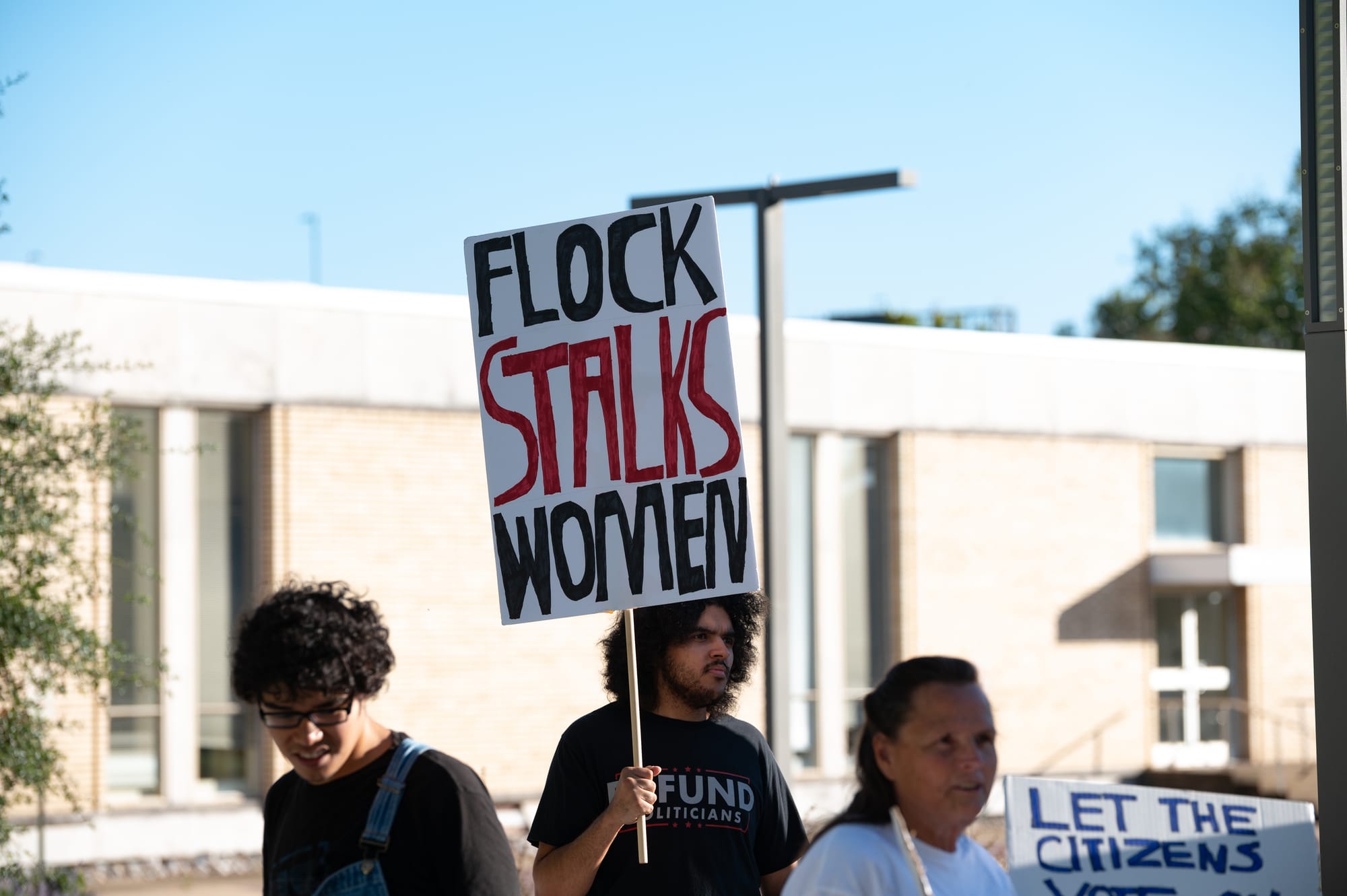
404 Media first covered Raven in January 2025. At the time, the tool was available to essentially anyone, and some people in the company’s Discord server asked for help stalking women. A day after 404 Media contacted Graylark for comment, the company restricted access to the tool to only government agencies and enterprise users.

In a September X post, Heinen said Alexandr Wang, now head of AI at Meta, was an angel investor in Graylark. Wang did not respond to a request for comment.

In a LinkedIn post earlier this year, Heinen showed Raven being used against a video of people vandalizing a Flock camera.

Read the whole story
mkalus
18 hours ago
reply
iPhone: 49.287476,-123.142136
Share this story
Delete

Saturday Morning Breakfast Cereal - Blog

1 Share


Click here to go see the bonus panel!

Hovertext:
I feel like if you said this on twitter someone wearing a shirt that reads INTERNET would come into your house and take an ax to your router.


Today's News:
Read the whole story
mkalus
1 day ago
reply
iPhone: 49.287476,-123.142136
Share this story
Delete
Next Page of Stories