Resident of the world, traveling the road of life
69431 stories
·
21 followers

I knew Brexit would be a disaster and I was right.

1 Share

 What I posted in June 2016, on the eve of the Brexit referendum:

Why I'm for the UK remaining in the EU

In a very short while the UK will be holding a referendum on the country's continued membership of the EU. At the moment, judged on the polls (which are of course often inaccurate, as with the last general election), things seem to be heading the way of a vote to leave.

I think it would be a great shame were this to happen. As a young scientist, I benefitted tremendously from the freedom of movement allowed within the EU. I'm not talking about my time within the European Space Agency, which is a non-EU organisation, although that experience certainly helped frame my views on European cooperation and integration. But having left ESA in 1994, I was immediately able to take up a two year postdoctoral position at a Dutch university, and I did so with the minimum of hassle and paperwork. Once again I was immersed in a pan-European working environment which I found stimulating and encouraging.

After my postdoctoral position expired in 1996, I found myself unemployed. There were a handful of possible job opportunities back in the UK, but I had grown fond of the Netherlands, and my partner at the time, who later became my wife, had a full-time job. She too had benefitted from freedom of movement within the EU. Disinclined to leave Holland, therefore, I signed on for unemployment benefit from the Dutch state, while continuing to look for work opportunities within the area where we lived. I applied for one job in Delft, working on satellite monitoring of the Earth's atmosphere, but was not made an offer.

Luck eventually intervened, in that I saw an advert in Nature for a newly founded business in Haarlem, which would revolve around developing scientific software for astronomical applications. It seemed right up my street, almost literally so, in that Haarlem was only a short train ride from where we lived near Leiden. I applied for the job and was suitably astonished to learn that the driving force behind the business was an old colleague of mine - and a Welshman, like me, who had settled in the Netherlands. We met for an interview, which went well. While there was a strong prospect of working for the company in the future, though, there was still going to be a few more months of unemployment. I therefore continued to sign on, while going through the motions of looking for work. It was an odd, unsettling time, but - in hindsight - a blessing, because it enabled me to dust off the abandoned manuscript of Revelation Space and finally give it the polish it needed prior to submission. That was early 1997, and the book sold two years later. Those months of unemployment were therefore literally life-changing, and I owe them to the Dutch state and EU regulations on worker's rights.

Many of the arguments for and against membership of the EU seem to revolve around economics, which seems to me to be an extremely narrow metric. Even if we are better off out of the EU, which we probably won't be, so what? This is already a wealthy country, and leaving the EU won't mend the widening inequality between the very rich and almost everyone else. More than that, though, look at what would be lost. Friendship, commonality, freedom of movement, a sense that national boundaries are (and should be) evaporating. When many countries (including the Netherlands) moved to the Euro, it was a joy not to have to pack Guilders, Belgian francs, Deutschmarks, for a simple drive to visit to family in Germany a few hours away. The eradication of visible borders did not lead to a smearing out of regional cultures, but instead it made it much more easy to sample those cultures and gain a deeper sense of European history. I never stopped feeling that living in the EU was a thing to be proud of, and more than ever I am content to think of myself as European before British. I therefore hope that the Remain vote will win the day.

https://approachingpavonis.blogspot.com/2016/06/why-im-for-uk-remaining-in-eu.html#comment-form
Read the whole story
mkalus
3 hours ago
reply
iPhone: 49.287476,-123.142136
Share this story
Delete

Meta keylogs staff typing for AI training — then leaks it

1 Share

Meta announced a fabulous new programme in April — the Model Capability Initiative! [BBC]

a new tool will run on Meta’s computers and internal apps, logging their activity to be used as training data for AI technology.

This collected every keystroke, mouse click, and screen image. Meta told the BBC it had:

safeguards in place to protect sensitive content.

Meta employees started a petition in May against the key logging. They asked about these safeguards. There weren’t any: [letter]

no completed privacy reviews were provided. The outlined privacy mitigations were vague, and leadership’s confidence in them appeared limited — evidenced by the selective opt-out afforded to executives.

The employees were right: [Wired]

Meta left potentially sensitive information collected from employee laptops accessible to anyone inside the company.

Meta paused the data collection. But it wants to start keylogging again as soon as possible. [Wired]

Meta is also sending expensive engineers off to become AI trainers in the Applied AI Engineering Unit! [Reuters]

Join or be fired. Applied AI head Maher Saba said:

AAI is one of the company’s highest priorities and we’re resourcing it by moving our ​strongest talent to address it. Therefore, the transfers aren’t optional.

The engineers are writing programs to generate training and tests for the AI. One draftee told Wired: [Wired]

You have zero purpose in life all of a sudden, you barely interact with anyone, you just have these tasks every week.

Just like the task workers who were training the AIs already. Fancy that.


Read the whole story
mkalus
3 hours ago
reply
iPhone: 49.287476,-123.142136
Share this story
Delete

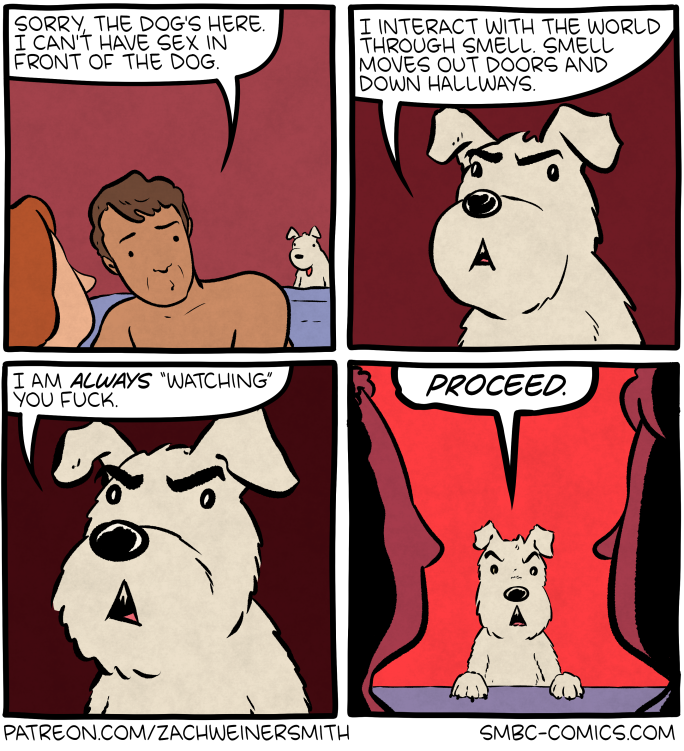
Saturday Morning Breakfast Cereal - UBI

1 Share


Click here to go see the bonus panel!

Hovertext:
The good news is everyone has job security in the post-scarcity world.


Today's News:
Read the whole story
mkalus
14 hours ago
reply
iPhone: 49.287476,-123.142136
Share this story
Delete

UK press can opt out of AI overviews, stay in search results

1 Share

Last July, publishers filed competition complaints about Google’s AI Overview in the UK and Europe. The overview directly substitutes for the publishers’ own sites with a worse version. And you can’t opt out of the AI Overview without blocking Google Search.

Until now! The UK Competition and Markets Authority designated Google with “strategic market status” in search in October. That means the CMA can put conditions on Google “for the purposes of ensuring fair dealing, open choices or trust and transparency.” [CMA, PDF]

Publishers can have their sites excluded from AI overviews without being cut out of search results. Google also has to let publishers opt out of their stuff being used to fine-tune AI models. [CMA]

Google now has to be transparent about its search results. The results algorithm has always been a trade secret — but now Google search has to have “objective and non-discriminatory criteria.” The AI overview as well. [CMA]

Google has complied, because they like selling ads in the UK. They’ve already set up a page for publishers to opt out of the AI functions as they need to. [Google]

Publishers are a bit optimistic, but they’d like it to be more fine grained. They don’t like that it’s an opt-out, instead of an opt-in. And they think the CMA shouldn’t be giving Google months to do this. [Press Gazette, archive]

Google’s opt-out page is not just UK, it’s global. Because playing nice heads off other countries regulating Google more harshly — even this tiny, inadequate bit.


Read the whole story
mkalus
16 hours ago
reply
iPhone: 49.287476,-123.142136
Share this story
Delete

Prenzlauer Berg nach der Wende 1991

1 Share

Ich habe ein ziemlich tiefe Verbindung zum Prenzlauer Berg. Während meiner ersten Ausbildung zum Maler/Lackierer Anfang der 1990er Jahre habe ich ihn genau so vorgefunden, wie diese Aufnahmen hier zeigen. Komplett desolat, marode as fuck. Wir sind dann darein, haben Fassaden aufgehübscht, Treppenhäuser saniert, Wohnungen tapeziert und die Stuckdecken ins damalige Jetzt zurückgeholt. Und immer wenn ich heute mal in Prenzlberg unterwegs bin, muss ich daran denken wie krass hart sich das alles verändert hat. Und ich war zu der Zeit irgendwie Teil davon. Ganz ohne zu wissen, wohin sich das alles mal entwickeln würde.

Ich war damals schon voll in diesem Berliner Techno-Zirkus unterwegs und dann gab es dort in Prenzlberg, in einem komplett kaputten Altbau, eine Wohnungstür mit genau diesem Aufkleber. Never forget. Und das gehört für mich irgendwie alles zusammen.

Wie sah der Prenzlauer Berg unmittelbar nach der deutschen Wiedervereinigung aus? Diese Ausschnitte aus einer Reportage von 1991 zeigen einen Stadtteil im Umbruch: verfallene Altbauten, marode Hinterhöfe, leerstehende Wohnungen und eine Bevölkerung zwischen Hoffnung und Sorge.

Über 145.000 Menschen leben damals im dicht besiedelten Bezirk Prenzlauer Berg. Tausende Wohnungen gelten als dringend sanierungsbedürftig. Während Politik und Wirtschaft über die Zukunft des Viertels diskutieren, fürchten viele Bewohner*innen steigende Mieten und die Verdrängung aus ihrem Kiez.


(Direktlink)

Read the whole story
mkalus
16 hours ago
reply
iPhone: 49.287476,-123.142136
Share this story
Delete

The Tokenpocalypse Is Here: Companies Are Scrambling To Stop Spending So Much on AI

1 Share
The Tokenpocalypse Is Here: Companies Are Scrambling To Stop Spending So Much on AI

Consulting giant Accenture is trying to figure out how to stop non-technical workers from blowing through companies’ AI token budget on trivial tasks like converting PDFs to presentation slides, according to leaked audio obtained by 404 Media. Across the industry Accenture is seeing “soaring token spend,” according to the audio.

The news highlights a major shift in the tech industry and other companies that use AI: the wave of uninhibited AI growth is over. Some AI providers like GitHub are now charging customers per token rather than a flat subscription fee, leading some companies to burn through their tokens. Uber recently capped employees’ use of AI tools like Claude Code and Cursor; that came after Uber told employees to use AI as much as possible and Uber’s CTO said the company had blown its entire AI budget in four months. And Accenture itself reportedly started requiring senior staff to start using AI or risk losing out on promotions. 

It also undercuts the narrative that superpowered engineers generating mountains of code are behind the AI boom. In many cases it is non-technical staff burning through tokens for non-specialized tasks.

💡
Do you know anything else about token spend inside tech companies? I would love to hear from you. Using a non-work device, you can message me securely on Signal at joseph.404 or send me an email at joseph@404media.co.

“We’re seeing from some of the data internally at least that it’s actually not our engineers that are driving the token consumption. It’s a lot of the non-engineers that are doing some of those behaviors [...] you were talking about,” Justice Kwak, Accenture’s agentic AI strategy lead, said in a recent internal meeting, according to the audio obtained by 404 Media.

Read the whole story
mkalus
16 hours ago
reply
iPhone: 49.287476,-123.142136
Share this story
Delete
Next Page of Stories